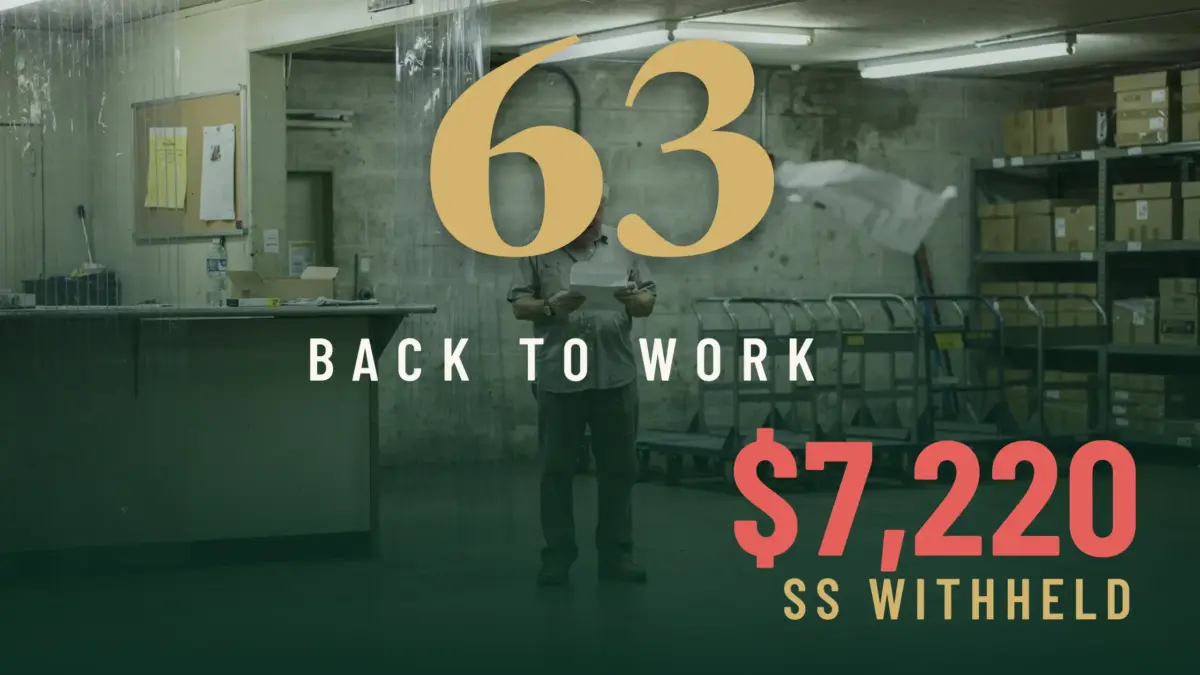
Social Security earnings test for retirees returning to work at 63, Digi Mart USA News: A retiree who claimed Social Security early may find that taking a job can temporarily stop his benefit checks. According to a 24/7 Wall St.
report, a 63-year-old who takes a $40,000 job in 2027 could see Social Security withhold $7,220 in benefits, even though the withheld amounts are not necessarily lost.
Many retirees return to work to cover higher costs, stay active or rebuild savings. Those who have not reached full retirement age (FRA) by the end of 2027 are subject to an earnings limit of $25,560.
For every $2 earned above that limit, Social Security withholds $1 in benefits.
In this example, the salary exceeds the limit by $14,440, so half of that amount, or $7,220, is withheld. Social Security typically holds back entire monthly checks, usually beginning in January.
If the monthly benefit is $2,000, the agency would withhold four checks totaling $8,000 and then return the extra $780 once annual earnings are reconciled.
For anyone born in 1960 or later, full retirement age for Social Security is 67. When the retiree reaches that age, Social Security recalculates his benefit and credits him for the withheld months.
His monthly check then increases, although he does not receive the withheld money as a lump sum.
The report says that someone who started benefits at 62 has a reduction of about 30% for claiming 60 months early. Receiving credit for four withheld months reduces that gap to about 28%, which adds roughly $48 per month to the check.
At that rate, it would take about 13 years past FRA to recover the $7,220, with a break-even point near age 80. Annual cost-of-living adjustments, such as the 3.6% increase for 2027, could shorten that period.
The paycheck may also affect taxes on benefits. For a single filer, once combined income passes $34,000, up to 85% of Social Security benefits can be taxed.
A $40,000 salary alone exceeds that threshold, so more of the benefits received could be taxable.
The job could also raise future benefits. Social Security reviews new earnings each year, and if a year is among the highest in the record, the benefit may be recalculated and increased starting the following January.
If the job replaces a low-earning year, the monthly check could rise permanently.
Retirees who began benefits within the last 12 months may withdraw their application using Form SSA-521, repay what they received and reapply later at a higher amount. This option is available only once in a lifetime and only during that first year.
The earnings test ends in the year a person turns 67, when a higher limit applies and $1 is withheld for every $3 above it. After reaching FRA, there is no earnings limit.
The report advises checking personal figures, including birth month, earnings history and household budget, through a Social Security account before accepting a job offer.