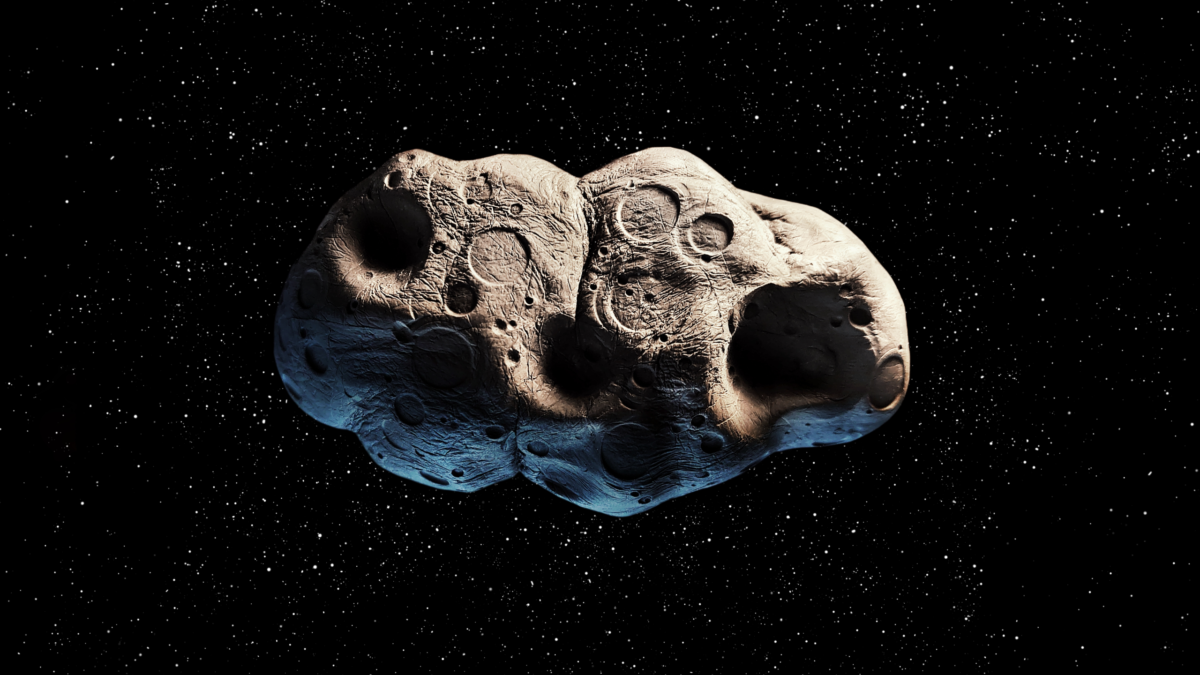
Asteroid KY26 unexpected acceleration and dark comet theory, Digi Mart USA News: Asteroids typically follow predictable paths, shaped only by external forces such as gravity or radiation pressure from the Sun. KY26, a small 11-meter (36-foot) space rock, is accelerating in a way that defies those expectations.
One proposed explanation is that KY26 is actually a “dark” comet, a body that releases gas without producing the visible tails typically associated with comets. That gas release could push the object along a different path, making it look like an ordinary asteroid.
However, aerospace engineers Korbin Hansen and Masatoshi Hirabayashi of the Georgia Institute of Technology report a problem with that explanation. Their temperature modeling, published in the journal Icarus, suggests the asteroid is too warm to keep buried ice intact, which would be needed to power such propulsion.
The researchers found that even the coldest regions of KY26 average at least 212 Kelvin (-61 degrees Celsius) over its orbit around the Sun. Water ice generally requires temperatures below about 145 Kelvin (-128 degrees Celsius) to survive over long periods.
Based on their calculations, even if water ice made up 1 percent of KY26’s mass, it would disappear in just over 2,000 years. If that ice were responsible for the asteroid’s unusual acceleration, it would be gone in only 62 years.
The researchers note an important caveat: it is unclear how long KY26 has occupied its current orbit. An earlier paper traced the object to a potential asteroid belt origin, which further reduces the likelihood that it retains significant ice.
Another possible explanation is radiation pressure from sunlight. Although small, this force could be strong enough to account for the asteroid’s irregular path.
The question may soon be settled. The Japanese space agency’s Hayabusa2 spacecraft is traveling toward KY26, with a rendezvous scheduled for July 2031.