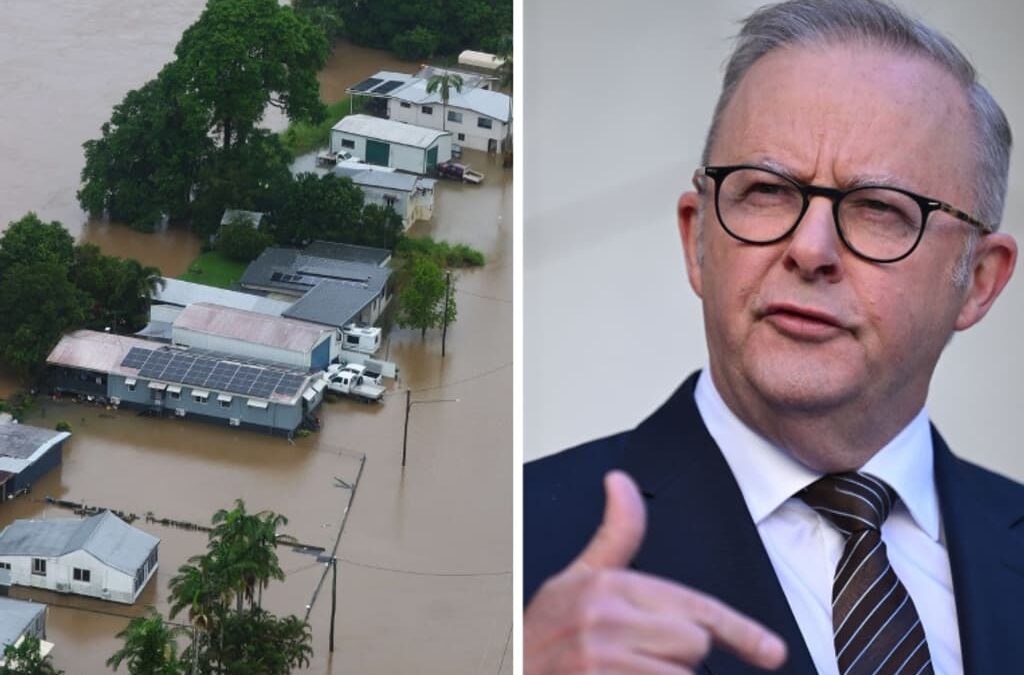
Australian flood-prone housing insurance premium survey, Digi Mart USA News (Australia): Australians are increasingly reluctant to pay higher insurance premiums to support people living in flood-prone areas, with two thirds now either unwilling or unsure about doing so.
Instead, the nation’s property owners want to fight floods with pre-emptive measures and block development in regions with elevated flood risk. That puts new pressure on local, state and federal governments to overhaul planning and fund defences.
New research by insurance firm Youi, which surveyed more than 1,200 people across the country, found that the preferred option for supporting those in flood-risk areas through higher premiums was to not subsidise them at all. A whopping 52 per cent of South Australians would prefer to pay no extra cost in their insurance, followed by 50.9 per cent of Western Australians, 49 per cent of Queenslanders, 43.5 per cent of Tasmanians, 43.2 per cent of Victorians and 42.5 per cent of New South Welshmen.
Adding in those unsure of the best approach brings the figure to 66 per cent nationally. The report identified more than two million Australian homes as being flood-prone.
Among those willing to support people in flood-risk areas, most topped out at $300 added to their own premiums.
The top priority for managing flood risk across the country was restricting development in flood zones, followed by improving flood defences and infrastructure. However, the finding that so many do not want their own bills to underwrite risks for others could have significant ramifications for the availability of insurance in some areas.
Youi chief executive Nathaniel Simpson said the way insurance works depends on a wider pool of people, which minimises costs for as many people as possible. Even insured residents in flood-risk areas help offset costs for storm risks elsewhere.
He said the responses could be read as unwillingness to support those in at-risk areas, but he believed the overarching desire to act before floods affect homes reflected a strong sense of Australian mateship.
“The Australian spirit is generous and inclusive and we rally around each other, so that answer, in the context of the other answers … the message to me is that while we have the opportunity to direct what we can to solving the underlying problem, to do that rather than increasing premium costs,” Mr Simpson said.
“But while the risk remains, it will be paid by someone, and they don’t want to see that perpetuated and to instead see the underlying issue addressed, rather than having to spend more and more on clean up after the fact.”
He added that this reflected the position of the nation’s insurers, who want to find ways to reduce risks and, where possible, provide policies more widely and more affordably. He said this would require a coordinated effort across federal, state and local governments, and that politicians should stop treating flood preparedness as a political point in order to achieve a unified response.
Independent economist and Climate Council climate councillor Nicki Hutley said the high number of people unwilling to support others’ premiums was a sign of naivety about how insurance works, as well as a “really distressing” attitude. “It’s a bit sad if that’s where we are,” Ms Hutley said.
Ms Hutley said rising building costs and insurance claim events were combining in a way that had not happened historically to drive premiums up more substantially. Separating insurance pools to remove those with heightened risks would likely leave them without insurance.
“There are some areas where it is already not available, or too expensive, so the market is already getting there anyway,” she said.
“But there’s always a cost somewhere, and it will be up to tax payers if the government is left with the clean up bill,” Ms Hutley said.
Although the responses were complicated at a climate level, Ms Hutley said many respondents appeared to take the right view toward reducing costs by reducing risks. She said having Infrastructure Australia audit parts of the country where levees and other systems could help minimise risks could “hopefully bring down premium costs” through defensive structures.
She also advocated better home design so residences are positioned to withstand flooding.
“You can’t prevent all risk, but there are some areas you shouldn’t be building there in the first place,” Ms Hutley said.
Mr Simpson noted that better thinking about how some areas are developed could still lead to more land development in areas with some flood risk, without that risk materialising. “But that is more cost effective if you do it before you put the housing in,” he said.
Mr Simpson added that housing affordability should be considered holistically, accounting for living costs rather than just the mortgage price. He said better financial literacy among Australians could help many anticipate insurance premiums so they are not a surprise and are factored into home purchasing decisions.
The insurer is also releasing a series of practical resources to help Australians better prepare their homes for flooding.