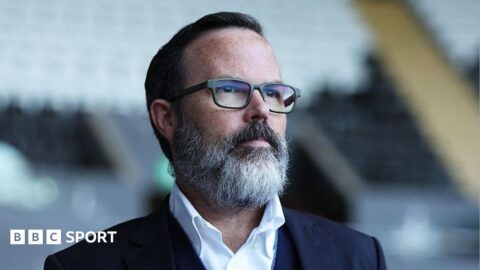
Netball NZ privatisation deal collapse with Ali Williams and Anna Mowbray, Digi Mart USA News (New Zealand): Netball New Zealand may have ended up paying to hand over control of its elite domestic competition under the privatisation deal negotiated with investors Ali Williams and Anna Mowbray, according to a report by RNZ.
As first reported by RNZ, Netball NZ last week abruptly pulled the pin on negotiations with the high-profile couple, just eight weeks after signing a term sheet in which the parties agreed to work towards establishment of a new privately owned league in 2027. The collapse has left players facing renewed uncertainty over their professional futures and raised questions about Netball NZ’s handling of the process.
The dispute has largely been framed as being about control, with the Williams and Mowbray camp questioning whether Netball NZ were truly willing to commit to handing over the keys to the domestic competition. However, concerns about the balance of the proposed deal were not confined to Netball NZ.
One team official told RNZ that feedback from potential franchise investors was that the terms “were too weighted in the league owners’ favour.”
RNZ understands that at the heart of the dispute is a disagreement over whether Mowbray and Williams were taking over the licence to operate the league on a “concession arrangement” or taking ownership of the competition outright. A concession agreement would grant a private party the licence to operate the league for a set period.
The operator makes money through team-licensing fees, commercial deals and broadcast uplift, but also takes on the risk if things do not go well.
It is understood Netball NZ were offering an initial 10-year deal, with a 10-year right of renewal, later increased to 15 plus 15 years, while Mowbray and Williams sought a deal in perpetuity. From the investors’ perspective, if they were committing their capital and expertise to building the competition, they needed confidence they would have the security to see that investment through.
A fixed-term licence, even with the option of renewal, left open the possibility that Netball NZ could take the competition back after Williams and Mowbray had put in the work and money.
“Imagine buying a house and the owner puts in the agreement that we can nick it back after 10 years,” said one insider. “Who would agree to that deal?”
Others have questioned the fairness of a deal that would have seen Netball NZ effectively pay the investors to take the league off their hands. Netball NZ chief executive Jennah Wootten told RNZ the national body would not have received any payment for the league licence and would instead have had to contribute money to help establish the competition.
“The proposal would not have seen Netball NZ receive any money as a result of the transaction and, instead, was prepared to invest into the venture,” Wootten said. “That ultimately couldn’t be made to work in a way that protected the future of netball in New Zealand.
We cannot get into the details of the arrangements for commercial reasons.”
Wootten announced in September that the organisation was backing a proposal by Ali Williams and Anna Mowbray to privatise the elite domestic league. Eight weeks later, the deal was off.
The news that the national body was pulling the pin on negotiations came a week after Williams and Mowbray provided an update to the Netball NZ board in a meeting that lasted three hours.
Williams told RNZ that in that meeting, Netball NZ drilled into the details. “We were transparent around it all,” he said.
“We made it pretty clear what we believed the potential losses could be to build these things.” When asked what he meant by losses, Williams responded: “There’s a lot of investment that goes into it, that’s probably a better word.”
“[Netball NZ] understood the investment that we were prepared to put in and it required investment from their end as well, but that was purely around 2027, because it had taken so long to get to where we were and the timeframes we were operating under.”
Netball NZ’s decision to privatise the elite domestic league was intended to bring in much-needed capital and commercial capability into a competition the national body could no longer afford to run in its existing form. In July, the organisation revealed the ANZ Premiership ran at a $3.7 million deficit this season.
About $1.2 million could be attributed to broadcast costs, after Netball NZ agreed to cover production costs in its deal with TVNZ to return the sport to free-to-air television.
Privatisation would have allowed Netball NZ to offload the costs of running the competition, but one sports business expert told RNZ that did not mean the proposed deal represented good value for the sport. “There’s no doubt that this is a distressed asset that [Mowbray and Williams] would be taking on, and it would take significant investment on their end to build the league into a strong commercial asset and get that broadcast revenue uplift,” the expert said.
“Regardless, the value of the deal changes significantly, depending on whether it is a concession arrangement or an equity arrangement. If you were talking in housing terms, it’s the difference between leasehold and freehold, if you like.
I sense Netball NZ have done the right thing here in walking away. The terms of that deal, if you’re not getting any money for the competition licence, that doesn’t make a whole heap of business sense.”
How the two parties could have reached this point without agreement on such a fundamental question as what was actually being sold remains unclear. Explaining the decision to walk away from negotiations, Wootten said the investors had strayed from what was set out in the original term sheet signed by the parties.
Few details have been provided of what the term sheet contained, but at the time of the announcement, Netball NZ said the “long form agreement would see the licence for the competition and competing teams held by the investors, with Netball New Zealand assuming a governance role on the board that will be established to govern the new league.”
Williams maintains the position of the investors has never changed. “From our point of view, the intention was never changed, so the intention of us coming in and doing all these things was still the same,” he said.
“They always knew what our intention was, but from there to signing the long form, that fell over.”
The disagreement over ownership and control was only one part of the problem. There were also significant questions about whether the proposed competition’s financial model would work, particularly for the teams expected to foot much of the bill.
Former Mainland Tactix general manager Kate Agnew, who was involved in trying to put together a bid for a Christchurch-based team, said feedback from investors was that the proposed model was weighted too heavily in favour of the league operators.
Under the proposed arrangement, teams would have been required to pay a significant fee to secure a licence, then cover their own operating costs, including player salaries, travel, accommodation and support staff, costs previously covered through broadcast rights and sponsorship at competition level. “In some cases, that is a model that a lot of leagues follow, but usually there’s either a greater certainty of return and being able to offset those costs, or there’s more investment coming in from the league itself to help support the owners with paying those costs,” said Agnew, who previously worked at Netball NZ.
“That was a lack of clarity for the investors. Did it mean they were going to end up having to foot an awful lot of costs, but with little prospect of return?” Agnew said there had been some “really positive conversations” with potential investors, but not enough detail or certainty in the proposal for them to confidently commit.
Williams told RNZ he had secured sponsors and had a broadcast deal lined up with both Sky and TVNZ, but these could not be signed until the long form agreement with Netball NZ had been reached. “Unfortunately, I couldn’t give them more detail, which I would have loved to, and that would have come out, but we can’t go down those paths until things are all signed up.”
The financial model also presented a significant hurdle for the existing franchises, three of which (Northern Stars, Tactix and Waikato-Bay of Plenty Magic) were already run by Netball NZ. The national body had underwritten most of the competition’s costs this season after broadcast revenue dried up, but the proposed model would have shifted that financial responsibility to individual teams.
An official involved with one of the franchises put the cost of running a team at about $1.2 million a season, while RNZ understands the buy-in cost for a franchise licence was $500,000, a figure Williams said was “about right.” Magic liaison manager Gary Dawson told RNZ the financial model did not “stack up” for the Waikato-Bay of Plenty side.
Of the three teams that stand on their own feet financially, RNZ understands only one, Southern Steel, was close to being able to pull together the funding required, but even that “wasn’t a done deal.”
Wellington-based Central Pulse said it would have been challenging for the franchise to put a bid together, while Northern Mystics chief executive Phil Vyver said that when Netball NZ pulled the pin, they were still a fair way off from being able to secure a team. “We would have required a private investment of our own or a significant increase in commercial sponsorship revenue to be able to afford it,” Vyver said.
“On face value, the Netball Northern Zone don’t have the reserves to be able to put towards it.”
“Over the last couple of months, we’ve been looking for investment into the team. When the decision was made by Netball NZ, we hadn’t had anything secured, plenty of conversations, but nothing was 100 percent locked in place.”
There was no requirement that the teams in the new competition be aligned with the existing zones, and the investors could have established five entirely new teams. Speaking to RNZ on Tuesday, Williams said he had private investors for three teams lined up “and then the rest we were working on, but that then sits with us, right?” Asked if that meant the couple were prepared to take on some of the team licences themselves, Williams responded: “We promised what we promised, that’s how it has to work.”
Williams and Mowbray own a 15 percent stake in A-League club Auckland FC and hoped to bring the team’s fan-centric model to netball. Williams acknowledged the proposed model would not have worked for everyone, but said the investors were looking to take a different approach to how the sport was run.
“I respect the zones, I respect their elements, but you also have to respect the fact that we needed to look at things in a different light,” he said.
Williams said the proposal was about finding investors who bought into a broader vision for the sport, rather than simply looking at immediate financial returns. “There were people that could see the vision and understand what we were trying to achieve, and then there were others that it was hard, and I’m not going to deny that.
This is not for everyone, so yeah, I can understand their position, but there’s also a reality around being able to do something and wanting to do something.”
Silver Ferns shooter Martina Salmon is among a handful of national players left without a contract heading into 2027, a World Cup year. The abrupt change of direction from Netball NZ has taken a huge toll on the players, coaches and support staff, who have endured a prolonged period of uncertainty over their professional futures.
While 18 players will head overseas next season, predominantly to Australia’s Suncorp Super Netball competition, several current Silver Ferns remain without a deal.
They include Peta Toeava, Parris Mason, Martina Salmon, Laura Balmer, Taylah Earle and injured defender Catherine Hall. Recent internationals Phoenix Karaka, Maia Wilson and Whitney Souness are also without contracts.
There is hurt and frustration among the playing group, particularly over the lack of warning that Netball NZ was considering walking away from negotiations.
The players’ association has repeatedly called for the athletes to be included in discussions, believing they could help find a way through the impasse. General manager Pippa Moore said the players had become collateral damage in a commercial dispute they had very little influence over.
She added the association still hoped a compromise could be reached and wanted an opportunity to bring the two parties together.
“We’ve repeatedly said to Netball New Zealand ‘bring the players in,'” Moore said. “The players can be used to assist.
Bring us into the conversation and let’s work together collectively to find a solution. We’d really love an opportunity to take part in a mediation with Netball New Zealand, and Ali and Anna, and perhaps we can find a solution we’re all happy with.”
Wootten has indicated the national body is ready to move on, saying its focus is now on developing an alternative competition for 2027.