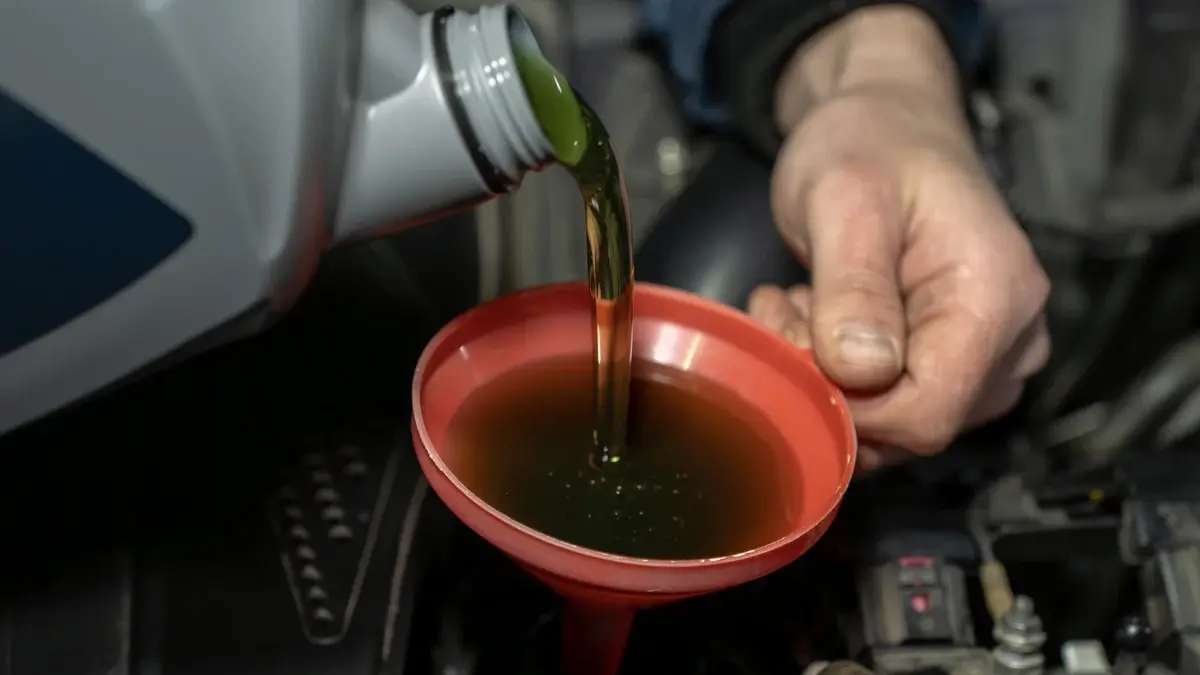
Japanese vs. French engine oil change intervals and high-mileage vehicle longevity, Digi Mart USA News: Japanese drivers are encouraged to replace engine oil far more often than French drivers, and their cars are often capable of exceeding 300,000 kilometers. Specifically, replacement is frequently recommended every 5,000 kilometers or six months in Japan.
This article was originally published in October 2026 and was republished on Les Numériques because vehicle reliability and maintenance advice for extending engine life, whether gasoline or hybrid, continue to generate strong reader interest.
In France, the practice is different: for certain models, the interval between workshop visits is between 20,000 and 30,000 kilometers. Toyota and Honda, Japanese brands, dominate studies of vehicles capable of surpassing 300,000 kilometers.
Short trips, traffic jams, and repeated engine starts prevent the oil from heating up for long enough. Moisture and fuel can then mix more easily with the oil, while additives naturally lose effectiveness over time.
Old oil protects metal surfaces far less and promotes deposits that accelerate internal wear.
Japanese drivers have taken this into account, and an oil change every 5,000 kilometers or six months is often recommended. At Toyota, a non-turbo gasoline engine may go up to 15,000 kilometers under normal conditions, but this drops to 7,500 kilometers under severe conditions.
For a turbo engine, the threshold may fall to 5,000 kilometers or six months, or even 2,500 kilometers or three months.
But why do Japanese manufacturers recommend changing oil more regularly than in France? In Japan, there are many short trips, traffic jams, and slow traffic with repeated restarts in urban areas.
The Japanese vehicle fleet also includes many small cars and turbo engines, which require more frequent oil changes.
In France, the same conditions as in Japan obviously exist. However, there are more peri-urban, rural, and longer intercity trips.
For example, in rural areas, 62.1% of workers travel more than 10 km to get to work. Average home-to-work distances reach 12 to 18 km.
On these longer routes, the engine and oil reach the proper temperature more consistently, which limits the buildup of moisture and fuel.
In France, oil changes are considerably less frequent for some models. A Renault Captur TCe 130 is generally serviced every 30,000, 60,000, or 90,000 kilometers.
For certain Peugeot 308 models, the interval is 20,000 kilometers or one year. A French driver therefore sometimes covers four to six times more kilometers between oil changes than a Japanese driver.
Longevity studies show that Japanese brands dominate in this area. Last month, a study based on more than 395 million vehicles calculated the probability of reaching 402,000 kilometers.
The Toyota Sequoia reached 42.3%.
Behind it are the Toyota 4Runner and Toyota Tacoma, at 33.1% and 25%, respectively. For the Honda Civic, the figure is 15%.
Karl Brauer, an analyst at iSeeCars, explained: “Reaching 402,000 kilometers is still far from typical.”
In a related case, a Toyota Tacoma surpassed 1.7 million kilometers with its original engine. Sasa Bolesnikov, owner of a repair shop that tracked the vehicle over more than one million kilometers, said the team did “little more than regular oil changes every 8,000 kilometers.” It should also be noted that this model was driven in Arizona, an area where corrosion is more limited than in territories such as Japan.