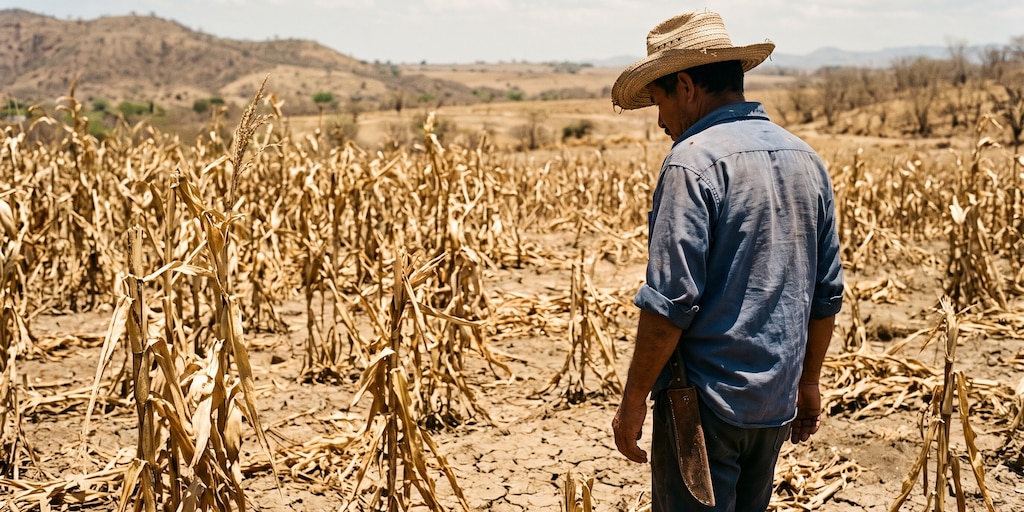
El Niño drought impact on El Salvador’s small farmers, Digi Mart USA News (El Salvador): The study “El Estado de la MYPE 2026: La otra cara de la economía,” prepared by the MYPE Observatory of the LID School of the Salvadoran Foundation for Comprehensive Support (FUSAI), found that 80.5% of small producers in the Salvadoran countryside suffered serious damage from climate problems over the past five years. The report says the situation forced thousands of families to part with their work assets in order to survive.
The study reports that 15.1% of those affected sold tools, machinery or livestock to cover their losses. The findings come as the Economic Commission for Latin America and the Caribbean (ECLAC) warns of the imminent arrival of a new El Niño episode in the Dry Corridor region.
The crisis is affecting rural communities directly. In the canton of Morita, in the San Jorge district of the San Miguel Oeste department, farmer Fidel Martínez lost his entire corn and bean crops during the first planting cycle.
Lack of rainfall prevented the crops from developing and destroyed food meant for his household and for local sale. His account reflects the situation of agricultural workers who watch their harvests disappear and are left without resources to finance the next planting.
Outlook for the coming months points to an even more complex scenario for the national agricultural sector. ECLAC calculations indicate a probability above 90% that El Niño will reach exceptional strength toward the end of 2026.
The National Oceanic and Atmospheric Administration (NOAA) of the United States estimates a 75% chance the event will reach historic magnitudes, with more than a 70% risk of prolonged drought in critical areas of the Dry Corridor.
The decline in agricultural production not only threatens producers’ stability but could also make the basic food basket more expensive across the country. Economic estimates warn that a pronounced rise in temperatures could add 0.64 percentage points to inflation in El Salvador, reducing the population’s purchasing power.
In response, the Ministry of Agriculture and Livestock has arranged the distribution of low-cost inputs and opened financing lines at an annual rate of 4% through the Agricultural Development Bank (BFA), with the goal of harvesting 11 million quintals of corn before the lack of water strikes productive areas harder.
Extreme heat has become the greatest climate threat and has sharply reduced sales at small businesses. The institutional report confirms that high temperatures and drought represent the main danger to micro and small enterprises in El Salvador.
Water scarcity directly affected 68.2% of producers in the eastern zone and 66.9% nationally. Overall, 68.6% of climate-affected businesses recorded a sharp drop in daily sales, 33.4% suffered losses of merchandise and inputs, and about 15% had to halt commercial activity for lack of resources.
For a small family business, damage that appears minor can cause a deep imbalance. The report says 54.1% of affected businesses reported losses below $300.
For a microenterprise with monthly income of $1,950, that sum represents more than 15% of a full month’s income, a figure that destabilizes any subsistence budget and forces money meant for the next planting to be spent on urgent food purchases.