New Zealand election vote counting process, Digi Mart USA News (New Zealand): Close to 4 million enrolled New Zealanders will vote on Saturday to pick the next government. Questions about who counts the ballots, how the count is carried out, and why a final result takes so long are answered in this explainer.
All votes are counted by hand, not by machines. A preliminary count takes place on election day, and the official count begins afterward, with final results expected by Friday, 27 November.
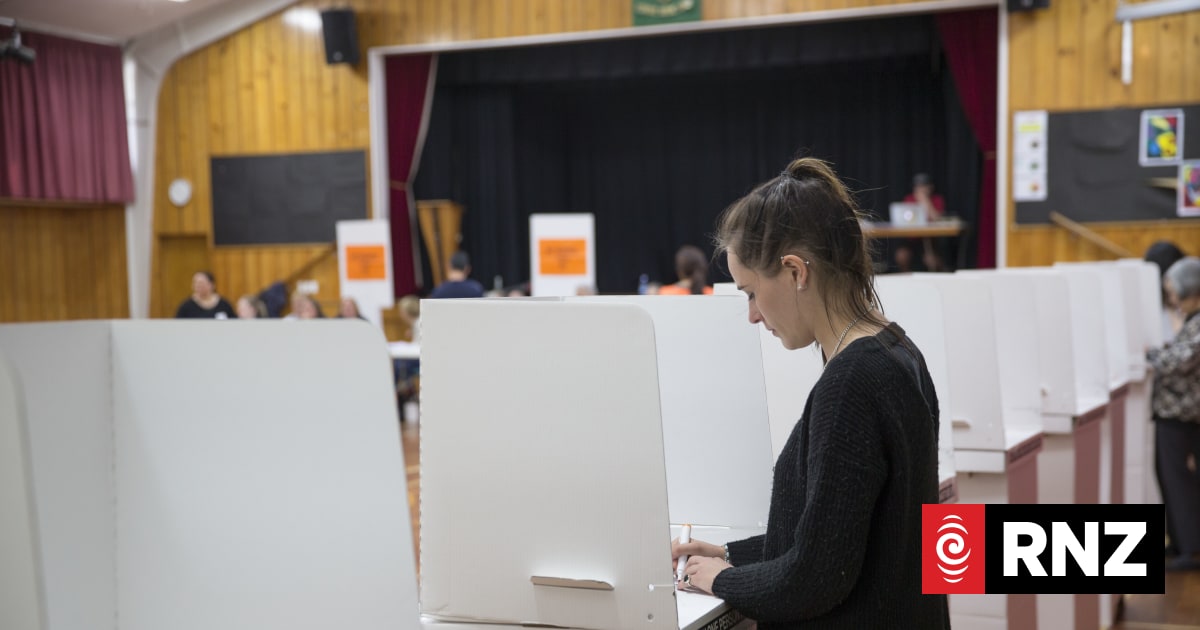
Several categories of votes are counted. Advance votes cast before election day are taken to electorate headquarters, and that count begins before voting closes on Saturday, though those results will not be released until 7pm.
Ordinary votes cast on election day are counted after polls close at 7pm and released as preliminary results.
Candidates and parties may appoint scrutineers to witness both the advance and election day counts. Most votes are counted on election day and election night, and the Electoral Commission aims to have 50 percent of results available by 10pm and 95 percent by 11.30pm.
Special votes take longer. They are cast by people not on the electoral roll or unpublished roll, by voters living overseas, and by those voting away from a polling place because they cannot reach one.
These votes undergo a stricter checking procedure, and overseas votes can take longer to process.
In 2023, it took three weeks to count special votes and confirm the election results. The Electoral Commission expects as many as 700,000 special votes this year and has said it expects about 20 days to complete the required checks and deliver final results.
Special votes must be returned to the electorate they were cast for before they are counted. Each special vote declaration is checked to confirm the voter is enrolled and eligible.
During the official count, totals for each voting place are recorded on a certificate signed by the returning officer and a Justice of the Peace. The commission will also scrutinise the roll by comparing every copy of the electorate roll in each electorate to identify voters who may have voted more than once.
Anyone suspected of double voting is investigated, and any voter found to have voted more than once is excluded from the final official count.
The official count is entered into New Zealand’s Election Management System, which was developed in the country and, according to the commission, regularly undergoes independent security testing and certification. The official count is then declared by the Chief Electoral Officer.
Electoral Commission staff, not volunteers, count the votes. The commission says all staff are fully trained, including on how to count votes.
After the count, voting papers are sealed in envelopes and placed in boxes closed with tamper-proof seals. They are held in secure storage for six months in case ballots are needed for a legal challenge.
Afterward, they are shredded and destroyed, with official representatives from Parliament and the Electoral Commission witnessing the destruction.
Electorate candidates may appoint scrutineers to observe the vote count, but candidates themselves and MPs cannot serve as scrutineers, and list-only candidates cannot appoint them. Scrutineers for special votes may observe the checking of special vote declarations and the official count of overseas, remote and dictation votes in Wellington, as well as declaration checks at any designated enrolment office.
Party secretaries of registered parties contesting the party vote may also appoint scrutineers to observe parts of the process under certain circumstances.
Under the Electoral Commission’s handbook for scrutineers, appointees may stay in a designated area within voting places. They may not obstruct voters or staff, and while they may photograph certain records, they may not touch voting materials or photograph voters.
Electorate candidates may apply to a District Court judge for a recount within three working days of official results being declared, with a deposit of NZ$1,022.22. The judge must begin the recount within three working days.
Section 180 of the Electoral Act 1993 sets no threshold for how close a race must be, so in theory any losing candidate could apply. A tie in an electorate triggers an automatic recount.
There were three judicial recounts in the 2023 election, in the close races in Nelson, Mt Albert and the Māori electorate Tamaki Makarau. None changed the winner.
For the party vote, only the party secretary may apply for a recount, either for a specific electorate or for every electorate. A recount across every electorate requires a $92,000 deposit.
An election petition is a formal legal challenge and the next step for those who want to contest a result beyond the recount process. One was filed in 1999 in the Coromandel electorate by National incumbent Murray McLean over Green candidate Jeanette Fitzsimons’ 250-vote victory, and the court upheld Fitzsimons’ win.
The Electoral Commission says it runs parliamentary elections that are free and fair, with the goal of providing an effective and impartial electoral system that New Zealanders can understand and trust. Probes may follow if issues are reported.
After the 2023 election, the auditor-general launched an investigation after more than two dozen voting places made errors when confirming the final result. The errors did not cause major changes to the overall results or seat allocation once corrected.
The final report found the final check was completed within a few hours under extreme pressure, and identified factors including an increase in late enrolments and special votes that allowed mistakes to go undetected.
Enrolments for this year’s election closed on 25 October, rather than continuing to election day as in 2023. Chief Electoral Officer Karl Le Quesne said at the time of the 2023 investigation: “These were errors made by people under pressure.
While the errors were too small to affect the results, we deeply regret they occurred.”