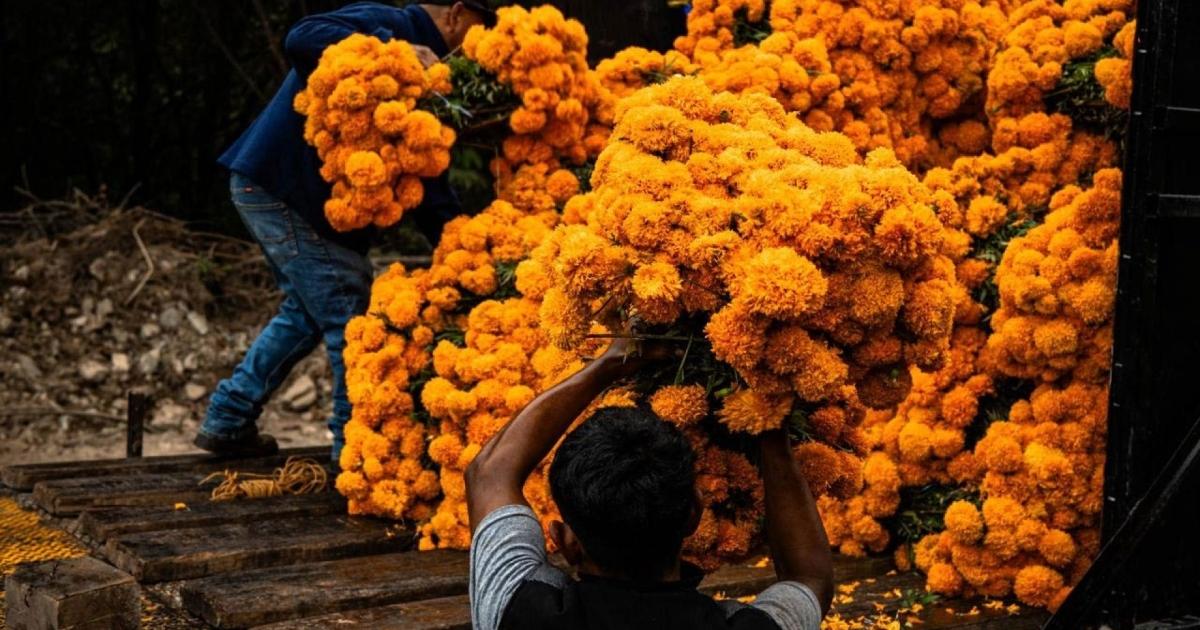
Cempasúchil seed collection and reuse of dried marigold petals, Digi Mart USA News (Mexico): Once the holiday season ends, the marigold flowers that decorate homes do not have to end up in the trash. Manuel Jonapa, head of the Museo Botánico, explained that this annual plant, whose life cycle lasts between two and three months, offers several ways to make use of it once it begins to wither, allowing its components to be reused sustainably.
The specialist said that if the flowers have reached maturity, it is possible to identify cempasúchil seeds at the base of the dried petals. These can be collected, stored and planted again around September, ensuring a new crop for the following year.
Beyond seed saving, Jonapa highlighted the possibility of managing plant waste responsibly.
“If the mature flowers have black seeds at the base of the dried petals, these can be saved for planting next year, around September.” Jonapa also explained the proper technique for removing the petals without damaging the seed embryo.
“We can take out the petals once they are dry, and if the base of the petal has black seeds, it means we have a good yield. We save the little seeds so that the next year we can plant them and they will sprout again.”
The Museo Botánico maintains a policy of accepting dried flowers and withered pots to incorporate them into its composting and organic fertilizer processes. For this purpose, residents are asked to deliver only organic waste, avoiding plastic bags or decorations that could contaminate the process of turning organic matter into fertilizer for future planting.
Beyond gardening, cempasúchil has traditional uses in cooking and crafts. Dried petals can be used to make natural infusions or atoles, preparations that are part of popular culture.
Petals can also naturally dye fabrics, giving them yellow or orange shades.
“Dried flowers are also used in traditional preparations such as tea and atole, and their petals can be used to dye fabrics in yellow or orange tones.”
“We can also keep the dried flowers to make a little tea, because in hot weather many stomach illnesses come around.”
Nevertheless, Jonapa stressed the importance of maintaining responsible health judgment. Although use of the plant is part of traditional remedies, he warned that these preparations should not be considered a substitute for professional medical care or for treatments prescribed by health specialists.