Didier Tisseyre cyberattack attribution France Europe refrigeration sabotage, Digi Mart USA News: Refrigerators and cold-storage installations in France and across Europe have been targeted by cyberattacks in recent weeks, with some attacks claimed by pro-Russian hacker groups. The Kremlin has denied any involvement.
Two pro-Russian cybercriminal groups, NoName057(16) and Z-Pentest, have claimed responsibility for attacks on supermarket refrigerators and freezers in about ten European countries, according to the publisher’s report. Western services have identified both groups as close to Moscow.
Kremlin spokesman Dmitri Peskov said there was “no argument or evidence” supporting the accusations.
On November 2, supermarket refrigeration temperatures rose by around 30 degrees in the United Kingdom, Germany, Belgium, Estonia and Finland, causing damage estimated at several tens of millions of euros. European Agriculture Commissioner Christophe Hansen described it as a deliberate attempt to disrupt the food supply chain.
French shops had been hit by a similar attack on October 12.
On Wednesday, November 4, the Établissement français du sang (EFS) confirmed it had been targeted two days earlier by a cyberattack affecting the refrigeration units of its provider, after Le Canard enchaîné reported the incident. The EFS said anomalies had altered the operating parameters of its cold rooms.
That attack has not been claimed, and the investigation is ongoing. No European authority has confirmed a Moscow-ordered attack.
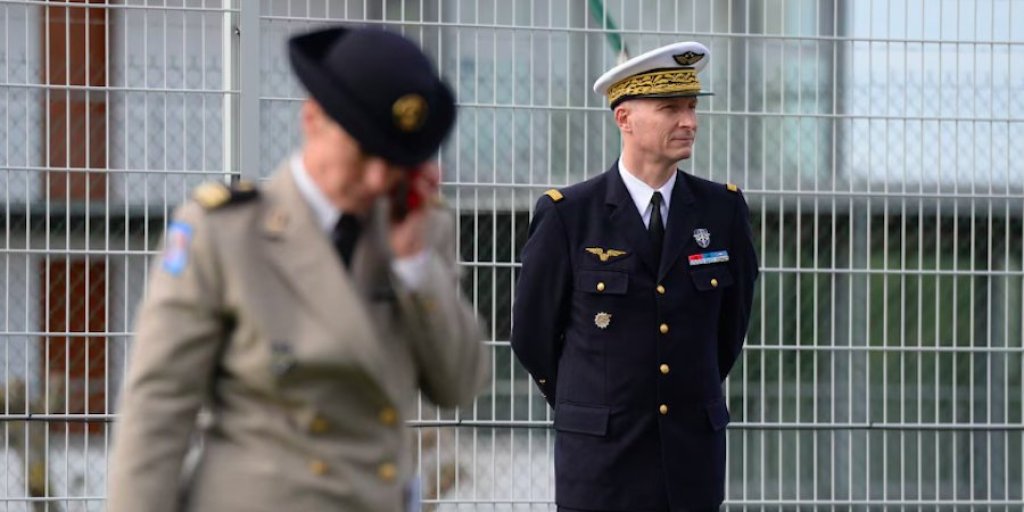
In an interview, retired General Didier Tisseyre, former cyber defense commander at the French Ministry of the Armed Forces from 2019 to 2022, explained that attribution resembles a police investigation, relying on technical evidence, attacker methods and tools, and what he called cyber intelligence. He said attackers often reuse code and spoof identities, making the chain of servers, accounts and devices hard to reconstruct.
Tisseyre said attacks are usually prepared for a long time, with attackers identifying vulnerabilities and hiding code before triggering an attack. Analysis after an incident can take days, weeks or months, and victims are advised to disconnect affected systems without deleting anything so evidence remains legally usable.
He also noted that European cooperation exists between technical agencies, such as France’s ANSSI, and through Europol and the French cybercrime prosecutor, though identifying responsible actors is difficult, since maintenance may be handled by manufacturers, contractors or trusted third parties. He said France’s policy treats a state-backed attack causing damage as a possible armed aggression, opening the door to lawful response, while attacks by lesser-known groups would call for a different response.
Tisseyre added that the spectrum runs from hobbyist hackers to organized cybercriminals and state-linked groups, and that some participants may not realize they are part of an attack. He said states increasingly use criminal or individual proxies to distance themselves from attacks.
France’s Cyber Crisis Coordination Center (C4), created in 2018, coordinates state cyber defense responses.