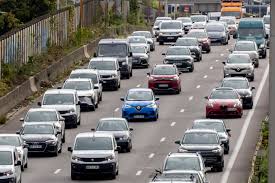
Speeding and distracted driving among work-related drivers by industry, Digi Mart USA News (France): Running out of time is a chronic problem for professional drivers. In this rushed environment, pressing the accelerator appears to be an instinctive reflex.
It is therefore unsurprising that speeding is the most commonly sanctioned offense among employees on work trips. Speeding alone accounts for 37% of major traffic violations recorded under the French Highway Code.
Not all occupations are treated equally. An analysis by British risk management company SambaSafety, based on a sample of more than 800 million kilometers driven, found that, contrary to expectations, transport and logistics professionals keep a lighter foot on the pedal, with a median rate of 48 incidents per 100,000 miles (160,934 km).
By contrast, construction workers drive at breakneck speed. The construction sector has the worst record, with a record rate of 254 incidents for the same distance, five times that of transport, followed by the petroleum sector (154 per 100,000 miles) and waste management (108).
In France, the Ministry of Labour notes that speeding accounts for 28% of fatal accidents on commutes between home and work.
Beyond drivers’ propensity for speed, the report highlights that this race against the clock is accompanied by a rise in inattention at the wheel, up 31% in two years. These moments of distraction are concentrated at more than 40% in the morning, a time slot in which pressure to arrive on time exposes drivers to multiplied risks.
road safety experts confirm this figure. On this side of the English Channel as well, inattention at the wheel is becoming a concern, accounting for 28% of accidents on work trips.
How can risky behavior among employees persist when onboard technology can monitor how they drive? “One of the most obvious findings […] is the gap between data collection and its proper use,” warned Kristy Kennah, insurance manager at SambaSafety.
While 90% of large fleets are equipped with tools capable of detecting driving behavior, only 26% of fleet managers use this information to target overly hurried drivers and require them to take training.
This silence about driving behavior extends to insurers. Only 35% of fleets share this data with their insurance companies.
To justify this lack of transparency, 64% of reluctant companies say they were never asked for it, and 31% see no financial benefit in reporting the data.
Yet the financial burden of repairs in France has jumped 26% in five years. In the first quarter of 2026, of the 3.4 billion pounds paid out by British motor insurers, nearly 2 billion went to repairs linked to accidents alone.
This should encourage companies to use their data to make employees aware of the need to slow down and keep their eyes on the road, in order to reduce their accident rates and gain leverage in negotiations with insurance companies.