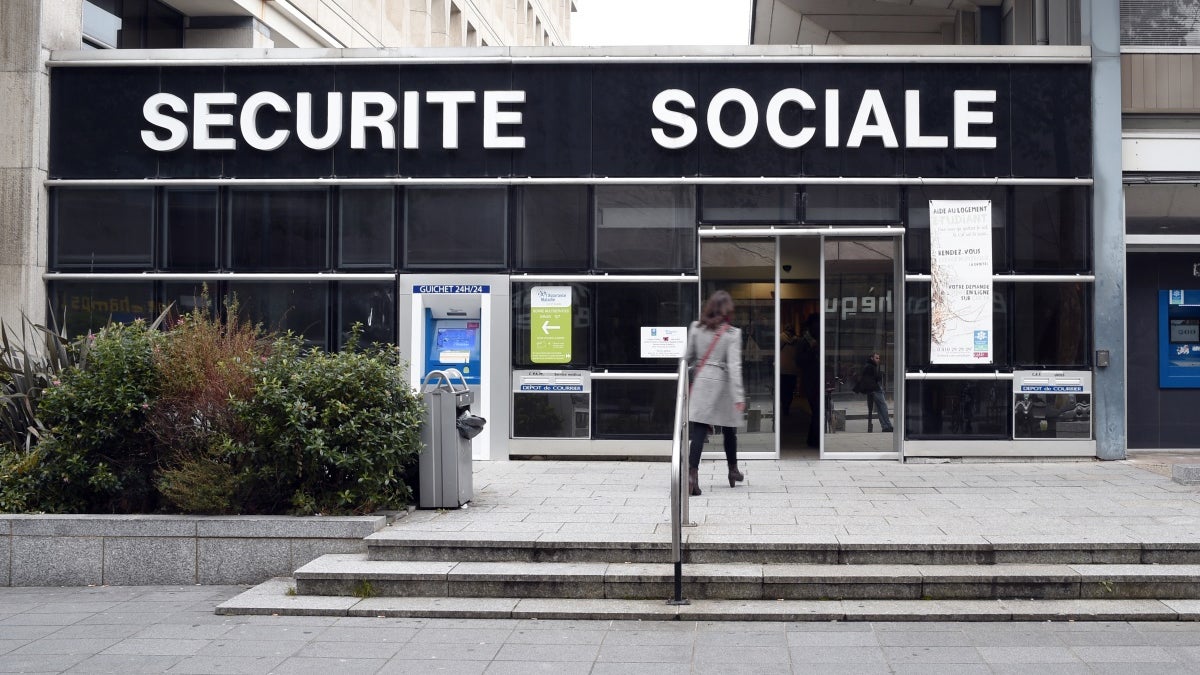
France social spending 32% of GDP compared with Germany, Denmark and the Netherlands, Digi Mart USA News: EU countries spent 5.183 billion euros on social protection in 2025, equal to 27.5% of GDP across the 28 member states, according to early Eurostat estimates published Friday. France, with social spending equal to 32.1% of its national wealth, remains among the EU countries that devote the most resources to social protection.
France moved into third place, behind Austria at 32.4% and Finland at 32.2%, after ranking second in 2024. The gap between the three countries is extremely narrow.
France has ranked near the top of the list for years because of its welfare state, which is among the most protective and most expensive in the world.
Each year, France spends more than 930 billion euros on social protection, or 57% of total public spending. This budget keeps growing naturally, notably because of population aging and regular inflation-linked increases in benefits.
According to INSEE, social benefits alone accounted for 60% of the rise in public spending in 2025, as they did in 2024.
Over a longer period, the share is even higher. François Ecalle, a public finance specialist and president of Fipeco, noted that of the 11-point increase in the ratio of public spending to GDP between 1975 and 2025, 8.5 points were attributable solely to social benefits, more than 77%.
Public Accounts Minister David Amiel echoed this point during budget debates in Parliament, as the government seeks to slow the growth of social spending. “For 50 years, 80% of the increase in public spending has not gone to young people or to future investments; it has gone to pensions and health,” he warned.
Éric Dor, director of economic studies at the IESEG School of Management, said, “We have favored social transfer spending over investment spending, a societal choice.” He added that a large part of the public deficit is now due mainly to underfunding of social spending, which is not offset by revenues despite very high contributions weighing on the productive sector. He described the growing “social debt” as the “elephant in the room” as France’s public accounts deteriorate.
France’s public deficit stands at 5.4% of GDP in 2026, far from the 3% target set by European rules. Reaching that target would require a budgetary effort of at least 120 billion euros.
Experts say social protection will necessarily have to contribute. “It is impossible to imagine this effort without touching 60% of public spending,” said Olivier Redoulès, director of studies at Rexecode.
Dor pointed to pensions, the largest spending item at about 400 billion euros, saying reform is indispensable. “When life expectancy rises and birth rates fall, you cannot leave things as they are,” he said.
Redoulès noted that the French pension system, known for its generosity, offers a lower retirement age and relatively higher pensions than neighboring countries, which partly explains the spending gap with the rest of Europe.
Health accounts for 20% of public spending, and France follows what Redoulès described as an extensive logic that is difficult to control. Coverage is particularly broad but not always efficient, as the state of public hospitals shows.
Employment policy also differs: France often tries to solve problems with public money, notably to address structurally high unemployment, though this does not always show in the results.
French generosity alone does not fully explain the high ratio of social spending to output. Measured per inhabitant, France is in the upper half but is not the top spender, Redoulès said.
According to Eurostat, a French resident received on average 11,634 euros in social benefits in 2024, compared with more than 15,300 euros for a Dane, 12,200 euros for a Dutch or Swedish resident, and more than 11,800 euros for a German.
Redoulès said the root problem is also low GDP per inhabitant, attributed to insufficient labor volume. In 2025, output per inhabitant in France was below the European average for the fourth consecutive year.
The lower this indicator, the more mechanically heavy public spending becomes.
Redoulès suggested France could look abroad if it wants to reform its social model, citing the Nordic countries, which have controlled public and social spending without cutting generosity while enjoying higher living standards than France. In those countries, coverage rates are relatively high but on a lower base.
For example, unemployment insurance contributions in France are capped at a high 16,020 euros, four times the monthly Social Security ceiling, a feature he said does not exist in Sweden.
In Sweden, health policy places greater emphasis on prevention and efficiency, with a pragmatic approach and patient accountability, along with outpatient care. Pensions adjust with the wealth created in the economy to ensure the country does not live beyond its means.
Redoulès summarized that the state remains very protective but acts sparingly and more efficiently without degrading public finances. He said the logic is the opposite of France’s, where everyone contributes according to means and receives according to needs, without asking who will pay afterward if revenues fall short.