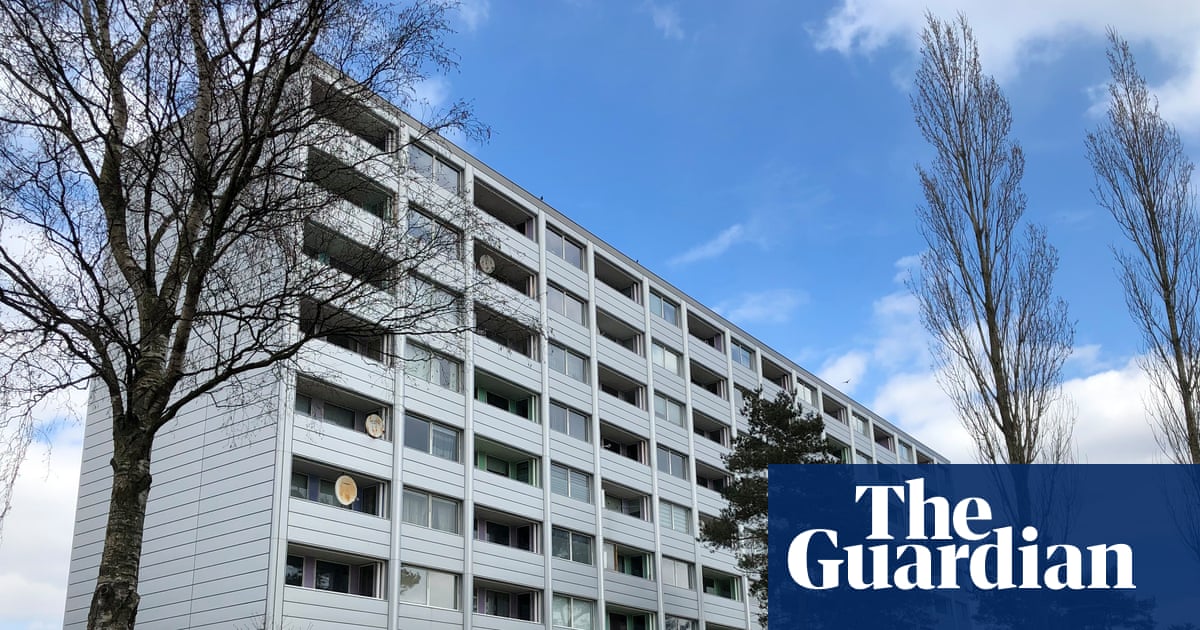
Denmark supreme court parallel societies ruling non-western residents eviction, Digi Mart USA News (Helsingør, Denmark): Denmark’s supreme court is expected to rule on whether the state’s classification of residents with “non-western” backgrounds is covered by racial discrimination law. The appeal was brought by residents who were evicted from Nøjsomhed-Sydvej in Helsingør, a city north of Copenhagen.
The outcome could have far-reaching implications for others who have been forced out of their homes under the controversial legislation previously known as the “ghetto law.” The government now refers to affected neighborhoods as “parallel societies.”
The residents, who have been unsuccessful in other courts, argue that the housing association’s evictions were intended to reduce the number of residents with a “non-western” background so the area would not become a “ghetto” and therefore subject to the legislation. The government has previously argued that the classification is unrelated to ethnicity.
In December, the European Court of Justice (ECJ) ruled that the legislation may be unlawful. The law requires housing associations to cut not-for-profit housing by 40%, including by selling or demolishing properties or terminating tenants’ leases by 2030.
The law also includes demolishing apartment blocks in areas previously labeled “tough ghettos” (now “transformation areas”) by the government, where at least half of residents have a “non-western” background. Other areas with similar socioeconomic conditions, such as high levels of unemployment or crime, are not subject to these measures.
The policy has been widely criticized by human rights groups, including Amnesty International. The European Commission Against Racism and Intolerance published a report last month stating there had been “no positive change in the authorities’ approach to the use of the ‘non-western’ category across various laws, policies and administrative practices, including in relation to the ‘parallel society’ legislation.”
The UN Committee on the Elimination of Racial Discrimination has called on Danish authorities to stop using the terms “western” and “non-western” in law and policy, and expressed concern that the parallel societies law has a “discriminatory impact on ethnic minorities.”
Residents of the Mjølnerparken housing estate in central Copenhagen filed a suit against the law in 2020, arguing that using their ethnicity to decide where they can live was discriminatory and illegal. Their case has yet to be returned to the domestic courts since December’s verdict.
More than 1,000 people were forced to move out because of the law.
Legal experts said the Nøjsomhed-Sydvej case, to be heard on Friday and Monday, could have implications for the Mjølnerparken case because it is likely to lead to a domestic ruling on whether “non-western” background is covered by racial discrimination law.
Susheela Math, head of legal at the NGO Systemic Justice, said: “If the supreme court decides that ‘non-western’ background is linked to ethnic origin and racial discrimination law, that raises huge questions for the Danish state.”
She said the state would then have to decide whether to abolish the categorization entirely, which could have ramifications across society.
“[The government] will refer to ethnic origin when it suits them but inside a court, no matter what you present, they say ‘non-western’ background has nothing to do with ethnicity and that they do not collect ethnic data,” Math said.
It is understood that residents of Nøjsomhed-Sydvej would be allowed to return to their homes if they win the case, which is expected to be decided later this month.
It is likely to be much more difficult for residents of Mjølnerparken to return to their homes if they win their case when it is heard, because their homes have been sold.
The Danish Ministry of Children, Senior Citizens, and Housing has been contacted for comment.