Bordeaux Marathon running industry growth, Digi Mart USA News (Bordeaux, France): Running has stopped being a passing trend and has become a full-fledged economic sector, according to a French report on the Bordeaux Marathon. Race bibs are allocated by lottery, shoes can cost 150 euros, and equipment makers are reporting record sales.
Caroline Pujol, president of Bordeaux Athlétisme, the club that organizes the Bordeaux Marathon, described the trend. She said that running was once a niche activity, but today everyone knows about it and has adopted it.
Each year, more people sign up for marathons, half marathons, trail races and other distances.
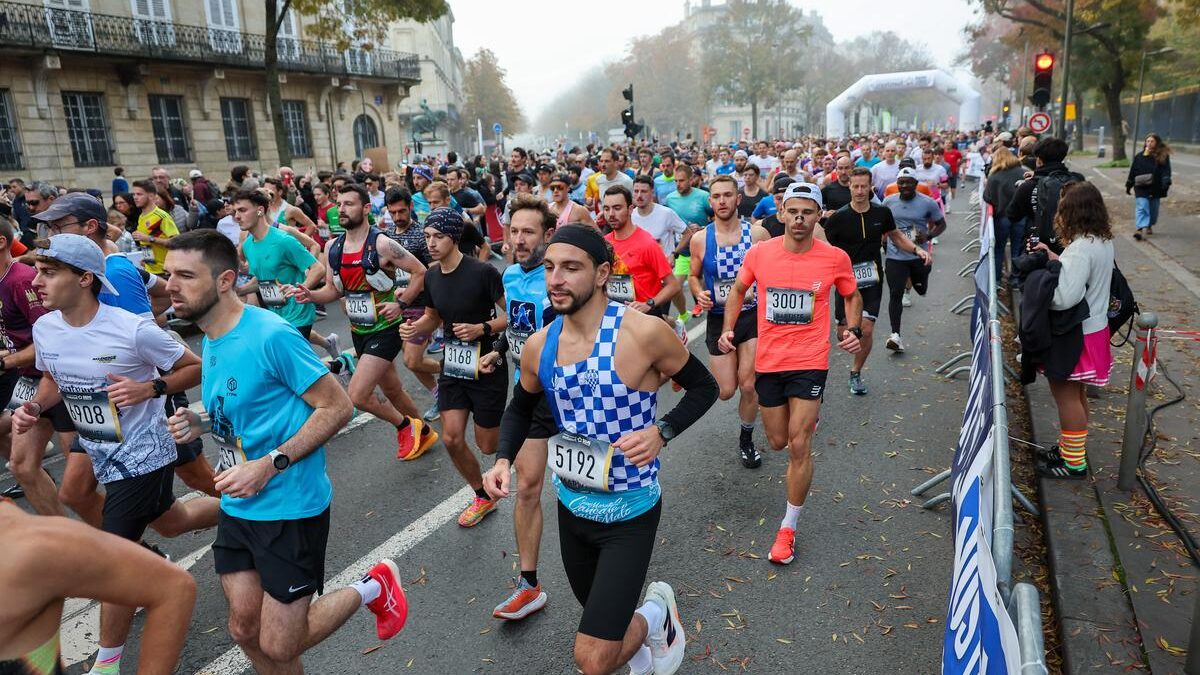
This Sunday, November 8, 34,000 runners will take part in the three Bordeaux events: the marathon, the half marathon and the 10 km. At the last Bordeaux marathon in 2019, total registrations across the marathon, half marathon and relay marathon were 18,000.
Thomas Delpeuch, director of mass-participation events at Amaury Sport Organisation (ASO), which organizes the Bordeaux race, said demand is very strong. He said that any race organizer can currently fill its events, but service quality and the participant experience will determine success once the enthusiasm cools, because runners compare events.
According to the report, 13.2 million people in France said they ran in 2025, about 1 million more than five years earlier. Around 8 million people did so in 2016.
Women make up 52 percent of runners, and 63 percent of new runners are women. Among runners with less than two years of experience, 80 percent are under 35.
The average age at the Paris Marathon has fallen from about 40 to 41 years before Covid to 37 years now.
The number of events is also growing. In 2025, 13,320 road, trail and cross-country races were held in France, and roughly the same number is expected this year.
Ticket sales for race bibs have an economic weight of 132 million euros, yet 62 percent of those surveyed said they had difficulty getting one. Because demand exceeds supply, fraud is increasing, especially in the resale of bibs.
Organizers, including ASO for the Bordeaux Marathon, have introduced or are considering official resale exchanges, since unofficial platforms may offer bibs that do not exist.
The pressure is greatest at major marathons. The Paris Marathon exceeded 60,000 participants in 2026, and 49 percent of registrants were running the distance for the first time with a golden bib.
For the 50th edition in April 2027, bibs will be allocated by lottery. London, which already uses a lottery, is an exceptional case: 1,338,544 people registered for the 2027 draw, which will award 60,000 bibs.
The London race now receives more applications than the Tokyo, Boston, Berlin, Chicago, Paris and New York marathons combined.
Equipment sales are benefiting from the boom. The running market grew more than 20 percent in 2025 and is approaching 1.5 billion euros, including 800 million euros for shoes and 400 million euros for apparel and accessories.
This contrasts with the wider sporting goods sector, where retail sales fell 0.3 percent this year.
Nearly 10 million pairs of running shoes were sold in France, and the average runner spends 550 euros a year. Globally, according to the strategic research institute Statista, two-thirds of runners planned to maintain or increase their spending in 2026.
Nutrition products and connected watches are also dynamic segments in a market that shows no sign of slowing.