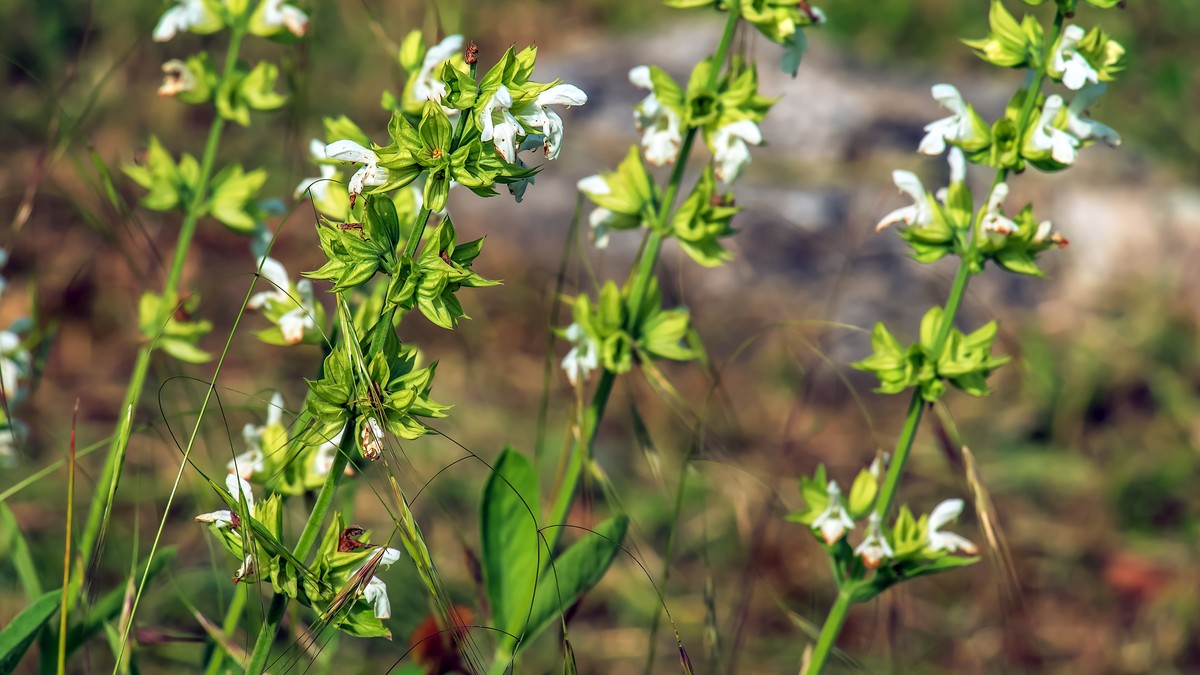
Einjähriger Ziest (Stachys annua) rediscovered on Kronsberg in Hannover after four decades, Digi Mart USA News (Hannover, Germany): A rare plant has been documented on the Kronsberg hill in Hannover, according to a press release from the state capital, the city of Hannover. The species is a small member of the mint family, reaching no more than 30 centimeters in height, with yellowish-white flowers arranged in small whorls around the stem, which appear between June and October.
The plant, botanically named Stachys annua and known in German as Einjähriger Ziest, was found on a municipal arable field on the northern Kronsberg, between the districts of Anderten and Bemerode. The most recent records of the species at this location date from the 1980s, meaning it had not been documented there for roughly four decades.
The discovery was not accidental. According to the city, it has systematically recorded which rare arable weeds appear on its own fields for more than 20 years.
The city described the find on its website as a “botanical sensational find.”
Leonard Schmalhaus of the statewide species protection program of the Lower Saxony State Agency for Water Management, Coastal and Nature Conservation (NLWKN) explained in the release that only one other confirmed location for the species currently exists in Lower Saxony, in the district of Hildesheim. According to the release, the species is listed as critically endangered on the state’s Red List.
Schmalhaus said the species reaches the northern limit of its range in Hannover and has also declined sharply nationwide.
The plant depends on warm, dry, lime-rich arable soils and is considered characteristic of such calcareous sites, according to the city. The city says the Kronsberg has lime-rich soils, which is why it calls the hill its “Noah’s Ark” for rare arable weeds.
The city says it aims to create more colorful fields on its land, with species such as corn poppy, field larkspur, toothed field salad and small venus’s-looking-glass. Local cooperation has been essential to the find.
According to the release, farms working some of the municipal fields have agreed to forgo plant protection products and mineral fertilizer on part of the land, which the city describes as essential for arable weeds to grow.
Justin Kirchhoff, head of the city’s department for environment and urban greenery, said in the release that this is a positive signal for preserving native biodiversity.
The city’s announcement does not state how many plants were found or whether a population capable of surviving the coming years has developed. Visitors may view the arable weeds on the Kronsberg during official guided tours in summer, but the city asks that people not enter the fields or pick plants.
The flowers can also be observed from the edge of the path during a walk on the Kronsberg.