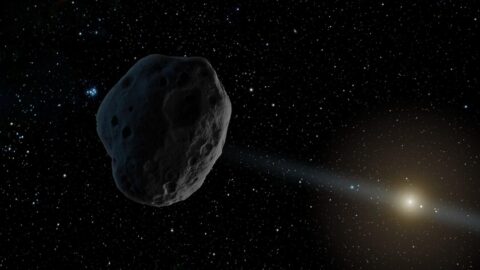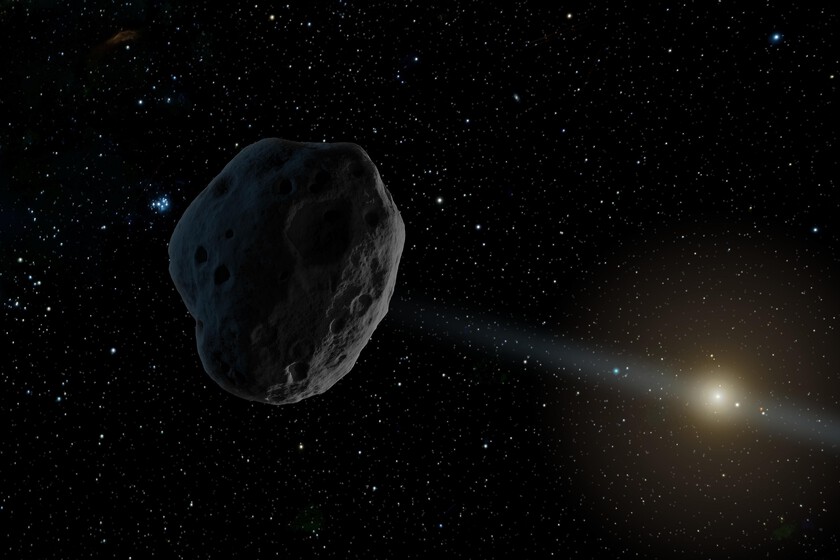
1998 KY26 asteroid acceleration, Digi Mart USA News: In 1998, an astronomer at the University of Arizona discovered an unusual object that appeared to be an asteroid but was accelerating. Asteroids normally move only under external forces such as gravity, and at most can show a small acceleration from the Yarkovsky effect, a thermal force caused by solar radiation.
The object, named 1998 KY26, showed acceleration greater than the Yarkovsky effect could explain, and for a long time it was thought to be a dark comet, an object resembling a comet but without a visible tail. Comets are generally icy and accelerate as their ice sublimates into gas that acts like a rocket thrust.
A new study by a team at the Georgia Institute of Technology, however, calculated the object’s temperature and concluded it could not retain enough ice to accelerate like a comet, weakening that hypothesis. The temperature estimates are indirect, based on models using known data: the object measures about 11 meters in diameter, rotates once every 5.35 minutes, and its reflectivity and possible composition are known.
These calculations suggest that even at its coldest points it does not drop below -61°C, while ice would need temperatures below -128°C to survive inside an object.
Further calculations indicate that even if ice made up only 1% of the object’s mass, it would be entirely lost within 2,000 years, and if that loss caused the acceleration, it would disappear within 62 years. The object may be billions of years old, but its time in its current orbit is unknown, so it may have only recently arrived and still be losing ice.
Some data still do not fit, however.
Earlier models also suggest 1998 KY26 may have formed in the asteroid belt, inside the snow line, the boundary beyond which water ice can persist. Because the belt lies in the ice-free zone, this would be inconsistent with a comet origin.
With the dark comet idea weakened, the Georgia Tech researchers support an alternative hypothesis: the acceleration may result from the object shedding dust grains from its surface as it rotates. The ejected material would produce a thrust similar to the gases released by comets.
The Japanese spacecraft Hayabusa 2 is currently traveling toward 1998 KY26 and is expected to arrive in 2031. It should be able to observe the surface up close and better determine the object’s composition, helping to identify the most likely explanation.