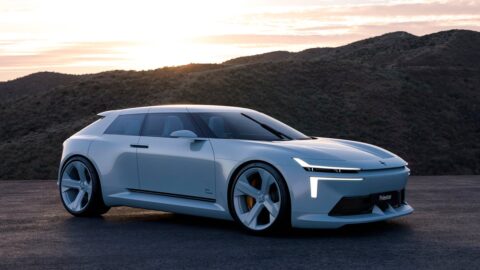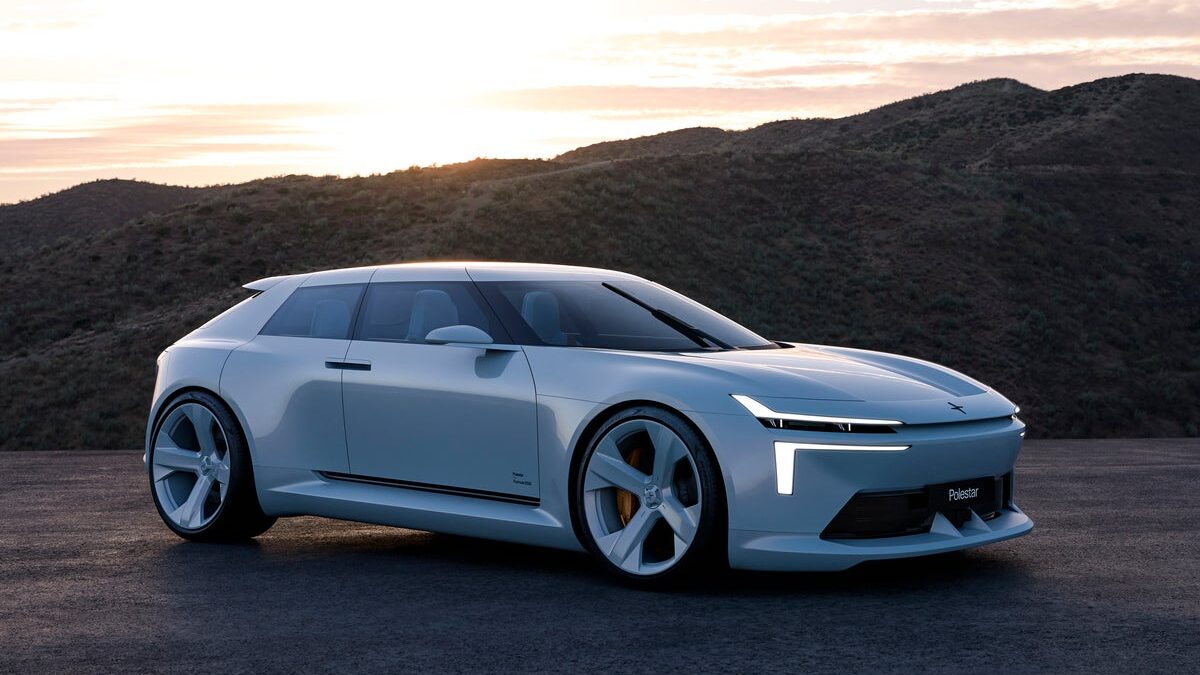
Polestar Formula 2030 electric sports car concept, Digi Mart USA News: Polestar has revealed a four-door electric sports car concept that previews a curvier new generation of models, complete with a cabin that rearranges itself and a return to something rather more familiar: proper buttons.
Called Formula 2030, it is the first show car created under new head of design Philipp Römers and previews design features heading for the next Polestar 2, planned for 2027, and the Polestar 7 compact SUV, due in 2028. The 7 is also planned for European production, expanding a manufacturing network that currently covers North America and Asia.
Inside, Polestar is changing the balance between screens and physical controls, with more for drivers to get their hands on. Below the central screen sits a panel of eight controls that can be tailored to the driver, including the type of control, with rocker switches or rotary controllers among the options.
Individual shortcuts can be programmed for favourite functions.
Juan Pablo Bernal, Polestar’s head of interior design, said: “As a performance brand, we see a renewed focus on the driver, and so we re-balance the digital and physical. We introduce physical buttons and controls, and we believe we have achieved a tactile harmony suited for our premium positioning.”
There is still plenty of screen space. A curved 20-inch driver’s display is attached directly to the steering column, while a 12.2-inch central screen sits in the console between the front seats.
Google Gemini provides a voice assistant occupants can chat to, and the screens move as the driver switches between Performance, Normal and Autonomous modes.
Slide the selector towards Performance and the central screen lowers until it sits flush with the console, while the steering wheel and driver’s display move closer to the driver. In Autonomous mode, the central screen stands upright and the seat and steering wheel move further apart.
A sensor normally hidden beneath a cover also emerges when the concept’s autonomous driving features are in use.
The four individual seats have inflatable cushions and side supports that mould around their occupants, and they are mounted low in the cabin. Doors that open in opposite directions leave no central pillar in the way when occupants climb aboard, though this is not expected to make it into production.
At 4,680mm long and 2,021mm wide, Formula 2030 sits between the forthcoming Polestar 2 and 7 in size. The concept’s roof is just 1,350mm from the ground, making it lower than the Polestar 5, while Polestar says the mix of low-slung styling and practicality draws on the Polestar 4 SUV.
A long bonnet, short overhangs and 22-inch wheels give Formula 2030 its sports-car proportions, with the cabin set towards the rear. The twin-blade headlights preview the face of the next Polestar 2 and are built into an aerodynamic wing across the nose.
A motorsport-style upright windscreen wiper is mounted centrally on wraparound glass that nods to the original Polestar 2. Polestar’s star emblem is projected into the panoramic glass roof above the occupants.
At the back, the familiar light bar makes way for new Single Blade lights, which Polestar says are heading for production. A rear wing sits on illuminated mounts, while more wraparound glass extends towards the side windows.
The paint, named Nitrogen, covers the body, wheels and lower trim, using a mix of gloss, matt and satin finishes. It is a shade developed for the concept and designed to react to natural light.
Gold details pick out the Brembo brake calipers, tyre valve caps and seat belts.
Maria Uggla, Polestar’s head of colour, material and finishes, said: “With the Formula 2030 concept we knew we had to do something that stands out, but we had to do it in a true Polestar way.”
Polestar’s work on materials continues inside. The seat backs combine European flax with a bio-based plastic, while exposed parts including the seat frames and the structural beam across the cabin use steel made with recycled material and renewable energy.
The company says the door interiors are fully recyclable, continuing its approach of using a single material to make recycling easier.
Specially made bags sit beneath a transparent boot floor, held in place by gold straps. Lifting the rear bodywork reveals the natural-fibre structure and Öhlins suspension dampers.
Up front, a gold brace frames a luggage compartment with dedicated space for racing helmets and a fire extinguisher.
For all its performance-inspired details, Formula 2030 remains a somewhat fanciful concept that might hint at forthcoming models, but is unlikely to see the light of day itself.