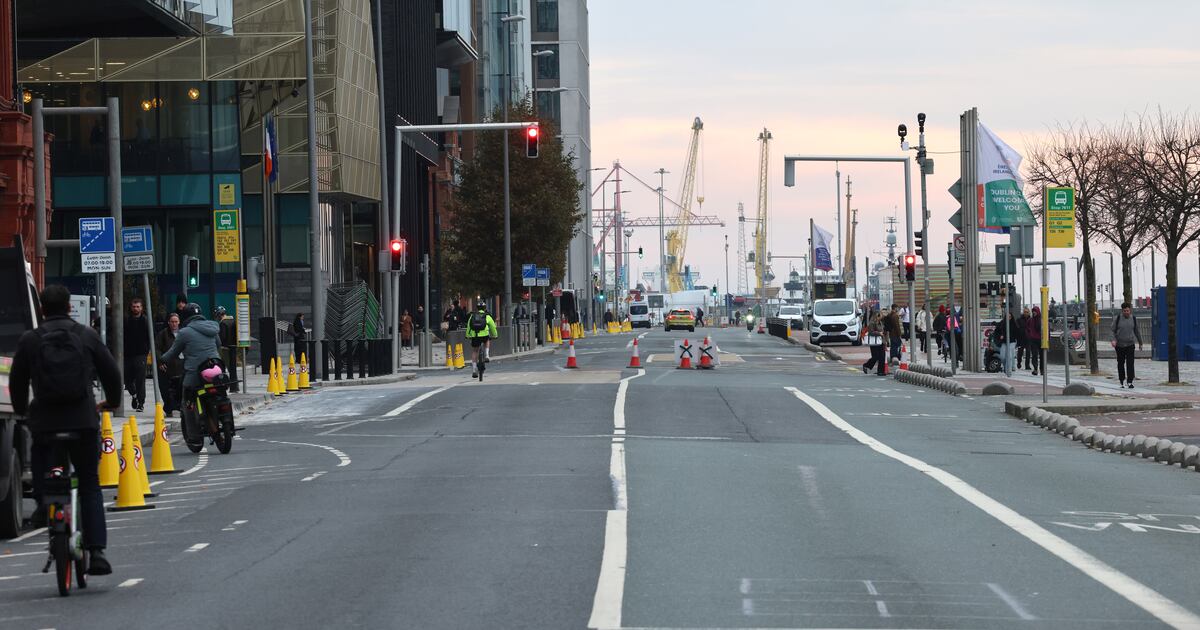
European Political Community summit Dublin, Digi Mart USA News (Dublin, Ireland): Today’s meeting of the European Political Community (EPC) at the Convention Centre in Dublin is the largest international meeting ever hosted by an Irish Government. It brings disruption, traffic restrictions, travel delays and street closures to the capital because of a vast and necessary security operation.
Some protests seem likely, and bomb scares, like the wave of hoax threats made against schools across Europe the previous day, remain a possibility. Public transport will be reduced and many city centre commercial outlets will be closed.
Security officials have significantly increased the size of the no-fly zone over Dublin this week, and the no-go zone around the Convention Centre applies to cars, bicycles and pedestrians alike. The threatened public sector strike is not now going ahead.
The scale of the meeting is considerable. It will bring together heads of state and government representing nearly 50 countries, with a combined population of 730 million people, double that of the United States.
The heads of the main EU institutions, as well as of the Council of Europe, the OSCE and NATO, will also attend, bringing the number of delegations to well over 50. Most delegations are from Europe, but Canada’s Mark Carney will attend. The presence of UK prime minister Andy Burnham is important given the EPC’s role in bringing the UK gradually back under a shared European umbrella.
The meeting takes place at a moment of particular significance. The outcome of the US midterm elections means there is now at least the prospect of closer co-operation and alignment between Europe and the US at Congress level on trade, artificial intelligence and the rule of law.
Meanwhile, Russia has stepped up its daily attacks on civilian targets in Ukraine. The attendance of Ukraine’s president Volodymyr Zelenskiy offers an opportunity for Europe to demonstrate solidarity as winter approaches.
The EPC is a relatively new format, first proposed by Emmanuel Macron after Russia’s invasion of Ukraine in 2022. Taoiseach Micheál Martin will chair it with the support of European Council president António Costa, a significant test for Ireland. The EPC does not take decisions, so the format will involve plenary sessions, smaller round-table discussions and bilateral meetings, with informal talks over lunch and dinner at the National Gallery of Ireland.
Although there will be no formal conclusions, delegations should be able to reach broad agreement on working together on shared security threats, including hybrid warfare, cyberattacks and disinformation. Ireland is not immune to these threats, as recent incidents affecting Aer Lingus, Ryanair, SuperValu and Irish and European schools showed.
Participants will also focus on the competitiveness of their economies, energy issues and enlargement. Separately, Ireland will host an informal meeting of the 27 EU heads of state and government at the Convention Centre the following day, where artificial intelligence will be discussed.
The heavy security and disruption will annoy Dubliners, visitors and businesses, but Bobby McDonagh, a former ambassador to London, Brussels and Rome, argues this should not overshadow the purpose of the meetings: protecting and promoting the security and prosperity of Irish and European citizens.