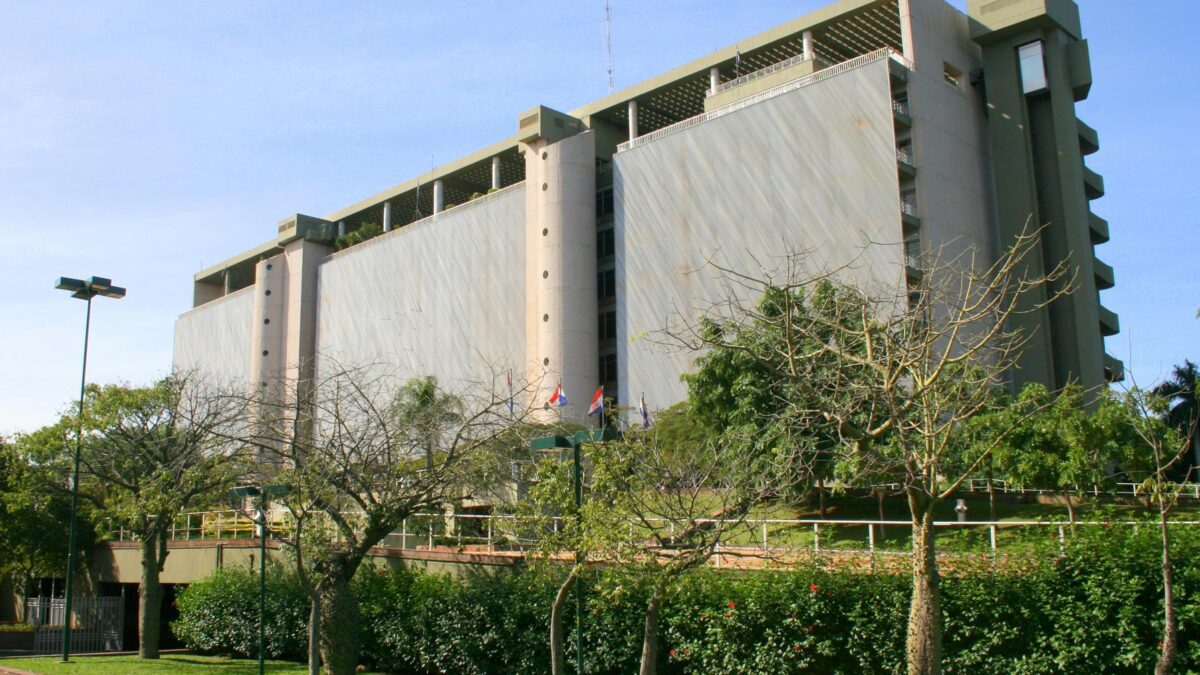
Paraguay Ueno Bank crisis and Santiago Peña resignation, Digi Mart USA News (Paraguay): The intervention of Ueno Bank, one of the fastest-growing financial institutions in Paraguay, has triggered a banking crisis that has spread to the government of President Santiago Peña. On Thursday, November 5, 2026, the president submitted his resignation while an impeachment process was advancing.
The dispute over whether to accept his resignation remains open after a legislative session ended without a quorum. The conflict affects millions of the institution’s customers and has put financial supervision, the handling of public deposits and relations between companies and authorities under review.
The Central Bank of Paraguay (BCP) resolved on November 2 to begin the resolution procedure for Ueno Bank after finding that its solvency ratio was below half of the required minimum. The process includes intervention to preserve assets, verify the bank’s equity and protect depositors.
According to international press reports, the institution served about three million customers. The closure of operations and the freezing of deposits made it difficult for people and families to access their funds, and led to protests outside the bank and against the government.
Reuters reported that the entity managed approximately 850 million dollars in public funds, a figure tied to the controversy over state deposits.
The Paraguayan Central Bank announced the start of guarantee payments to a first group of savers with deposits of up to ten million guaraníes, provided they meet specific conditions. The overall amount guaranteed under its legal framework reaches up to 75 monthly minimum wages per depositor and institution.
Peña formally submitted his resignation on November 5. However, the Chamber of Deputies approved advancing the impeachment process and, later, a joint session of Congress lacked a quorum while the resignation was being considered, according to ABC Color.
Therefore, at the close of this update, his departure could not be presented as a fully resolved institutional succession.
The president has rejected allegations of irregularities linked to his earlier business relationships. Investigations into banking management and public funds must distinguish suspicions and complaints from determinations made by competent judicial authorities.
The first channel is financial but indirect. A crisis of confidence in a country can change some investors’ risk perceptions of emerging markets, increase caution toward securities or intermediaries exposed to that market, and raise the cost of financing operations related to Paraguay.
This does not imply that Mexican bank accounts are frozen or that automatic contagion exists.
The second channel is commercial. According to Data México, from the Secretariat of Economy, Mexico City was among the main origins of Mexican exports to Paraguay in 2024, with 31.4 million dollars.
A contraction in activity, payment disruptions or exchange-rate variations could affect companies with direct operations in that market. The reach will depend on each company’s actual exposure.
The third channel is regulatory. The events underscore the importance of monitoring the solvency of institutions that take deposits, especially when they concentrate large numbers of users and public money.
In Mexico, the Institute for the Protection of Bank Savings (IPAB) guarantees eligible deposits at multiple-banking institutions up to 400,000 UDIs per person and per bank. Coverage is not per individual account, and not all financial products carry the same insurance.
Anyone considering opening an account or taking out a savings instrument can verify that the institution is authorized to take deposits in the registry of the National Banking and Securities Commission. The Paraguayan crisis is a significant international story; its main lesson for Mexico is to check the protection rules and supervisory quality of each institution.