Mexico cartel kidnapping of farmers in El Balcón, Guerrero, Digi Mart USA News (El Balcón, Guerrero, Mexico): An elderly man recalls how the gunmen toyed with them by asking which kind of death they preferred. A teenager describes his terror that he would be turned into a hitman, because the gunmen said they would send some of the captives to fight.
A man begged desperately to be shot so the suffering would end.
These residents are part of a group of eight people kidnapped in El Balcón, a community in the state of Guerrero set high in mountains covered with pine trees. One of them remains missing.
They say they were part of a group of 136 captives, a figure they heard from a gunman who requested food rations for the “squirrels,” as the captives were called because they had to bring both hands, cuffed, to their mouths to eat.
Cartels kidnap people to subjugate them, recruit them, or punish them. Families sometimes report their disappearance, but there are no clear figures on how many people may be held by criminal groups, or how many of those later found dead or alive, if they are located at all, passed through their hands.
The Associated Press spoke with six of the kidnapped people from El Balcón, most of whom spent 22 days in captivity, and with a dozen residents of the village. Their testimonies, all anonymous out of fear of reprisals, offer an unusual description of how cartels operate to control territory and provide clues about the possible fate of some of the more than 130,000 people missing in Mexico.
On September 24, dozens of armed men entered the community of 750 inhabitants, which sits on collectively owned land that forms part of a protected natural area, six hours from the nearest city by difficult rural roads, where the presence of authorities is minimal.
The gunmen captured and tied up whomever they encountered: an elderly man tending livestock with his 13-year-old grandson; a teenager helping his uncle treat a cow infested with screwworm; a driver, a mezcal producer, and two brothers in their twenties who worked in the fields.
“There were hitmen all along the road,” said the mezcal producer.
The cartels’ interest in El Balcón is not new, but its residents had always tried to stay out of their businesses. Decades ago, they decided not to grow opium poppy, the base of heroin that enriched drug traffickers, and they became a model of sustainable forest management.
More recently, residents faced the same dilemma as many Mexican towns: cooperate with the cartel or flee. El Balcón, with a strong community organization, rejected both options.
The attackers presented themselves as members of La Familia. Filiberto Velázquez, a priest and director of a local human rights center that assists the community, said the cartel aimed to control a route connecting central Mexico with the southern Pacific coast, where allies of the rival Jalisco New Generation Cartel operate.
El Balcón and its forest resources stood in the way.
On the day of the raid, the community learned what was happening almost in real time because all the communities in the area are part of a security network that activates immediate alerts.
When someone reported unusual movements, residents flew a drone and were still able to watch as the armed men took away the last members of the group of eight. The mobilization and public pressure were immediate.
They demanded government action to find the missing. Some soldiers set up camp in the village.
The farmers were taken to a house holding dozens of other captives. They slept packed together, the elderly man says.
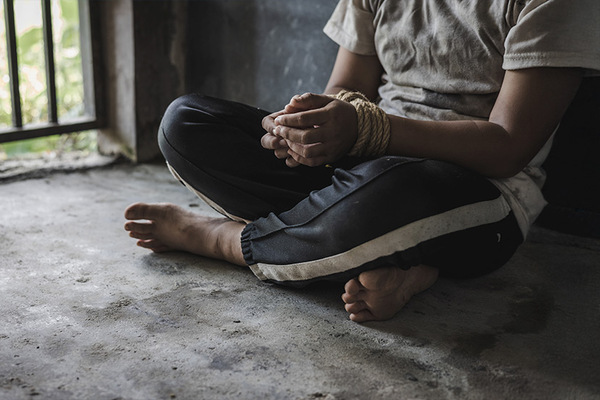
They were handcuffed, with blindfolds they could lift only slightly to eat.
First came interrogations—they were accused of belonging to the rival cartel—then threats to burn them alive, beatings with rifles, and kicks to the body, punishments that increased if they were heard speaking.
The extreme heat was suffocating. The teenager fainted several times from hunger and thirst.
One of the farmers had to drink his own urine. Delirium led to the removal of the man who remains missing.
His friends never saw him again.
Over the gunmen’s radios, warnings about military movements could be heard, which, they recount, meant rapidly packing more than a hundred people into trucks where they could barely breathe in order to change hiding places. Everyone feared each trip might be their last.
A few days later, they were brought before a boss who told them what the cartel wanted: to seize their lands and timber. The government, he added, was not going to help them.
“There we lost faith; we had resigned ourselves to dying,” said the mezcal producer.
One week into the kidnapping, the cartel released the elderly man’s grandson. The community interpreted the release as a criminal tactic to persuade residents to accept their demands.
The boy arrived in his village barefoot after walking for several hours. At his grandfather’s house he found relatives of the kidnapped people.
He says he was startled to see everyone crying and embracing him.
Using the information he provided and clues gathered by residents and their allies, the community drew up a map of where to search and handed it to the authorities. Protests and demonstrations demanding results from the Guerrero state government increased.
“He brought hope,” said his father proudly.
Meanwhile, desperation grew in the camp. “As time went on, the food got less,” the teenager says.
Nevertheless, details of what was happening there increased thanks to brief whispered conversations with other captives, some of them chained.
The mezcal producer says a man with a foreign accent said he had been held for two and a half years, and a woman said she was captured as punishment because her son had deserted the cartel.
The guards told other prisoners they would be sent to fight. The teenager’s worst nightmare was imagining what would happen if he were recruited, since he had no strength to stand, much less to bear the weight of a weapon or tactical gear.
On several occasions they heard helicopters. One day one flew very low while they were being loaded onto a truck.
Three of them explain that, as the gunmen briefly scattered, they lifted their blindfolds and saw it was a National Guard aircraft. Within seconds it was gone.
Around October 7, a video circulating online shocked El Balcón. Six of the missing men, in military uniforms and handcuffed, were being questioned by someone who presented them as members of a rival cartel.
One of the neighbors recognized his two sons. He assumed he would never see them again, because in Mexico many of these videos end with a point-blank gunshot.
“That day they put the rifles on us, they were aiming at us and told us what we were going to say,” says one of the brothers. They rehearsed three or four times.
They also expected a bullet. Instead, a boss told them they would be released.
Velázquez, the priest, is convinced it was the result of social pressure that prompted military operations, because no group wants the armed forces on top of it and its businesses disrupted.
On the day of their release, the six farmers were separated from the larger group. Their handcuffs were removed and they were put in a vehicle.
One was ordered to drive.
The teenager said he expected a bomb to explode or a burst of gunfire. The men kept going.
Some laughed nervously. Then they saw a military checkpoint.
On October 16, the army announced in a statement that it had located six missing persons thanks to “military intelligence work.”
When the six men were received by their families, joy turned to grief. One of the kidnapped men says he could not stop crying when he saw the wife of the companion who remains missing.
The Guerrero state prosecutor’s office continues to investigate. But Velázquez presses for the federal prosecutor’s office to take over, given the large number of victims.
Authorities did not clarify to AP whether they are searching for the roughly hundred people residents say were held with them.
Meanwhile, in El Balcón, the men gather at night to ease their fears and think about the future. Some talk of emigrating.
One recent night they grilled meat to share with the soldiers who have spent a month protecting the community, in the hope that they will not be left alone.