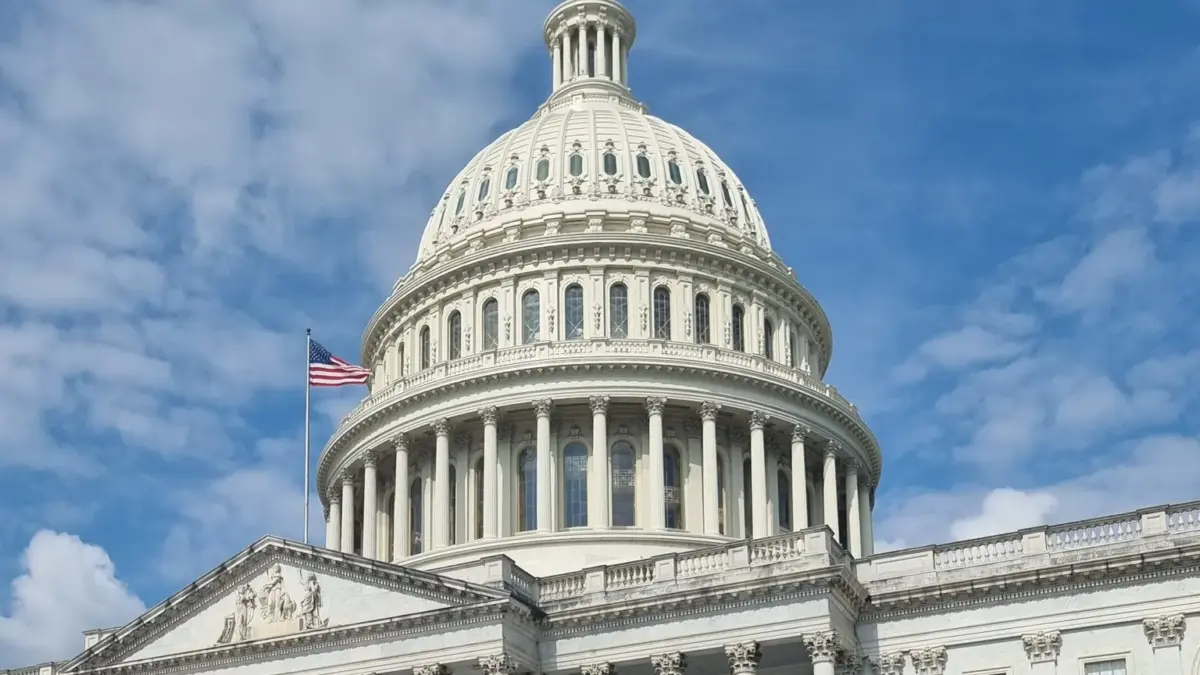
Democratic Congressional Win and Mexico, Digi Mart USA News: The Democratic Party’s victory in both chambers of the U.S. Congress changes Mexico’s interlocutors in Washington, but it does not replace the administration of Donald Trump or by itself resolve trade and migration tensions.
For the government of Claudia Sheinbaum, the scenario requires negotiating with the White House and, from January 2027, with a legislature whose majority differs from the presidency.
The most immediate issue is the Agreement between Mexico, the United States and Canada (USMCA), which remains in force after the joint review of July 2026. The United States did not then agree to extend it for a new 16-year period, so the three partners entered a process of annual reviews.
This does not mean the agreement has ended.
There is no automatic relationship between the partisan makeup of Congress and the extension of the treaty. On July 1, U.S.
Trade Representative Jamieson Greer announced that his country would not renew the agreement in its current form, but that it would remain in force while discussions continued. The official USTR communication ratified this position.
Mexico’s Secretariat of Economy reported that the USMCA remains in force until 2036, except for the legal mechanisms provided for, and that the parties may extend its validity if they reach an agreement in an annual review.
Negotiating topics include rules of origin for the automotive sector, steel and aluminum, agriculture, economic security, regional supply chains and conditions for investments from third countries. These issues were listed by the USTR and the Secretariat of Economy after the July talks.
A Democratic Congress can hold hearings, review sector impacts and legislate on trade matters. However, Trump retains certain powers to pursue trade restrictions and apply measures under existing laws.
It would therefore be incorrect to say that the Democratic victory implies the elimination of U.S. tariffs.
Mexico’s economic exposure is considerable. The USTR estimates that bilateral goods trade reached 871.6 billion dollars in 2025: U.S.
exports to Mexico of 337.3 billion and imports from Mexico of 534.3 billion. These official figures explain why any change in rules of origin or import costs affects manufacturers, suppliers and workers in both countries.
Border issues will remain on the bilateral agenda. Congress controls resources and can oversee security and migration programs; the White House, for its part, retains executive powers over law enforcement and diplomatic conduct.
There is no basis to assert that the electoral change will immediately suspend deportations, raids or surveillance measures.
For Mexico, negotiations will also have to address the fight against arms and drug trafficking, information sharing, migrants’ rights and working conditions. On these issues there are differences within both U.S.
parties, and positions in Congress are not always uniform.
The situation of families receiving remittances and of sectors linked to the United States will depend on measures actually approved, on economic developments and on migrant employment. Likewise, it is not possible to say that the Mexican peso will necessarily appreciate or depreciate because of the election result.
Greater executive oversight could change investor expectations, but it could also generate difficult negotiations over public spending, interest rates and trade. Mexican companies should watch USMCA reviews, tariffs in force, manufacturing decisions and upcoming trade appointments.
Mexico’s challenge is not to bet on one U.S. party but to protect its interests with verifiable agreements.
The first relevant signal will come from decisions of the Trump administration and, afterward, from the installation of the new Congress on January 3, 2027.
Information cutoff: morning of November 4, 2026. The implications described are institutional scenarios, not measures already adopted.