Camargue Delta climate threats and local adaptation, Digi Mart USA News (Camargue, France): Rising water levels, erosion, storms and soil salinization are already disrupting daily life for people who live and work in the Camargue, a distinctive territory in southern France lying between sky, lagoons and the Mediterranean. Adrien Gavazzi, a journalist with ICI Provence-Alpes, meets women and men working to protect this unique land, according to a publisher article from FranceTvPro.fr.
About 30 kilometers from the Mediterranean, Julien, a winegrower, is already facing the effects of salt. Salinization is scorching his vines and undermining the balance of his family farm.
To adapt, he is expanding crop diversification and, after rice and wheat, is now betting on pomegranates, a crop better suited to the new conditions.
“We got this idea while watching the 8 o’clock news, which was about Spanish farmers and plantations just a few hundred meters from the sea. So we asked ourselves, why not us?
Some neighbors still wonder about the origin and nature of this fruit, but the gamble is on its way to succeeding.”
During his visit, Gavazzi also meets Frédéric, who is involved in preserving the Pont de Gau, one of the key sites for biodiversity in the Camargue. Together with his brothers, he continues the work inherited from their father: maintaining the fragile balance of an area essential to thousands of birds.
“The Camargue is multifaceted. It is like a very large service station for many birds, migratory or not.
It is essential to maintain it so that each species can refuel before continuing its journey.”
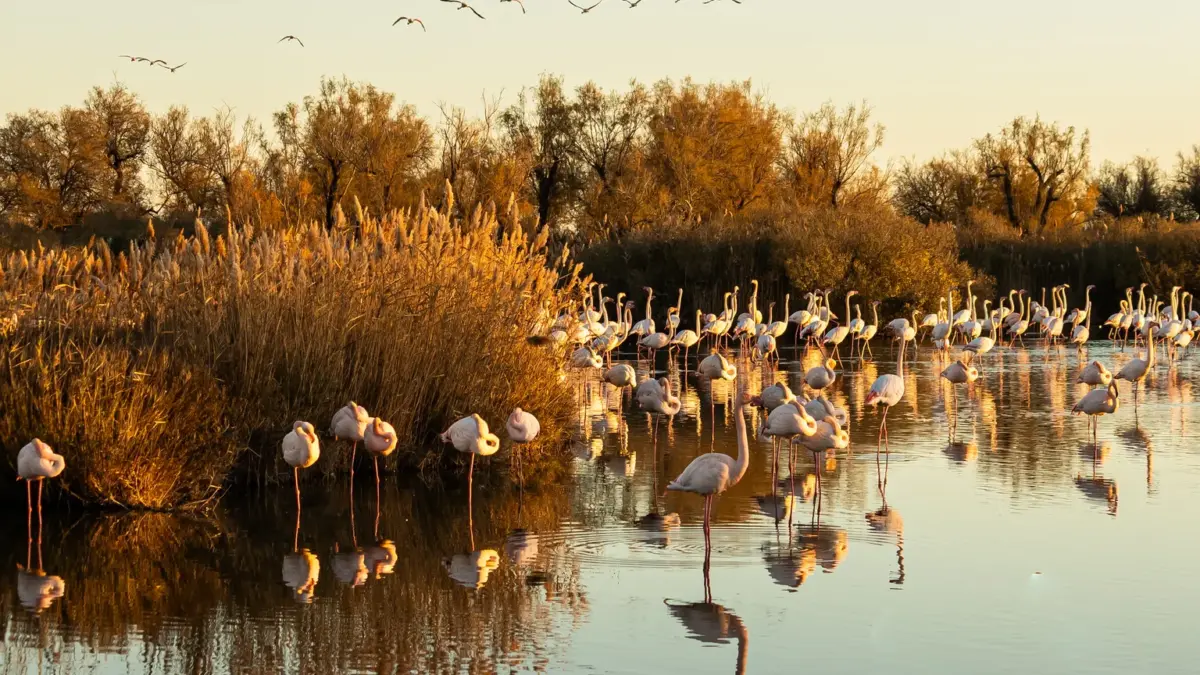
The delta is more than an emblematic landscape; it is a vital refuge for wildlife. Gavazzi witnesses one of the most striking moments of his journey: the takeoff of hundreds of flamingos returning each evening to their shelter.
The spectacle draws visitors from around the world, especially during the courtship display in the heart of winter.
Another reality brings a different urgency. Aude and Aurélie, two sisters who run the family manade (a traditional cattle-raising operation), see rising water as a present concern rather than a future projection.
Their pastures are increasingly flooded, forcing them to consider gradually relocating their activity.
“We have already bought ten hectares of land farther north, but we would need much more. And in the Camargue, land is extremely expensive.
When the sea rises in winter, we are anxious. And when the good weather returns, we enjoy these lands, which are incredible.”
Through these life stories, Gavazzi portrays a Camargue that is both spectacular and threatened, where attachment to the land collides with the climate emergency. The episode highlights women and men who adapt, innovate, protect and anticipate, defending a landscape, a way of life, a natural balance and a collective memory.