11 novembre 2026 armistice commemoration France, Digi Mart USA News (France): France commemorates the armistice of 1918, the agreement between Germany and the Triple Entente (France, Great Britain, United States) that marked the end of the First World War, also known as the Great War. The signing paved the way for the Treaty of Versailles of 1919 and suspended fighting that had raged for four years between the two sides.
Each year in Paris, the Élysée Palace marks the armistice. Across metropolitan France, the day is observed with a series of ceremonies honoring soldiers of the Great War who died for France, at some 30,000 war memorials built in towns and villages across the country.
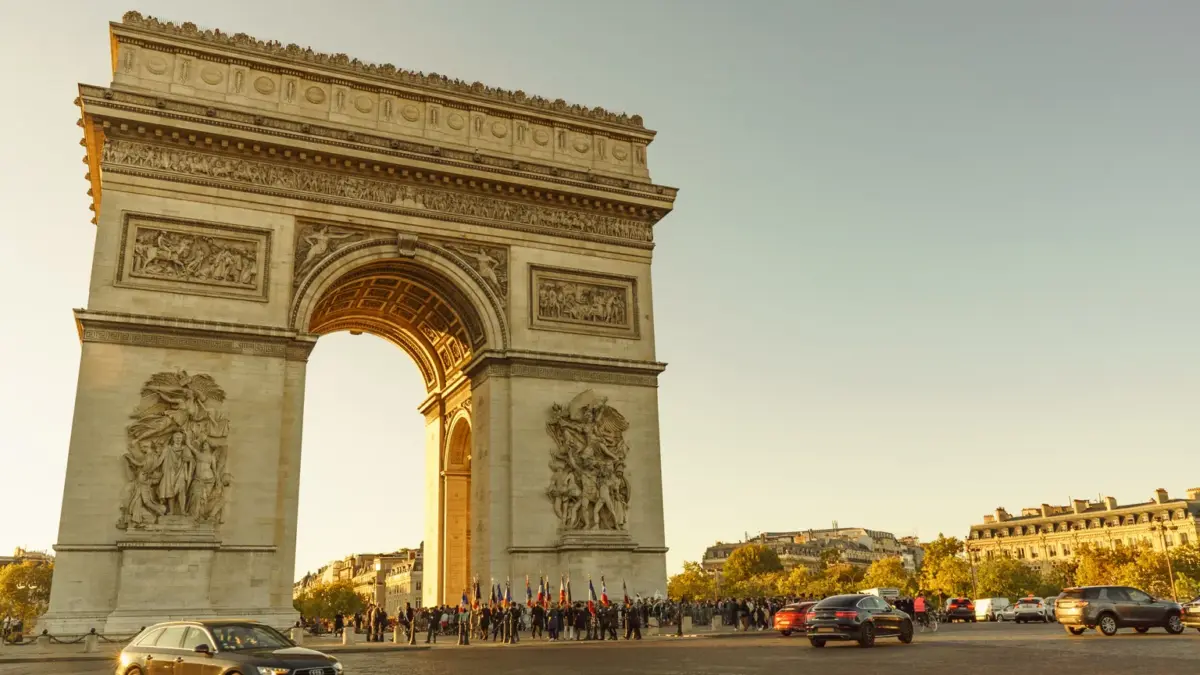
For the 108th anniversary of the November 11, 1918 armistice, the president of the Republic will wear the Bleuet de France on his lapel and lay a wreath of tricolor flowers before the statue of Georges Clemenceau, who served as president of the Council during the First World War. Escorted by the Republican Guard, he will then walk up the Champs-Élysées and lay a second wreath at the tomb of the Unknown Soldier beneath the Arc de Triomphe, before rekindling the flame.
At 11 a.m. on November 11, commemorative bells ring in every village in France, marking the hour when the Allied victory was announced.
Two minutes of silence are observed nationwide, and the rest of the day offers further occasions to retrace the steps of the 1918 armistice.
The date was chosen for its significance in France: it coincides with the traditional feast of Saint Martin, patron saint of the Franks. The guns fell silent at the eleventh hour of the eleventh day of the eleventh month of 1918 on the front in northeastern France, and consequently across Europe.
Soldiers climbed out of the trenches, but the celebrations were marked by mourning. From 11 a.m.
on November 11, 1918, bells and bugle calls announced the end of fighting on the Western Front, after four years of war that left France drained and 1.5 million victims, most of them young. In total, the Great War caused more than 8 million deaths and casualties.
At 4 p.m., at the Palais Bourbon, Clemenceau read the armistice terms, greeting Alsace and Lorraine while paying tribute to the Nation. In 1919, deputies adopted a plan to honor an unknown soldier who died in the First World War, an anonymous symbol of all the Poilus.
The following year, the unknown soldier who would be transferred to Paris was chosen by another soldier at Verdun, who placed a bouquet of flowers on one of the coffins. In 1920, Parliament unanimously passed a law granting the honors of the Panthéon to the remains of one of the unidentified soldiers killed in the 1914–1918 war, to be interred beneath the Arc de Triomphe.
This took place on January 28, 1921.
On November 24, 1922, Parliament declared November 11 a national holiday named the Day of Remembrance, making it a public holiday. The following year, on November 11, the Minister of War André Maginot lit the Flame of Remembrance, an idea proposed by several artists.
A Flame Committee has since been charged with rekindling it every evening at dusk. The flame has never gone out, even during the Occupation.
To keep it alight, a strict rekindling ceremony has been held daily for 92 years, always the same. It takes place every evening at 6:30 p.m.
Associations march in procession to the Arc de Triomphe, with wreath bearers at the head followed by flag bearers. The Flame flag, a bugler and a drummer of the Republican Guard are positioned near the sacred slab.
The Flame’s bugle call sounds, the flame is rekindled, and the wreaths are laid. Then the “Aux Morts” call sounds, the flags are lowered, and a minute of silence follows.
Participants sign the Golden Book, exchange salutes, and gather at the tomb to hear musicians play “Honneur au soldat inconnu.”
November 11 marks the anniversary of the 1918 armistice, signed by Germany and the Triple Entente and leading to the Treaty of Versailles of 1919, which suspended fighting that had raged for four years. Each year in France, the day is marked by ceremonies honoring soldiers of the Great War who died for France, at some 30,000 war memorials in towns and villages.
The armistice text was negotiated and finalized in the “Armistice Wagon” on November 11, 1918, at 5:15 a.m. The railway car served as Marshal Foch’s command carriage near the Allied headquarters, not far from the Rethondes station in the Oise department.
The armistice took effect on the front at 11 a.m. on November 11, 1918.
By signing the agreement at Rethondes that day, the Allied forces and Germany officially ended hostilities, subject to several conditions. On the same day, Emperor Charles I of Austria renounced the throne, ending a Habsburg dynasty that had ruled for more than 600 years.
For a century, November 11 has symbolized the close of the Great War, though many former schoolchildren know little of its history.