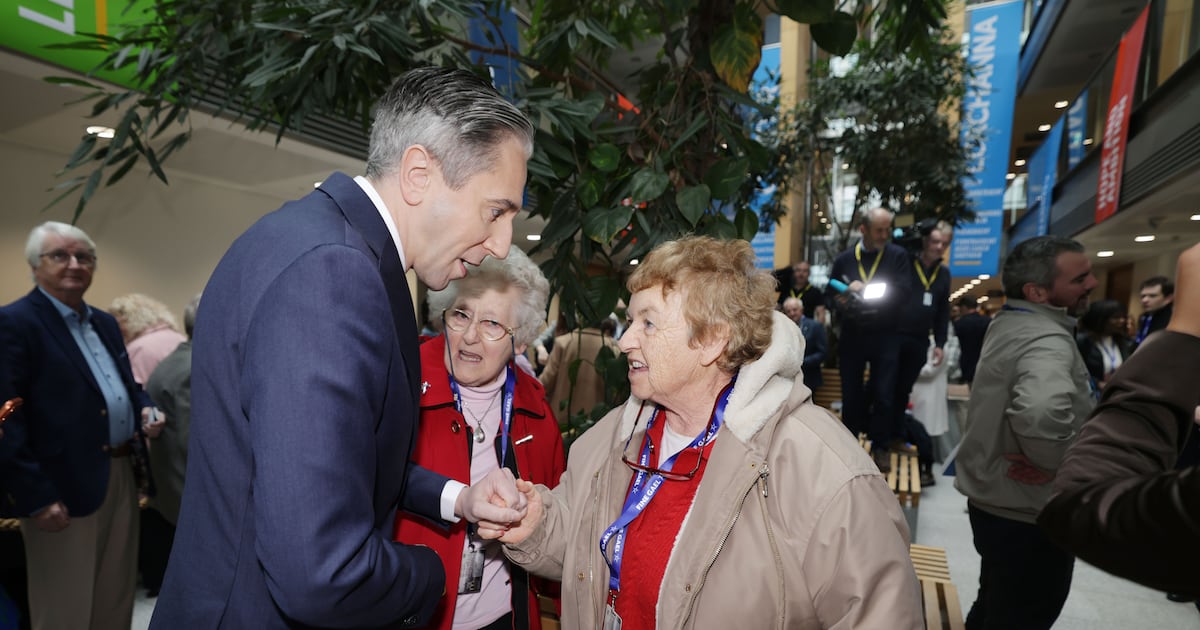
Fine Gael Leader Simon Harris, Digi Mart USA News (Cork, Ireland): Fine Gael leader Simon Harris responded to questions about his party’s identity, raised this week by its own Commission for Renewal, by setting out an identifiably right-of-centre approach in his ardfheis speech in Cork on Saturday evening. He stressed citizens’ responsibilities as well as their rights, promising “penalties” for those who prefer welfare to work and a “much more demanding approach to how public money is spent.”
Harris has had a difficult few weeks amid controversy over the handling of Patrick O’Donovan’s budget row with RTÉ and O’Donovan’s subsequent illness. This week, the party’s Commission for Renewal reported that many people “do not have a clear idea” of what the party is about.
It recommended that Fine Gael offer “a clear and shared understanding of why it exists, what it seeks to achieve, the Ireland it wants to help create and the principles that should guide its choices and actions.”
“The first requirement of renewal,” the commission said, “is, therefore, clarity.”
Speaking to delegates and to the country in his live televised address, Harris sought to offer some clarity. In his first minute, he gave a clear salute to the pro-enterprise, centre-right heartland of Fine Gael: “We are the party that represents the person who gets up early in the morning and does a good, decent day’s work.
We are the party that fights to put more money back in people’s pockets and that backs small businesses.”
What followed set out an emphasis on responsibilities as well as rights. “Let’s be honest, the debate has got a bit out of whack in this country where we only hear one side,” he said.
“Rights must always be balanced with responsibilities.”
Harris also addressed welfare fraud, a longstanding focus of the right. “The dole is a safety net, not a way of life,” he said, promising penalties for those who refuse to engage with efforts to get them to work.
Pledges followed to ensure “a much more demanding approach to how public money is spent” and to “maintain a tougher response to illegal immigration.” He spoke of the need for more gardaí and more prison spaces, as well as the importance of building defence capability.
Many of these areas fall within the purview of Fianna Fáil ministers in the Coalition, and at least one of them, an initiative to examine public spending, has already been announced by Minister for Public Expenditure Jack Chambers in his budget speech.
Harris has not in the past identified so clearly with one side of Fine Gael’s traditionally dual identity, which includes both Christian democrat and “just society”/social democrat-adjacent wings. If he is definitively setting a direction, this is a significant speech.
But it will only be possible to say that if it is followed by action.
For now, his speech is likely to please those inside and outside the party who want to see it adopt a clearer, centre-right identity. But the public, who tend to pay less attention to what politicians say and more to what they do, will be harder to impress.
Former taoiseach Leo Varadkar also talked about supporting the people who get up early and cracking down on welfare cheats. But Varadkar found that doing tough centre-right things, such as prioritising tax cuts over increases in public spending, involves decisions that are unpopular with many people.
It is also harder to do this in a coalition government, where partners may not agree to take part in a party’s political rebranding. Harris has sent a clear message.
Party and pundits alike will now watch to see whether he follows it with action.