New Zealand election overhang strategy and Epsom electorate race, Digi Mart USA News (New Zealand): Coalition parties are clashing over the election overhang strategy rather than focusing their attacks on the left bloc. ACT’s Paul Henry has called National “two-faced,” former ACT and National leader Don Brash has taken out a full-page newspaper advertisement backing the overhang strategy, and former Prime Minister John Key is urging voters in Epsom to back Paul Goldsmith over David Seymour.
The overhang strategy, promoted in separate campaigns by billionaire Harry Mowbray and by Reality Check Radio, encourages supporters of the right bloc to give their electorate vote to National while giving their party vote to ACT or New Zealand First. The aim is to create an “overhang” and secure extra seats.
However, the strategy could keep top-ranking National list-only MPs such as Nicola Willis and Gerry Brownlee, as well as frontbench electorate candidates at risk such as Paul Goldsmith and Chris Bishop, out of Parliament.
In keeping with electoral law, both ACT and New Zealand First needed to sign off on Reality Check Radio’s full-page advertisement written by Brash, and on Friday both parties confirmed they had done so. Christopher Luxon has said he fears that dividing the right vote could allow the left to take power.
National leader Christopher Luxon said on Sunday that he “disagrees completely” with the strategy and urged voters to give both votes to National. “It’s confusing messaging at the time of a tight election and risks actually a Labour Party coming through and forming a coalition government,” he said.
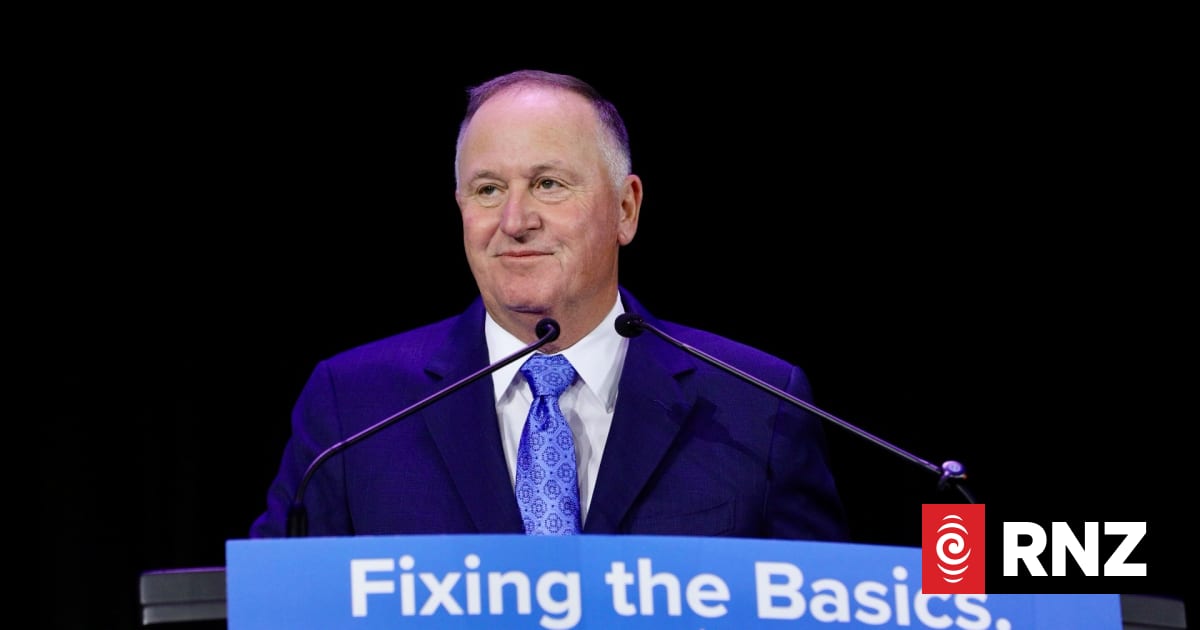
Goldsmith, who currently holds 10 portfolios, risks losing Epsom to incumbent David Seymour, who has held the electorate since 2014. On Sunday, Key urged voters in the electorate to back Goldsmith in a social media video.
In it, Key said that 15 years ago he had made it sensible for Epsom voters to give their electorate vote to Seymour of ACT and their party vote to National. He said that approach still made sense for party votes, but asked Epsom voters to also give their electorate vote to Goldsmith, whom he described as a tremendous minister.
He added that “everyone knows ACT does not need to win the seat of Epsom, so it’s a slightly different message.”
Key’s earlier deal with Seymour had been designed to ensure ACT returned to Parliament even if the party received less than 5 percent of the vote. ACT candidate Paul Henry described the change in stance as “two-faced” and “arrogant,” asking how Key could promote a message that contradicted what he said as prime minister regarding Epsom.
Henry said National was claiming there was “something wrong with us” over strategic voting, and pointed to a letter from Goldsmith urging people not to vote for Seymour because “he’s going to get in anyway.”
National’s other coalition partner, New Zealand First, has also backed the strategy. Leader Winston Peters warned on Saturday that a party vote for National would be wasted.
At a public meeting on Sunday, he said it was “astonishing” that Luxon and National were telling people not to split their vote, given voters had been able to do so since MMP was introduced in 1996. He said the danger of the right bloc losing was “clear.”
Labour leader Chris Hipkins said he would be open to discussions about constitutional reform to ensure overhangs do not occur at future elections, but said “it’s not easy to do.” He warned against the issue becoming “a political football where parties trying to manipulate the electoral system to their own advantage.”