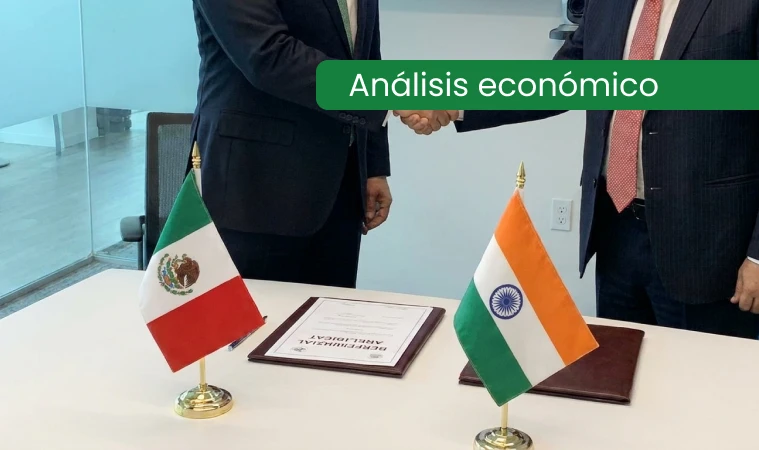
Mexico and India trade negotiations, Digi Mart USA News: Mexico and India have opened negotiations that could expand economic ties between two significant economies, but one point needs to be clear: no new preferential trade agreement is in force yet. On October 28, 2026, both governments signed the Terms of Reference, the document that sets the framework and roadmap for negotiations.
The outcome will depend on concrete concessions, the rules agreed and the ability of companies to take advantage of them.
The news matters for a country that needs to widen trade opportunities without weakening its current strategic relationships. Diversifying does not mean replacing the North American market, but building options that reduce risk and provide access to different customers, technologies and production chains.
The challenge is not to export more at any cost, but to ensure that agreements translate into productive investment, better jobs and responsible access to necessary goods.
According to a statement from India’s Ministry of Commerce and Industry, the delegations set topics for negotiation: market access for goods, rules of origin, customs procedures, trade facilitation, dispute settlement, sanitary and phytosanitary measures, technical barriers and trade defense mechanisms. These subjects may appear purely legal, but they determine who can sell, what requirements must be met, and how consumers and producers are protected against unfair practices.
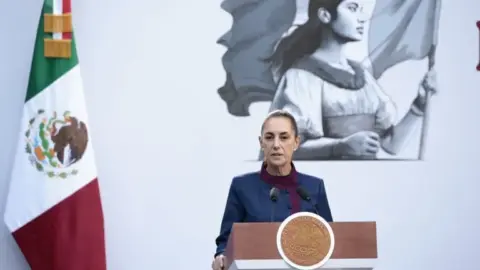
The meetings included Rajesh Agrawal, India’s Secretary of Commerce, and Luis Rosendo Gutiérrez Romano, Mexico’s Undersecretary of Foreign Trade, representing Marcelo Ebrard. The process continues the political understanding reached by Claudia Sheinbaum and Narendra Modi during their meeting at the G7 in Canada in June 2025.
Signing a roadmap does not mean that tariffs have been eliminated, import quotas opened or procedures reduced. Nor does it mean that goods from India will automatically receive preferences under the Mexico-United States-Canada Agreement.
Compliance with rules of origin and other requirements will remain decisive. Treating anticipated benefits as already negotiated would confuse expectations with results.
India’s Embassy in Mexico reports that bilateral merchandise trade reached $11.09 billion in 2025. Of that total, about $9.13 billion corresponded to Indian exports to Mexico and $1.969 billion to Indian imports from Mexico.
From Mexico’s perspective, the difference represents a trade deficit of about $7.16 billion: for every dollar exported to India, roughly $4.60 was imported.
The figure deserves attention, but it should not be used as an automatic diagnosis of harm. Importing vehicles, electronic components, machinery or chemical products can contribute to domestic production when those goods are integrated into local processes.
An unequal balance does, however, raise the need to examine barriers to Mexican exports, scale limitations, logistics costs and opportunities to sell higher value-added products.
The Indian embassy cites automobiles and auto parts, pharmaceutical products, engineering and chemicals among the relevant goods in the exchange. For Mexico, identifying opportunities requires looking beyond large corporations to small and medium-sized companies that can join production chains as suppliers, provide specialized services or make more sophisticated goods.
The delegations identified potential in the automotive industry, electronics, pharmaceuticals, agri-food, energy, critical minerals, medical devices and advanced manufacturing. A well-designed agreement could reduce administrative costs, expand markets and offer certainty for long-term investment.
However, each industry faces different conditions, including health standards, intellectual property, logistics capacity and labor requirements that do not disappear with the signing of a document.
The pharmaceutical sector requires special care. India has a significant medicine and active ingredients industry that could broaden supply options.
But more accessible prices must not mean weaker quality controls, traceability or health oversight. In Mexico, the regulatory authority must preserve its responsibility for safety, efficacy and regulatory compliance.
Patients cannot become the hidden cost of a commercial operation.
Agriculture faces a similar situation. Opening opportunities may benefit producers who find new customers, but it may also create competitive pressure on sectors with less capacity to adapt.
Impact analysis should consider company size, region, employment, water availability, sanitary practices and transition costs. Vulnerable sectors need information and reasonable adjustment mechanisms, not promises of unlimited protection.
Mexico is part of manufacturing chains deeply integrated with North America. This explains part of its appeal to international investors, but it also carries responsibilities.
An Indian company establishing a plant in Mexico does not mean that every good made or assembled there automatically meets the rules of origin of other agreements. Requirements depend on the product, the processes and the applicable provisions.
For that reason, diversification toward India should be built on a long-term industrial vision: worker training, local suppliers, research, logistics, infrastructure and regulatory compliance. Attracting investment that only assembles components with minimal ties to the territory offers different benefits than developing domestic suppliers, technological capabilities and more productive jobs.
India’s government reported that the possibility of organizing a Mexican business mission during the first quarter of 2027 was discussed. The proposal could facilitate meetings and identify real demand, but its realization and results will need to be verified.
An official visit does not replace commercial intelligence work, support for exporters or effective removal of barriers.
Several questions should accompany the entire negotiation: Which products will receive preferences, and under what timelines? Which Mexican sectors could expand exports?
What labor, environmental and consumer protection conditions will be maintained? How will small businesses be able to participate?
Which indicators will measure changes in formal employment, wages, investment and access to essential goods?
Transparency matters as much as economic ambition. A trade negotiation requires consultation with chambers of commerce, unions, specialists, producers and consumers, but consulting does not mean ceding control to those with the greatest pressure capacity.
The state must weigh effects on the overall economy and protect those who could face disproportionate costs.
The relationship with India opens an opportunity to look further and strengthen Mexico’s productive capacity. But optimism cannot replace analysis or negotiation of details.
A good agreement is measured not only by the volume of trade it generates, but by its verifiable contribution to decent work, competitiveness and the well-being of families. That should be the central question as conversations continue.