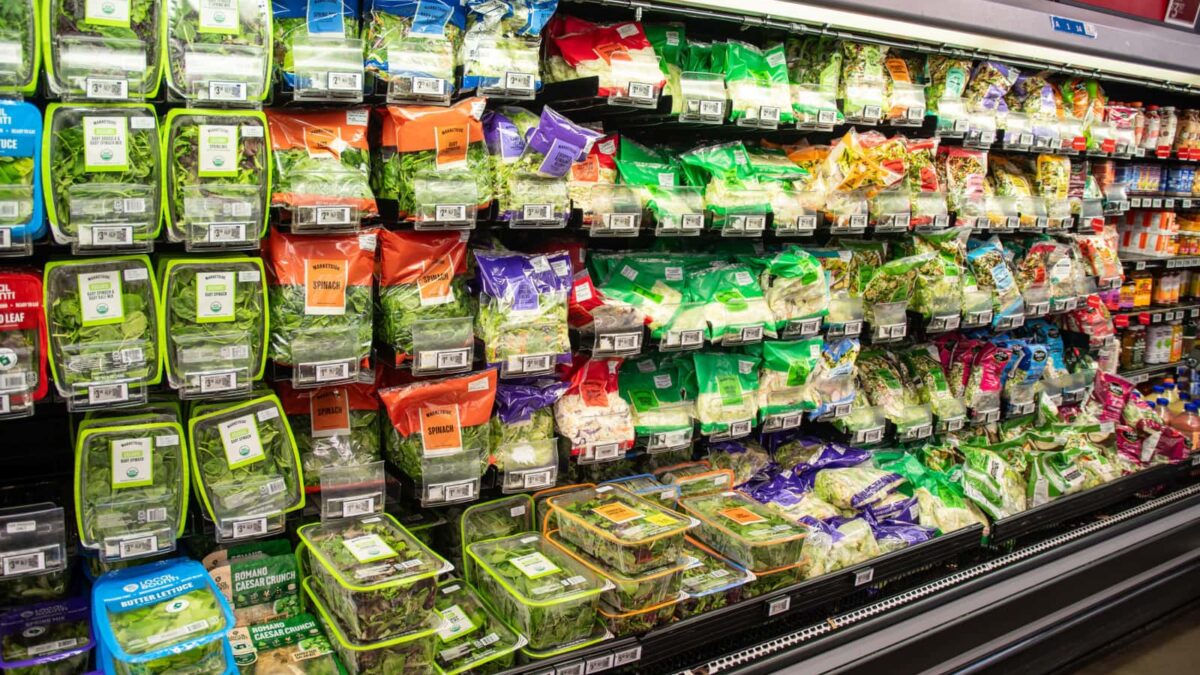
Vegetables Increasingly Linked to Foodborne Illness Outbreaks in Germany, Digi Mart USA News: Plant-based foods are causing foodborne illness outbreaks more and more often, according to a long-term analysis by the Federal Office of Consumer Protection and Food Safety (BVL), presented Thursday in Berlin. The study examined foodborne outbreaks reported between 2015 and 2024.
The study was first published in May of this year in the journal Journal of Consumer Protection and Food Safety. During the reporting period, 3,021 outbreaks were reported, and 59 people died as a result.
Only 297 outbreaks, or just under 10%, could be clarified with strong evidence.
Of these clarified outbreaks, 56.6% over the entire period were traced to animal foods and 19.5% to plant foods. The data nonetheless show a clear shift: the share of plant products rose while the share of animal products declined.
The increase was particularly pronounced for vegetables and vegetable products. In 2023, plant foods were responsible for the first time for more outbreaks than animal foods, at 53%.
The following year the ratio reversed again, and animal products remained the main cause.
According to the BVL, extreme weather events linked to climate change and contaminated irrigation water could explain the rise in plant-related outbreaks. When asked, the agency said a more plant-based diet could also be a contributing factor.
Targeted measures along the food chain have had measurable effects. The number of outbreaks caused by Campylobacter declined steadily over the decade, a trend the BVL says coincided with the introduction of limits on chicken carcasses.
Still, Campylobacter remained the most frequent cause with 1,218 outbreaks, followed by Salmonella with 929.
Control programs have also worked for eggs. Between 2020 and 2023, no outbreak was registered with eggs as the causative food, and in 2024 there was only one.
The BVL attributes this to Salmonella control programs for laying hens and accompanying risk communication.
After the end of the milk quota, more farms offered raw milk directly from the farm, and outbreaks rose between 2015 and 2017. Inspections uncovered hygiene deficiencies at raw milk vending machines, and in some cases the required warning to boil the milk was missing.
After the states tightened controls and the Federal Institute for Risk Assessment (BfR) increased information efforts, raw milk-related outbreaks fell to zero in 2022 and 2023. Histamine outbreaks linked to fish also declined, which the BVL attributes to control programs targeting the concealment of spoilage.
The COVID-19 pandemic is also visible in the data. Reported outbreaks fell from around 400 per year before 2020 to about 200 per year between 2020 and 2023.
After protective measures ended, they rose again.
Deficiencies most often arise in food service. Details on the food, cause and location of an outbreak are available only for the 297 clarified incidents.
The most common contributing factor was inadequate heat treatment, followed by cross-contamination and insufficient cooling. Two-thirds of identified handling errors occurred in restaurants, communal catering or snack bars.
Contaminated food, however, was most often eaten at home, followed by canteens and restaurants.