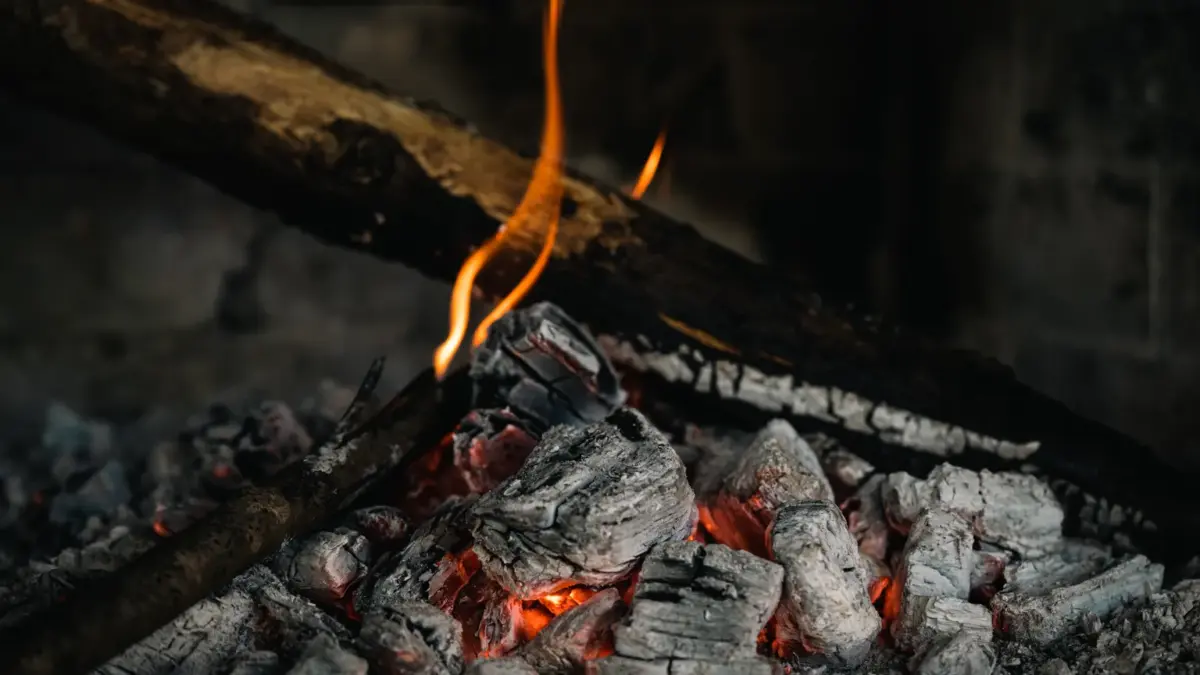
Open-hearth fireplace restrictions in France, Digi Mart USA News (France): Enjoying an evening by the fire with a good film will no longer be possible everywhere in France. Since November 1, 2026, residents of 95 communes in the Lille European Metropolis have joined 562 other French communes that no longer have the right to use open-hearth fireplaces for heating.
The cause is air pollution, which is often underestimated. Contrary to common belief, fireplaces are far from harmless to the environment and to health.
In the Lille metropolitan area, wood heating is the leading source of fine particle emissions, ahead of road traffic, according to the Nord prefecture, which points to poor wood combustion in open-hearth fireplaces.
In total, 657 communes across six departments are now affected by the ban: Nord, Loire, Rhône, Isère, Ain and Haute-Savoie. They include Lille, Roubaix, Tourcoing, Villeneuve-d’Ascq and Lambersart, as well as communes around Lyon, Saint-Étienne and the Arve Valley.
The rules are not new: the first restrictions took effect in January 2022 in the 41 communes of the Arve Valley in Haute-Savoie, followed by the Lyon metropolitan area in April 2023, the Saint-Étienne basin in April 2025 and Isère in early 2026.
In each case, the goal is to reduce fine particle emissions by limiting use of the most polluting fireplaces. Residents who break the rules can face fines of up to 1,500 euros, or up to 3,000 euros for repeat offenses, according to the rules cited in the Lyon metropolitan area.
Households can still heat with wood if they have suitable equipment, such as an insert, a high-performance stove or a closed-hearth fireplace.
Converting a fireplace is costly. According to RMC, replacing an open-hearth fireplace can cost between 4,500 and 7,000 euros, although financial aid is available under certain conditions.
Some owners find this difficult to afford; one resident interviewed by TF1, Francine, said the requirement is “a bit excessive for all the people who don’t have the money to install a closed hearth.”
Following criticism, Minister Delegate for the Ecological Transition Mathieu Lefèvre said on X that the restrictions were decided locally after consultation with elected officials and residents. He also said that priority will be given to awareness-raising rather than penalties.