Cop31 climate summit leaders warn of overshoot beyond the 1.5C target, Digi Mart USA News (Turkey): Failure to deliver an overwhelming response to the climate crisis means “the world we know is over,” the president of the embattled Marshall Islands, Hilda Heine, warned as dozens of leaders gathered in Turkey for the Cop31 climate summit.
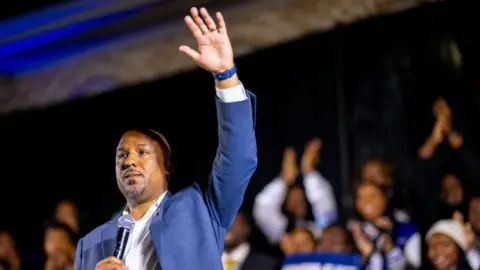
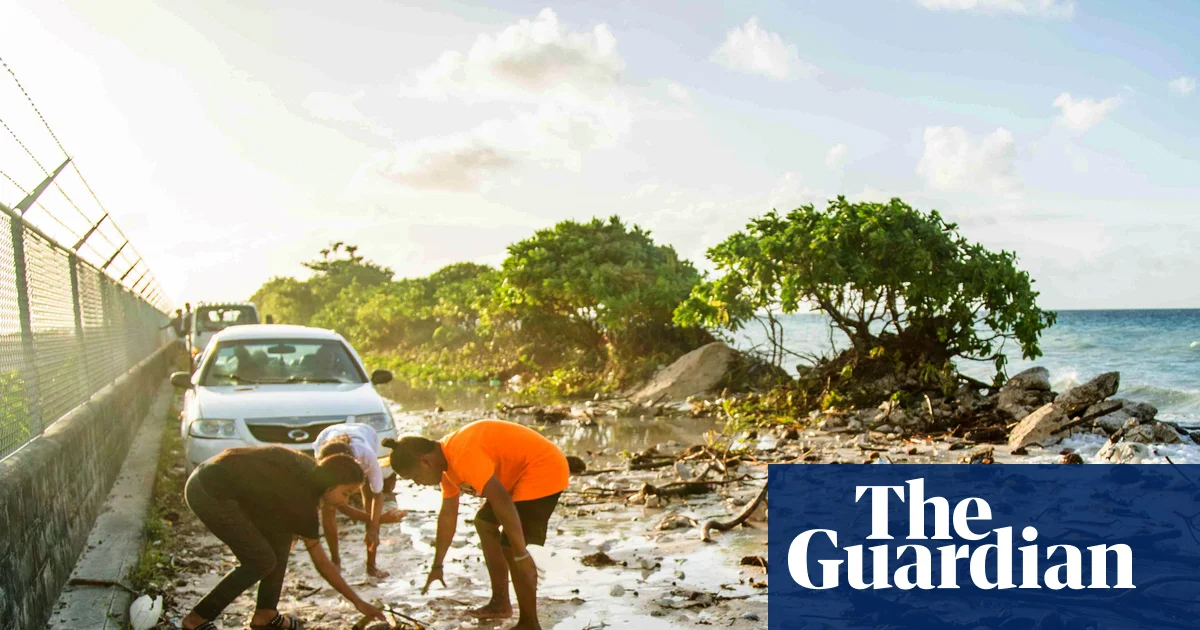
Heine, one of a handful of Pacific Island leaders to make an impassioned speech at Cop31 on Wednesday, told other heads of state that overshooting the 1.5C Paris temperature target would mean waves eating away at their shores and floods destroying towns, schools and hospitals. She described seeing bright, lush coral beneath the water of her home island in July that had been bleached white just months later.
“It’s time to wake up,” Heine said. “Our response to the threat of overshoot must be overwhelming, or the world we know is over.”
Mia Mottley, the prime minister of Barbados, also criticized governments that had “not tried hard enough” to curb emissions since the Paris agreement. “The UN tells us that, even if every pledge is delivered, we are heading for 2.6 degrees,” she said.
“On current policies, 2.8 degrees is where we will end up.”
Mottley added: “Let me be plain: overshoot is not a new target. It is a debt, a debt of heat, borrowed against our children’s future.
And it must be repaid.”
The opening of the summit of international leaders, on day three of Cop31, featured impassioned speeches interspersed with vigorous displays of Turkish music and dancing.
António Guterres, the UN secretary general, blamed a deceitful fossil fuel industry and countries that “keep expanding fossil fuel production while claiming to be committed to 1.5C.” His speech, one of the last Guterres will deliver as secretary general before he stands down next month, was aimed at boosting the talks.
“We need an extraordinary acceleration,” Guterres said. “Our planet is heating up.
The clock is winding down. It’s make or bake time.
Fossil fuels must go the way of the dinosaurs. And that won’t happen on its own.
The dinosaurs did not have a lobby – fossil fuels do.”
Guterres said oil and gas companies had distorted science and delayed action on the climate crisis, and called for a windfall tax on the bumper profits they have made from the Iran war. “It’s time to kick the habit and end the fossil-fuel addiction,” he said, to applause.
“It’s time for governments to tax these windfall profits and use them to help vulnerable countries recover. Polluters must pay.”
Turkey is co-hosting Cop31 with Australia, with the leaders of both countries, Recep Tayyip Erdoğan and Anthony Albanese, each praising the partnership. Erdoğan said he wants Cop31 to be remembered as a turning point in the climate crisis and called on countries to act rather than just make promises.
However, on Monday, away from the conference hall, Erdoğan celebrated the discovery of two new oilfields with an estimated in-situ potential of 135 million barrels.
In her speech, Heine said every new oil well drilled and every piece of coal extracted was a threat to her country’s future. Without naming any individual producer, she added: “The discovery of new fossil fuel resources is not something to celebrate but something to fear.”
Albanese said the conference was a “historic moment” for Australia, one of the world’s biggest exporters of coal and liquefied gas. He said governments had a “solemn responsibility” to act on the climate crisis, but was criticized for failing to mention fossil fuels in his speech.
The gathering of leaders was relatively thin. While 91 national leaders attended, according to the UN, major figures such as Donald Trump of the US and Xi Jinping of China were absent.
Some leaders who declined to attend, including French President Emmanuel Macron and German Chancellor Friedrich Merz, are instead heading to Ireland for a conference on AI.
Almost every country at Cop31 is lagging in cutting emissions, with insufficient finance for the nations most vulnerable to extreme heat, floods, fires and other climate-fueled calamities. Although the world is barreling past the 1.5C limit and entering one of the strongest El Niño events in history, there is little sign the talks will produce further progress on phasing out planet-heating fossil fuels.
Bill Hare, a climate scientist and chief executive of Climate Analytics, said: “I’m getting a feeling of panic from around here, from the science community.” He described fraught conversations with rainforest and cryosphere scientists. “The mood is gradually darkening among scientists.
In fact, people talk about feeling as though things have gone backwards.”
Small island nations face an existential threat from rising sea levels and are among the countries most exposed to catastrophe when global heating passes 1.5C. The UN Environment Programme has found that such overshoot is now inevitable and warned that its effects on icy regions will be so calamitous it should be kept as brief and low as possible.
Other leaders stressed the urgency of the moment. Gordana Siljanovska-Davkova, president of North Macedonia, said: “We are the first generation to fully understand the consequences of our choices – and perhaps the last with time to change course.
Future generations will live with the consequences of our decisions.”
Nataša Pirc Musar, president of Slovenia, said: “If we cannot agree that human dignity and respect for nature must be at the heart of our decisions then, frankly, what is left to unite us?”