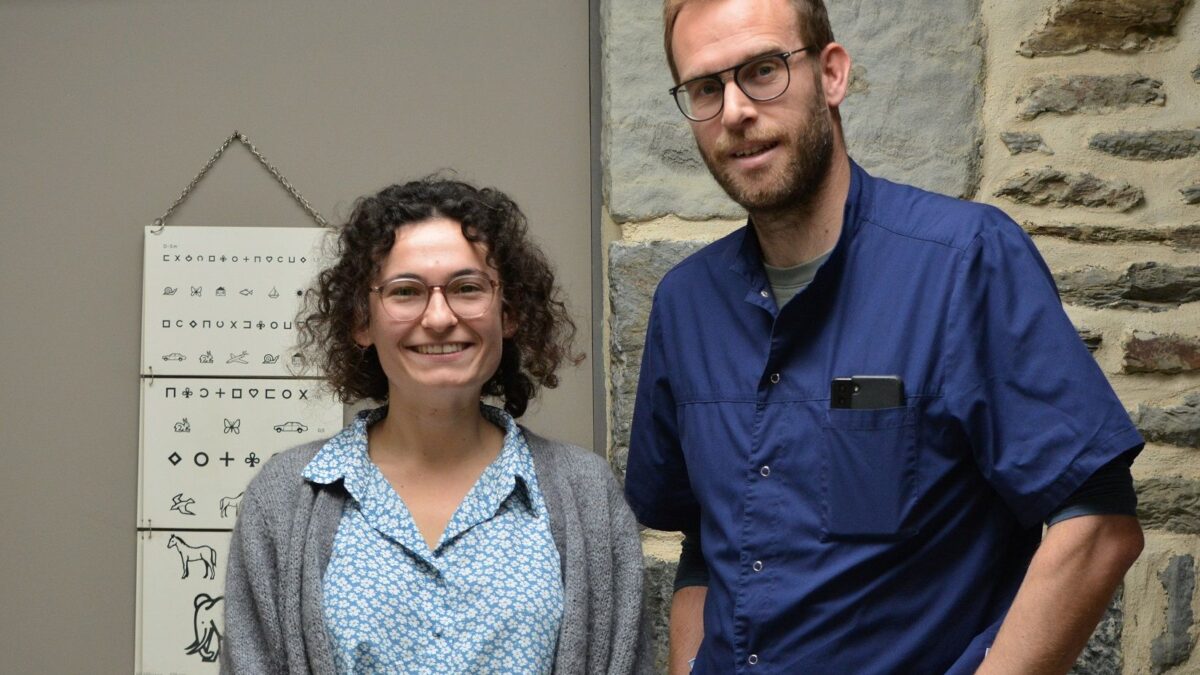
Drs Juniors deployment in France, Digi Mart USA News: Nearly 180 Drs Juniors have been deployed in the Pays de la Loire region, and about 130 in Brittany (administrative region). Among them is Pauline Mourlon, who has been working for a week at the La Chèze health center, near Loudéac, in the Côtes-d’Armor.
Originally from Guérande, Pauline studied in Nantes and Rennes. She shared her first impressions of the new program, including its drawbacks: “The downside is the feeling of having to keep a pace of life similar to residency, with intense weeks, few vacation weeks authorized by the institutions, and the geographic constraints we may have.”
She added that she is mostly looking forward to the learning benefits: “We are mainly waiting to see what the benefits will be for us in terms of learning. It will give us experience in practicing general medicine.
I was very well welcomed at the health center, and I find I am in good working conditions. It is a very pleasant population, we receive a lot of appreciation, and people seem truly delighted.” She said she is not sure whether this will make her want to settle in central Brittany, but calls it a worthwhile experience to discover the area.
Like the other Drs Juniors, Pauline works three days of consultations, one day in external care structures such as maternal and child protection services or home hospital care, and one day of classes. Drs Juniors have already defended their thesis in general medicine and completed internships in hospitals or community medicine.
Some commentators argue that the government is sending students to plug gaps when what is needed is family doctors. Dr.
David L’Hénoret, a general practitioner at La Chèze who is supervising Pauline’s internship, called this an inaccurate and caricatured shortcut. Pauline said that in prescribing and providing care, doctors can act within their field of competence, and that she has completed the nine years of medical training that until now qualified doctors to practice general medicine, so she does not believe she is less competent than earlier cohorts.
Dr. L’Hénoret said the arrival of Drs Juniors allows established doctors in areas like his to “perhaps catch their breath a little.” He said their presence will free up consultation slots.
Currently, his appointments are booked two months ahead, so he has no availability for scheduled care before then. Once waiting times decrease, he said, the practice can take on new patients as their primary doctor without making false promises, since it is worse to accept someone as a patient and then be unable to offer them an appointment when they need one.
Marie-Gwénola Hollebecq, mayor of the commune, welcomed Pauline’s arrival at the La Chèze health center. “Not only did we wait a long time for her, but we also prepared with the creation of a new practice.
It is an extraordinary opportunity for a municipal health center. The arrival of young people is fundamental, and it is teamwork, which is what young doctors are looking for, I suppose, because we are at the far end of Brittany, without the sea, and it is harder to attract and recruit doctors to central Brittany.
But we manage to keep our health center going, and our dream is that the person stays. This is something that will be renewed, and perhaps another doctor will come and stay.”
A first review is scheduled in six months. This year of consolidation is divided into two internships, and Drs Juniors may change posts after six months.