Solar panel owners face higher electricity bills as net metering scheme ends, Digi Mart USA News (Netherlands): The electricity bills of people with solar panels are rising, and that is causing some to make rash moves. “People with solar panels collectively suffer from loss aversion,” says Simone Tresoor of the Kenniscentrum Duurzaam Leven, meaning that panic over losing something outweighs rational judgment.
The trigger for that panic is the ending of the net metering scheme.
The Dutch consumer authority ACM spokesperson Tjitte Mastenbroek confirmed that the electricity bill for people with solar panels is going up. “It is of course the case that a subsidy is being scrapped,” he said.
The Consumentenbond, the Dutch consumer association, still hopes a scheme will be introduced to keep solar panels profitable, especially for people who have only recently installed them or who still plan to. “Because the energy transition has to continue,” said spokesperson Joyce Donat.
The net metering scheme was introduced to encourage people to install solar panels. Under the scheme, the electricity a person draws from their energy supplier can be offset against the electricity their panels generate but they do not use, which is fed back into the grid.
“Say you draw 1,000 kilowatt-hours and feed back 500, then you pay no energy tax or VAT on those 500 kilowatt-hours,” Mastenbroek explained.
Solar power is generated and fed back mainly in summer, when there is plenty of sun and electricity is cheaper. In winter, people draw more electricity, when supply is lower and more expensive.
“Netting is assessed over the year,” the ACM spokesperson said. “When there were no feed-back costs, consumption and what you fed back were offset one-to-one.”
That arrangement ended when energy suppliers introduced feed-back costs. “We investigated at the time whether that was justified, and it was,” Mastenbroek said.
The cost of feeding electricity back, including the difference between cheap summer power and expensive winter power, was passed on to all customers, the suppliers argued. “That was also included in the entire discussion about whether or not to abolish the net metering scheme.”
From January 1, people can still feed electricity back into the grid, but it can no longer be offset. The tax benefit therefore lapses.
In addition, suppliers will charge feed-back costs, and those will remain.
The Consumentenbond is, to put it mildly, not pleased. It had hoped the feed-back costs would be abolished along with net metering.
“Now that this is not the case, we at least call for one clear calculation method for feeding back electricity, because it is not becoming more transparent,” the organization said.
The ACM regulator agrees. “That is correct,” it said, since energy suppliers charge feed-back costs in different ways, such as a fixed fee, a monthly cost per tier where costs rise as more kilowatt-hours are fed back, and other methods.
Tresoor of the knowledge centre says that with net metering gone, people feel they must do something to replace it. “I have to buy something to put my electricity into,” she says is the prevailing thought.
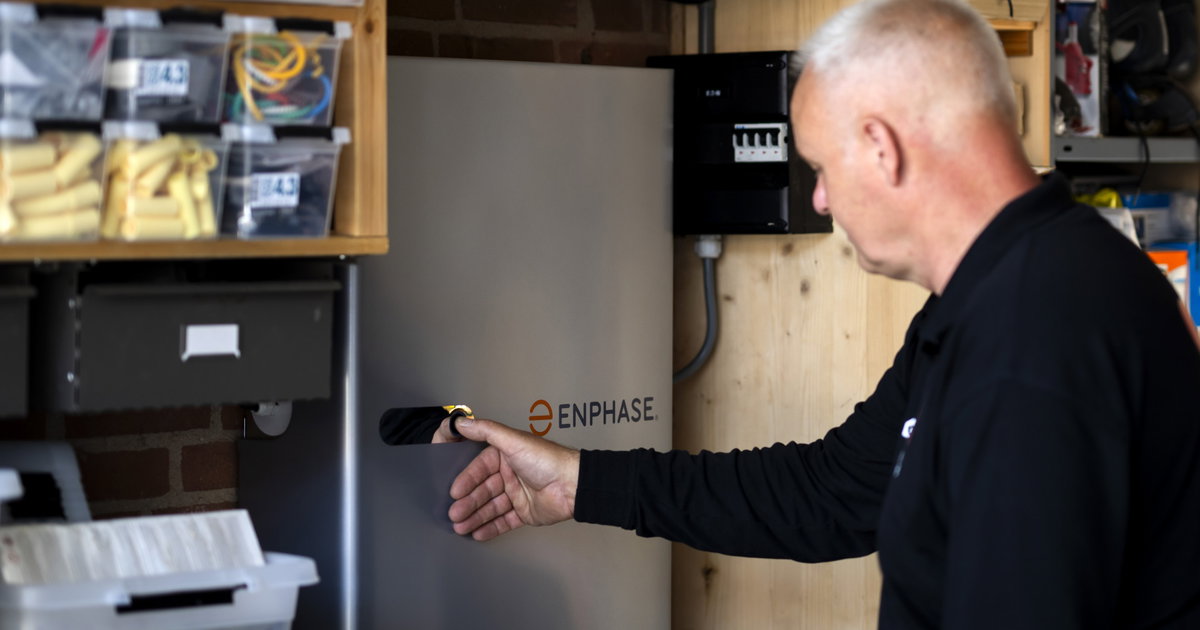
That idea leads people to consider spending thousands of euros on a home battery. “It is very realistic that you will not recover the costs,” she said.
The sustainable living expert points out that a home battery is not only expensive but also environmentally burdensome. “So ask yourself: why do I want it?
For the environment? No.
For your wallet? No.” According to the knowledge centre, a home battery saves at most a few hundred euros per year.
Meanwhile, the centre says one in three people with solar panels has already recovered the cost of their panels. That refers to one million people with panels installed before 2020, Tresoor said.
“The other two million people generate their own electricity at an average of four times cheaper than electricity bought from your supplier.” Even without a home battery, people therefore still save money.
Home batteries also do not have a long lifespan. The Consumentenbond is also critical of them.
“Like panels, it is a major investment, and will you earn it back?” The spokesperson asked and answered the question. “On average, no.” That is partly due to the high price of batteries, which may change in the future.
“But it is also not the case that you can store your summer electricity in the battery until winter.” A battery can only hold it for a few days.
With the end of net metering, a battery becomes somewhat more attractive, or less unattractive, depending on one’s view. There are other considerations, such as where to install it safely and who should do so.
The fact remains that everyone with panels receives far less for the electricity they feed back after net metering disappears. “Using solar power when it is available is where the greatest gain lies,” Tresoor said.
On average, that happens automatically for just under a third of your consumption, the organization calculated. “That is because of the fridge that is always on, the freezer, the Wi-Fi router.” Switching off your solar panels to avoid a “feed-back fine” is therefore not a good idea.
“Then you would have to buy that thirty percent back at a much higher rate.” If you also run your washing machine, dryer or dishwasher while the sun is shining, not all at once because that is not feasible, you can use an additional five percent of your own electricity.
The Consumentenbond is also concerned about tenants. “They are mainly the victims of abolishing net metering,” Donat said.
Landlords installed panels on roofs and charged a surcharge or raised rents. Donat said: “The idea was that the tenant benefits through net metering.
Now that it is ending, rents will certainly not go down. The landlord made an investment.”
The Kenniscentrum Duurzaam Leven would much rather people invest in better home insulation or a heat pump. “You notice that effect immediately.” If you still want to buy a home battery, buy it through a specialist trade and never at the door.
“You don’t buy a car at the door either.”
The ACM also encourages using as much electricity as possible at the time it is generated, while acknowledging that there are limits. Donat of the Consumentenbond summed it up clearly: “To use as much of your own solar power as possible, the sun has to be there, and so do you.”