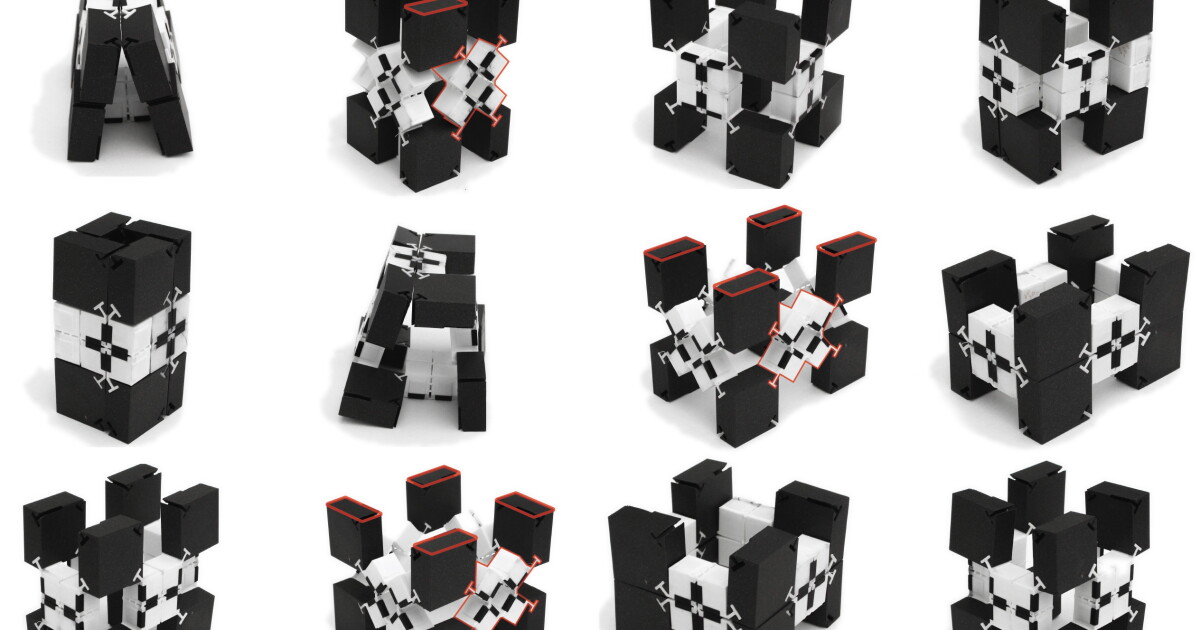
MIT bifur-circuit shape-shifting building blocks, Digi Mart USA News: A team at the Massachusetts Institute of Technology (MIT) has developed “bifur-circuit” 3D-printed smart modules that can connect and shift between many shapes without breaking the electrical connections that keep their mechanical functions working, according to a New Atlas report.
The modules are built from programmable mechanical metamaterials, simple base units that can be combined in endless arrangements. They are described as auxetic, meaning they become wider rather than thinner when stretched.
Because the modules are joined rather than forming one rigid structure, each unit can keep its electrical connection as it rotates or pivots.
In their Human Computer Interaction Engineering paper, lead author Marwa AlAlawi and co-researchers at MIT, the University of Michigan and the University of Tokyo report that the modules need no external wires to stay electrically connected after multiple reconfigurations. The conductive material, Filaflex 92A, shaped how sensing between blocks works, and during testing the design endured 10,000 compressions with no loss of electrical connection.
Prototypes described in the report include chairs that convert into tables and collapse for storage while detecting their configuration and showing information on screens. The researchers also built a transforming game controller that launches different video games depending on how a user shapes it.
The report suggests possible uses in medical assistance and rehabilitation, soft robotic grippers, and dynamic shelters at disaster sites, though these remain proposed applications rather than confirmed deployments.
AlAlawi said the work is one step toward mechanical building blocks with integrated intelligence. Co-senior authors include MIT graduate student Ticha Sethapakdi and MIT associate professor Stefanie Mueller, director of the Human-Computer Interaction Group at CSAIL.
The source article notes the report was not independently verified.