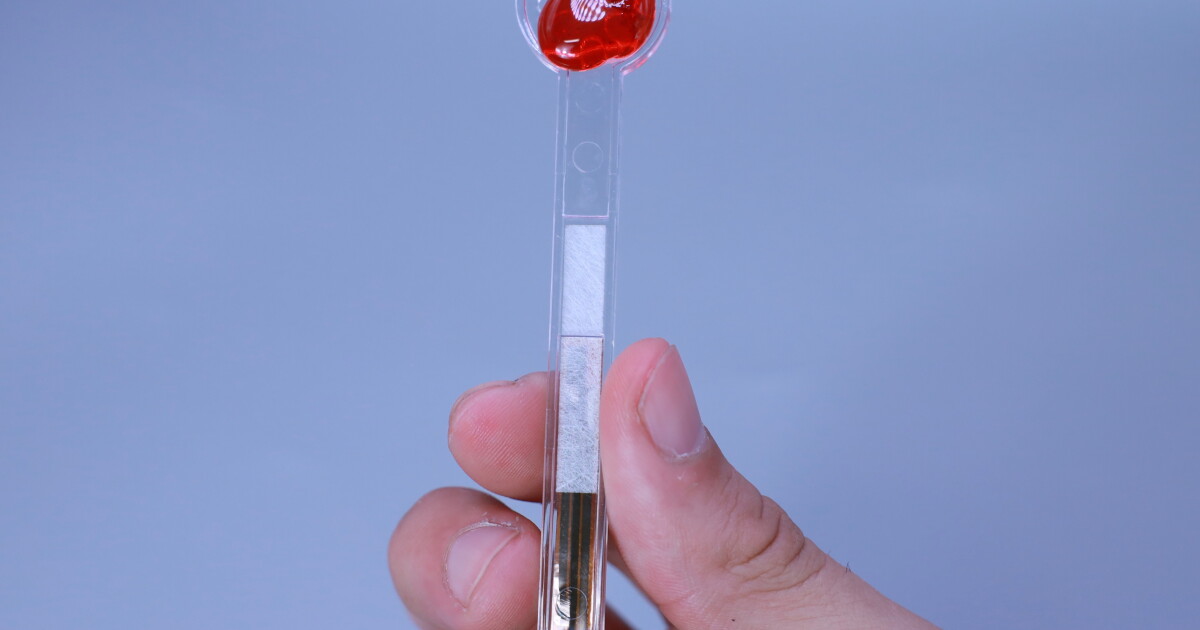
Lollylab lollipop oral sensor for acetaminophen detection, Digi Mart USA News: Researchers at the University of Southern California have developed Lollylab, a lollipop-inspired device that contains a miniature laboratory designed to test saliva for acetaminophen, a common ingredient in painkillers and cold and flu medicines.
The device is made of two plastic pieces with stems and rounded tops that snap together. Saliva enters through small holes in the rounded head, flows down a paper-lined glass-fiber stem, and reaches a graphene sensor at the bottom in about 60 seconds.
Only about 0.3 milliliters, roughly six drops, of saliva is needed for the test.
The rounded top is coated with a red, peach-flavored candy shell, which gives the device a familiar, child-friendly form and allows users to collect saliva by licking it. The detection uses an electrode made from laser-induced graphene, which is already widely used in wearable health monitors, environmental sensors and water purification systems.
When acetaminophen reaches the electrode, it triggers a chemical reaction that produces an electrical signal the sensor can measure.
The article explains that acetaminophen can cause serious side effects, including liver damage, when taken in excess, and that accidental dosing errors are especially dangerous for children. The researchers chose the drug because its concentration in saliva can reflect its level in the bloodstream fairly precisely, which could allow monitoring without drawing blood.
In testing with artificial and real human saliva, six adults who had taken acetaminophen licked the device, and it detected the drug in less than two minutes. Participants reported the method was easier and more comfortable than conventional swabs.
The source describes the study as small, and Lollylab remains an experimental prototype. Researchers plan larger studies and plan to adapt the technology to detect other substances in saliva.