Maryland Gov. Wes Moore Afghanistan military service claims, Digi Mart USA News: For years, Maryland Gov. Wes Moore has described his Afghanistan deployment as the experience of an 82nd Airborne Division paratrooper who led soldiers in combat.
Now, the Army officer who supervised Moore daily says his accounts of what happened there in 2005 and 2006 are unequivocally false.
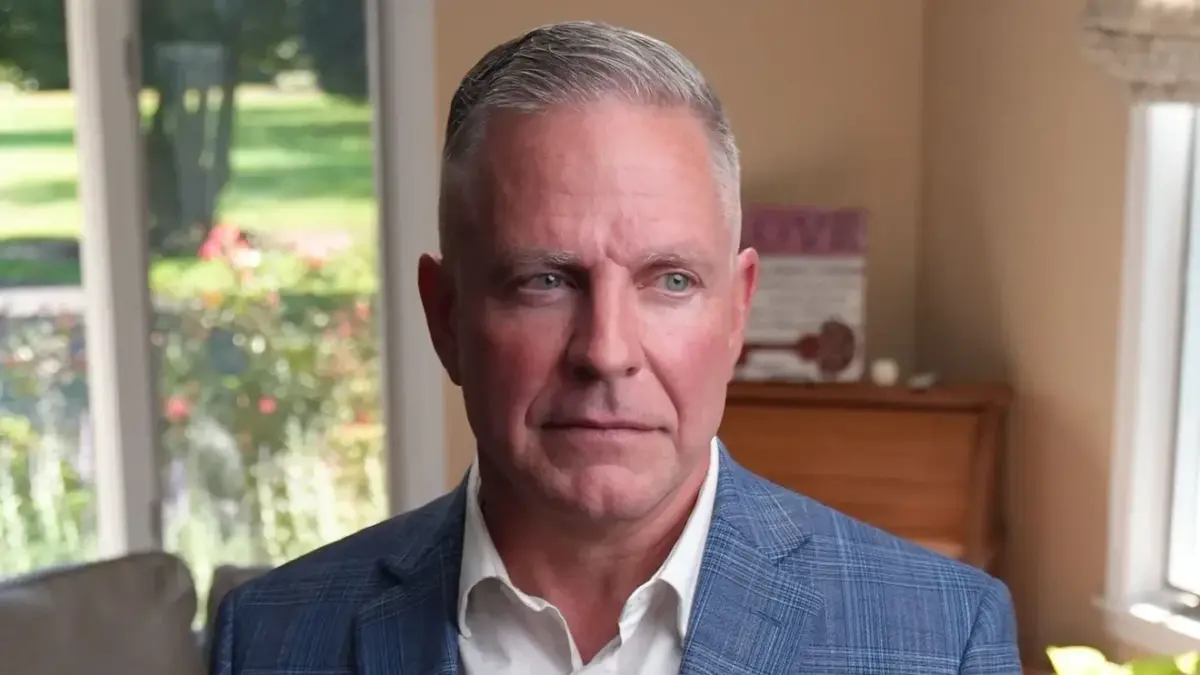
“Be honest,” retired Lt. Col.
James A. “Jamie” Gottschling said when asked what he would tell Moore.
“His service in Afghanistan was good. He was a valued member of the brigade staff.” But he added, “It’s disingenuous to say that you led paratroopers in combat or that you did what would be direct action activities in a combat zone.”
Spotlight on Maryland first cast doubt on Moore’s claims of leading soldiers in combat before it learned about Gottschling, who has since participated in two interviews. Gottschling’s firsthand knowledge of Moore’s daily activities adds to three Spotlight articles published in May that examined Moore’s path to Afghanistan, his duties and his combat claims.
Moore’s office did not respond to Spotlight’s offer to sit down with the governor and give him an opportunity to dispute his former supervisor’s statements or any of the reporting to date.
Moore received an Army reserve commission in May 1998 but did not complete his initial officer qualification for more than seven years, graduating from the Military Police Officer Basic Course at Fort Leonard Wood, Missouri, in June 2005. By then, the 1st Brigade of the 82nd Airborne Division had already deployed to Afghanistan.
Moore arrived Aug. 15, nearly five months after the brigade arrived in country.
Spotlight reported on May 10 that Moore’s records showed no prior troop-leading experience or information-operations training. His placement came through then-Lt.
Col. Michael Fenzel, the brigade’s deputy commander and Moore’s longtime friend and mentor, who arranged a by-name deployment request for the newly qualified Army Reserve officer.
Moore has described months of pre-deployment training with the 82nd at Fort Bragg, North Carolina, including in his 2015 book, “The Work.” Spotlight found no Army records substantiating that account. The records placed him in Military Police training at Fort Leonard Wood, Missouri, during much of the brigade’s train-up period, and by Army regulation he would have been ineligible to participate in such training before qualifying in a branch.
Gottschling, a field artilleryman who was a major during the deployment, confirmed that Moore, who is airborne qualified, neither trained with the brigade before deployment nor conducted training jumps. He said Moore served with the 82nd in Afghanistan as an attached Army reservist but was not in a jump status, did not receive jump pay and was not in a parachutist’s position.
“He’s not a paratrooper,” Gottschling said.
Gottschling served as the brigade’s fire support coordinator and Moore’s direct supervisor. A career officer and Ranger-qualified, he spent 12 of his 20 years in units including the 82nd Airborne Division, the 173rd Airborne Brigade and U.S.
Army Special Operations Command, and retired as a lieutenant colonel. His responsibilities covered kinetic and nonkinetic effects, including artillery, mortars, close air support, armed drones, information operations, public affairs, civil affairs and psychological operations.
Moore worked directly for Gottschling exclusively on information operations coordination, and Gottschling confirmed Moore was never involved in the employment of any weapons system. At Forward Operating Base Salerno, their daily work involved analyzing reports from infantry battalions and provincial reconstruction teams, coordinating civilian assistance and helping Afghan officials communicate with the public.
Gottschling credited Moore with helping local leaders learn to respond publicly to community needs. “He did a really good job trying to train the Afghans how to kind of sell their own story,” Gottschling said.
Asked whether Moore was responsible for the brigade’s kinetic combat activities, Gottschling said, “No, no, his was the information operations.” That distinction challenges Moore’s portrayal of his relationship with the soldiers he claims to have led.
In “The Work,” Moore wrote affectionately about soldiers he said were assigned to him, saying he “adored their passion and their hearts” and knew which ones had financial or marital issues and what motivated them. When asked about that passage, Gottschling said, “That sounds more like what the role of a platoon leader or a company commander would be.
I mean, if he was in a military police company, that’s what he would have been doing. But that’s not what his role was.” Asked whether Moore had any troops assigned to him, Gottschling said, “He didn’t have any troops assigned to him.” He added, “You don’t really lead staff officers.
You coordinate with staff officers.”
Spotlight’s May 17 report examined additional discrepancies. In a 2014 interview with the USO’s in-house magazine “On Patrol,” Moore said he had been an infantry officer, a military police officer and then “became special ops” with the 82nd.
Moore’s military records establish qualification only as a Military Police officer, not as an infantry, special operations or information operations officer.
That report also examined Moore’s 2006 officer evaluation report, which described him as a “Top 1% officer” and compared his abilities with those of experienced majors and lieutenant colonels. The report contained errors in his rank and military specialty.
Gottschling, Moore’s rater, said evaluations routinely included inflated praise to help soldiers advance. “There’s a lot of embellishment with that, but that’s just how the system was,” he said.
“You’re not trying to be deceitful about it, but you want to elevate what they did (your soldiers) so they can get their next job or next promotion.” Comparing his own evaluation to Moore’s, Gottschling said, “I wouldn’t read my own and say that was really who I was.”
Gottschling said Moore’s deployment duration also differs sharply from his public accounts. In multiple interviews, Moore has said he spent anywhere from 10 to 13 months in Afghanistan.
His Army records document six months and 27 days in country, from Aug. 15, 2005, to March 14, 2006. Emergency leave following his grandfather’s death kept him away for roughly another month, further reducing his actual time there to about six months.
Spotlight’s May 31 report examined what may be the most consequential difference between Moore’s accounts and Gottschling’s. Moore has claimed he led soldiers in combat and experienced direct fire engagements.
In a May 2022 social media post, he wrote that he had “led soldiers into combat in Afghanistan.” In “The Work,” he recounted bullets striking the ground around him during a firefight, and in a 2021 interview he described leading paratroopers and witnessing a firefight soon after arriving. Spotlight described these accounts as complete fabrications.
Before locating Gottschling, Spotlight searched and found no after-action reports, witness accounts or other military records substantiating that Moore led soldiers in a direct-fire engagement.
Moore received a Combat Action Badge for a minor indirect rocket attack at FOB Salerno on Dec. 9, 2005, that caused no soldier injuries. He did not receive it for the firefights he later described.
Gottschling confirmed for Spotlight that Moore never saw combat. “I like to say that we’re combat veterans, but we’re not veterans of combat,” he said of their brigade headquarters service.
He acknowledged that Moore sometimes left the base to coordinate with Afghan officials but said those trips never resulted in any hostile action. “When you’re talking about direct combat, leading soldiers that are under hostile fire, and leading them and supporting them, that’s not truthful,” he said.
Asked whether he thought Moore was a liar, Gottschling said, “I do.”
Gottschling’s criticism is not that Moore failed to serve or failed at his assigned job, but that the true nature of his service has been repeatedly described to the public as something else. “I think he can be very proud of that,” Gottschling said of Moore’s actual service.
“It’s just really the embellishment of the story after that that’s the issue.”