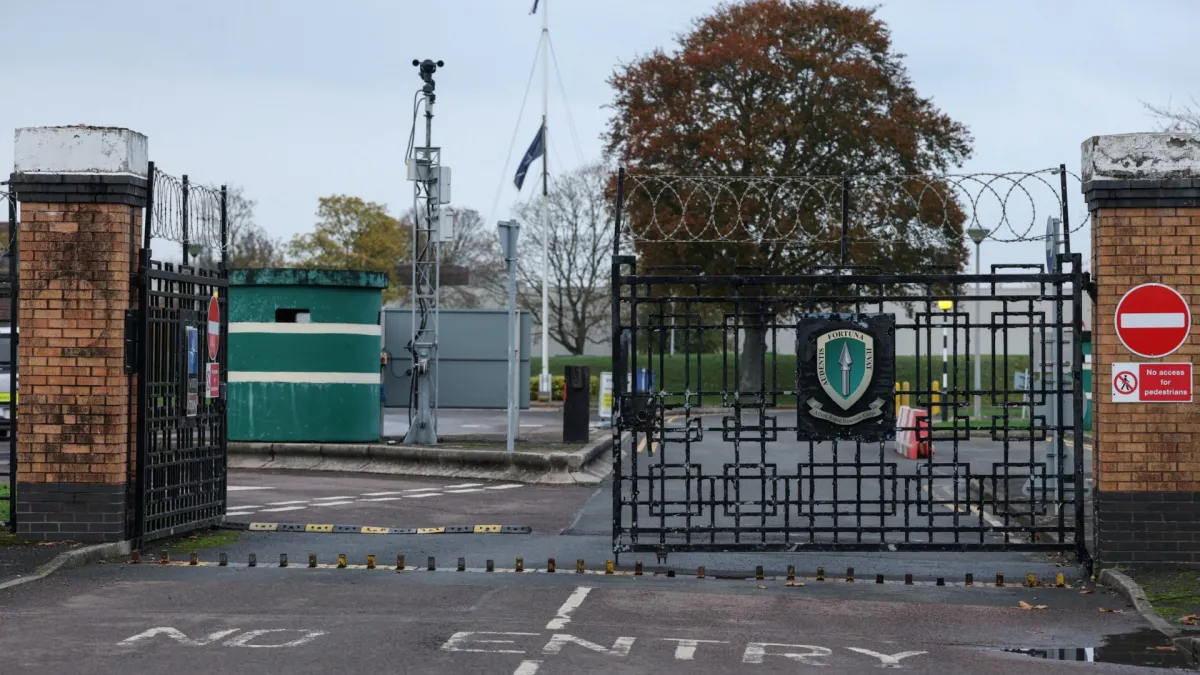
suspected US Army spy NATO Allied Rapid Reaction Corps arrest, Digi Mart USA News (Imjin Barracks, Gloucestershire): A 41-year-old senior soldier based at NATO’s Allied Rapid Reaction Corps (ARRC) has been arrested on suspicion of espionage for Russia in an operation involving MI5, Counter Terrorism Policing and the FBI. The i Paper understands the soldier is a Lieutenant Colonel, a rank that would generally give access to a broad range of strategic, operational and higher-level classified material.
Officials familiar with the investigation told The Washington Post that no sensitive information was passed to Russia. Analysts nonetheless say the arrest is likely to raise concern among allies.
More than 400 permanent staff from over 20 countries, including dozens from the US, are based at Imjin Barracks, the alliance’s largest UK base and home to the ARRC headquarters.
Andrei Soldatov, an exiled Russian journalist and security services expert, said recruiting a senior US soldier would be a “significant coup” for Russia’s intelligence agencies, despite more than 400 spies being expelled from Europe since the full-scale invasion of Ukraine. He said that if the allegations are proven, several organisations would need to assess what information about operations could have been compromised.
David Cattler, a former NATO Assistant Secretary General for Intelligence and Security, told The i Paper the suspect may have had access to “potentially quite sensitive information” about NATO’s military capabilities, operational planning, readiness, exercises and command arrangements. He cautioned, however, that assignment to a headquarters should not be confused with access, as what an individual could see would depend on his duties, clearance and need to know.
Soldatov said information on how documents are circulated or how commanders are addressed could also help a state-sponsored phishing or cyber attack. He added that the UK is a “primary target” for Russian intelligence, and that Russian services have increasingly used recruits of other European nationalities rather than relying only on people with diplomatic cover.
Asked whether espionage against Western military installations is increasing, Cattler said Russian intelligence has targeted NATO for decades, and that the broader security environment and technology have changed the picture. He said an increase in hostile activity, better detection and more public reporting are not necessarily the same thing.