Gibran resignation Indonesia vice president Prabowo Jokowi relationship, Digi Mart USA News (Jakarta, Indonesia): Gibran Rakabuming Raka’s resignation as Indonesia’s vice-president on Thursday (Nov 12) has raised questions about his political future and what his departure means for the relationship between President Prabowo Subianto and his predecessor Joko Widodo.
Gibran, 39, stepped down amid mounting pressure over his educational qualifications after the Supreme Court annulled his overseas high school education equivalency certificate on Oct 30. His departure comes amid signs of growing tensions between Prabowo and Jokowi, whose support was instrumental in securing the Prabowo-Gibran ticket’s victory in the 2024 election.
Analysts say the resignation could let Prabowo further consolidate his influence while raising fresh questions about the political future of Jokowi and his family. Sana Jaffrey, a political expert from the Australian National University, said there had long been indications that the relationship between Prabowo and Jokowi was heading towards a split.
She said a move on Wednesday by 120 lawmakers to initiate impeachment proceedings against Gibran appeared to have increased pressure on the vice-president to step aside rather than face a potentially lengthy and public process. “In that sense, Prabowo has achieved this split without publicly demanding a resignation,” Jaffrey said.
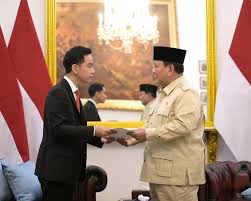
Gibran submitted his resignation letter to the People’s Consultative Assembly (MPR) in Jakarta. Jokowi told reporters in his hometown Solo that he would continue backing Prabowo’s government despite his son’s departure.
“Public office is temporary. And we will continue to support Mr Prabowo’s administration, especially regarding programmes that serve the interests of the broader public,” he said.
Under Indonesia’s constitutional process, the president must nominate two candidates to the MPR, which must convene a special session within 60 days of the vice-presidential position officially becoming vacant. The candidate who secures a majority vote among MPR members will serve the remainder of the term.
Aditya Perdana, a political lecturer at the University of Indonesia, said the selection could open another round of bargaining among parties in Prabowo’s governing coalition.
Analysts noted that lawmakers from all eight parliamentary factions supported the impeachment proposal. They also suggested Prabowo could broaden his support by bringing in the Indonesian Democratic Party of Struggle (PDI-P), the largest party in parliament, which has remained outside his coalition.
Wawan Mas’udi of Gadjah Mada University said PDI-P appeared reluctant to join due to Gibran’s presence.
Gibran’s resignation marks an abrupt end to his vice-presidency, and analysts are divided over how much lasting damage it could do to his political career. Wawan said stepping down voluntarily could help Gibran preserve more political legitimacy than if he had been removed through impeachment, potentially leaving room for a comeback in the 2029 or 2034 elections.
Jaffrey was more cautious, pointing to controversies over Gibran’s eligibility and public demonstrations demanding his resignation. Still, she said Jokowi retained support among significant sections of Indonesian society, making it premature to write off Gibran’s future.
“It’s hard to say if this is the end of his career,” she said.
Analysts also cautioned against assuming Jokowi had lost all political leverage. Several PSI figures resigned from the party on Monday, but analysts said the departures did not amount to conclusive evidence that Jokowi’s network was collapsing.
Analysts said the power play between Prabowo and Jokowi remains far from settled, with Nicky Fahrizal of the Centre for Strategic and International Studies calling the resignation “a pause to regroup and restrategise.”