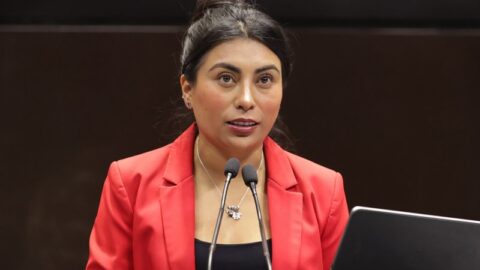
Narcopolitics and violence in Mexico, Digi Mart USA News (Oaxaca, Mexico): This editorial, published by Libertad Oaxaca and translated from Spanish, argues that violence and death have become instruments of domination in Mexico, fear a mechanism of control, and impunity fertile ground for the expansion of organized crime.
The piece says Mexico must recover the democratic authority of the state so it can guarantee the security of families and return to justice its capacity to protect victims. It frames the Day of the Dead, a tradition that blends pre-Hispanic and religious roots, as an occasion to reflect on death not only as an inevitable fate but as a tool of power when violence becomes political and social control.
According to the editorial, the country faces a reality that cannot be hidden behind official speeches, what it calls doctored statistics, or complacent explanations. Criminal violence, it says, has penetrated broad areas of national life and made fear one of the main daily experiences of millions of Mexicans.
The author argues that the problem goes beyond killings, executions, femicides and disappearances. It points to the capacity of criminal groups to challenge the state, impose their own rules, control communities, subordinate authorities and turn entire regions into areas where the law loses authority to weapons.
The editorial says the situation becomes more troubling when there are allegations of complicity, political protection, illicit financing or criminal infiltration in government structures. It states that citizens who fear reporting crimes more than they trust institutions cannot be said to live in a full democracy.
Extreme violence, dismembered bodies, public executions and disappearances, the author writes, are intended to send messages of intimidation and warn those who challenge criminal groups. When authorities fail to prevent, investigate and punish these crimes, the piece argues, violence produces collective submission: families change habits, merchants pay extortion, journalists face threats, businesses restrict activity and communities learn silence to survive.
The editorial calls for investigation, documentation and accountability for officials, regardless of party or office. It lists dismantling financial structures of drug trafficking, investigating money laundering, using financial intelligence, applying asset forfeiture under the law, and breaking up political and economic protection networks as necessary tasks, with prosecution reaching those who finance or facilitate crimes from positions of power, based on evidence and due process.
The author stresses that impunity acts as a second sentence for victims and their families, and that the state’s responsibility cannot be delegated to citizens or reduced to a dispute over narratives between governments and opposition. The piece closes by linking the Day of the Dead commemorations, including the honoring of journalists and mothers searching for the disappeared, to a demand for truth and justice.