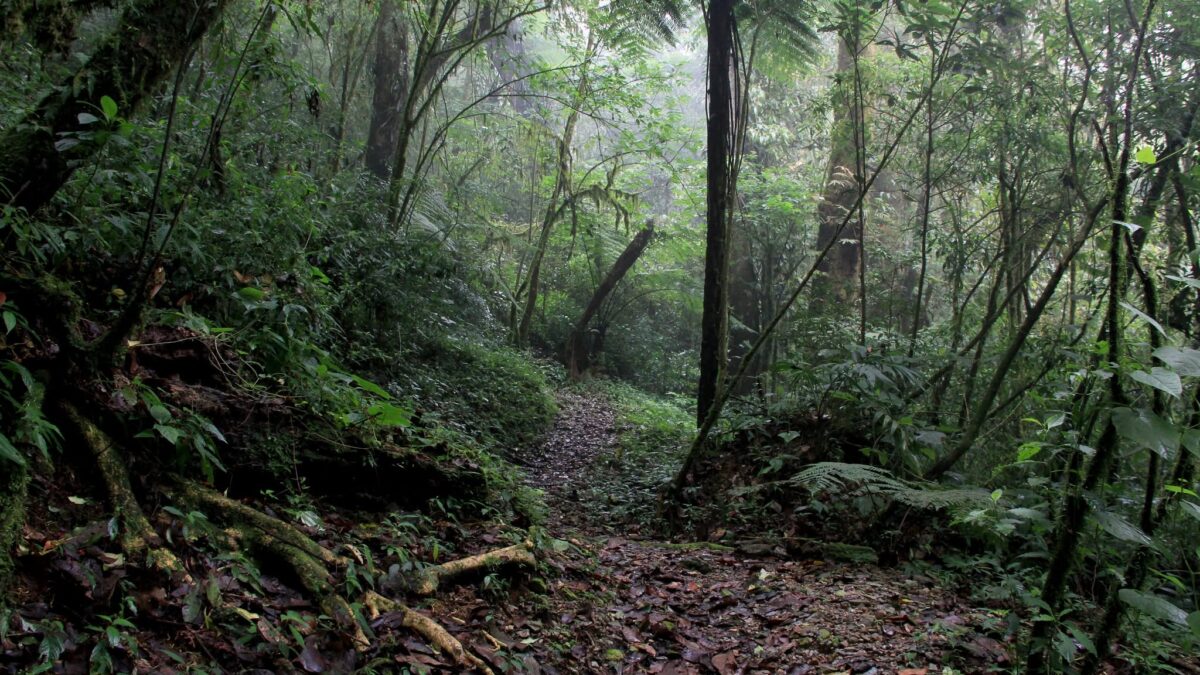
Mexico’s cloud forest (bosque mesófilo), Digi Mart USA News: Mexico contains nearly every type of ecosystem found on Earth, and roughly 12% of the planet’s biodiversity is concentrated within its territory. Among these ecosystems, the bosque mesófilo stands out.
Although it faces constant threats, the strips of land it covers shelter what the publisher describes as authentic sanctuaries of nature.
Also known as montane forest, fog forest, mist forest, humid mountain forest, cloud forest, or nubiselva, the bosque mesófilo is an ecosystem that typically grows on mountain slopes between 600 and 3,100 meters above sea level. It occurs in temperate to semi-warm climates with extremely high humidity.
Because of its high elevation, clouds constantly collide with the mountainsides, producing perennial mist that moisten the foliage of the trees directly.
In Mexico, the bosque mesófilo varies considerably in species composition, but it shares a very similar structure and climate across its range. Its trees grow in several layers, with abundant ferns and epiphytes.
About 50% of its tree species lose their foliage at some point during the year. Frequent rain, cloud cover, mist and high atmospheric humidity persist throughout the annual cycle.
Over the past several thousand years, this forest has served as a refuge for many species during periods of climate change.
In the country, the bosque mesófilo is found in very humid zones. It occupies 1% of the national territory, or 18,534 square kilometers, spread across small portions of twenty states at elevations between 600 and 3,100 meters above sea level.
It is found mainly in the upper parts of the Sierra Madre Oriental (Sierra de Juárez), the Sierra Norte de Chiapas, the Sierra Madre del Sur (Guerrero and Oaxaca), and Jalisco.
Twenty-one protected natural areas in Mexico contain bosque mesófilo. The forest holds about 12% of the country’s plant species and 27% of its national floristic richness, which equals 2% of global flora.
The ecosystem also supports a wide range of animal groups, including roughly 60% of Mexico’s amphibian species such as frogs, toads and salamanders, 55% of its reptile species such as snakes and lizards, and somewhat over 40% of its mammals.
This ecosystem faces serious threats. These include illegal logging, fires, clearing of land for agriculture, livestock grazing, urban development and roads.
Because the forest regenerates slowly, its distribution has shrunk as a result of these activities. The bosque mesófilo is therefore considered fragile, endangered, and a priority for conservation.