
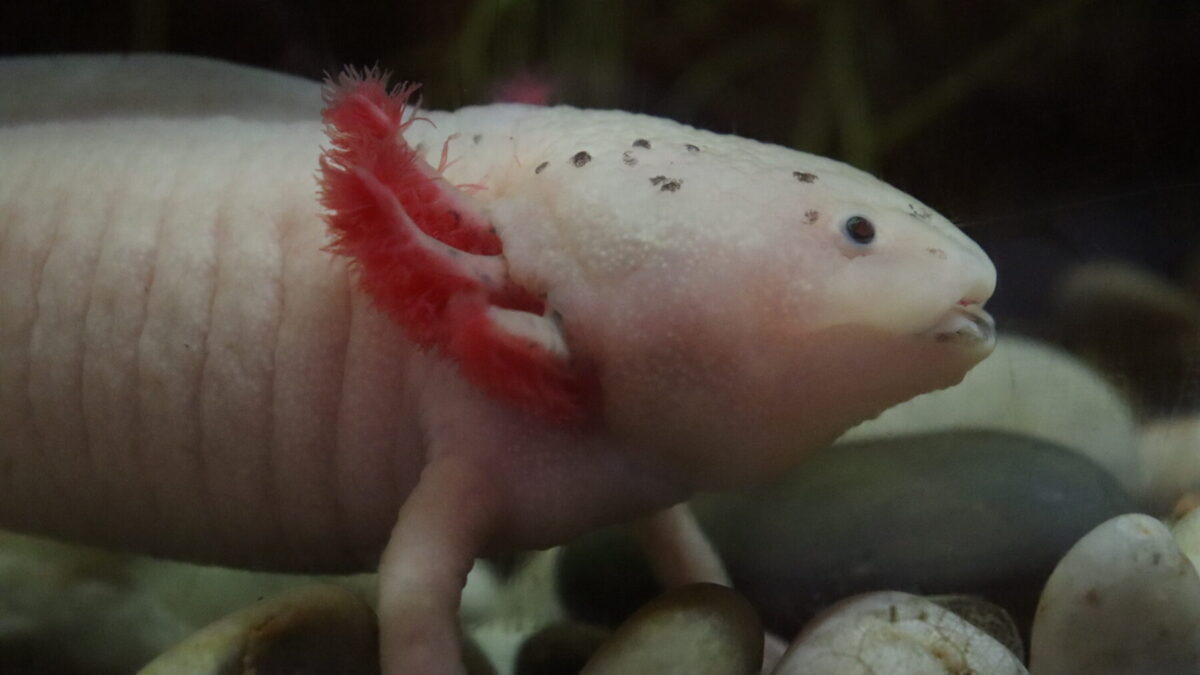
Mexican axolotl conservation in Xochimilco, Digi Mart USA News (Xochimilco, south of Mexico City): The Mexican axolotl (Ambystoma mexicanum) is a fascinating amphibian found exclusively in the canals of Xochimilco, south of Mexico City. The species, known for its ability to regenerate limbs, has drawn the attention of scientists and conservationists because of its critical conservation status.
With its larval appearance retained into adulthood, the axolotl is a clear example of neoteny. In this state, it keeps juvenile characteristics throughout its life.
According to research from the National Autonomous University of Mexico (UNAM), the retention of juvenile traits such as external gills allows it to live in an aquatic environment for its entire life.
Beyond its notable physical features, the axolotl stands out for its exceptional regenerative capacity. Studies have shown that it can rebuild not only limbs but also internal organs such as the retina and the heart, thanks to molecules such as retinoic acid, a derivative of vitamin A.
This ability has made the axolotl a model for laboratory research, where scientists such as Jesús Chimal Monroy have investigated the processes behind its regeneration.
Unfortunately, the IUCN Red List classifies the axolotl as critically endangered. A 2014 census conducted by UNAM found axolotl density as low as 36 individuals per square kilometer, a 99% decline since 1998.
This alarming decline results from multiple factors that have severely affected its natural habitat.
UNAM has begun a new census to update these figures, combining innovative techniques such as environmental DNA analysis and water quality assessment. These non-invasive methods have made it possible to obtain more precise information about the current axolotl population and the conditions of its habitat.
The axolotl faces significant threats from the urbanization of Xochimilco, water pollution, and the introduction of exotic species such as carp and tilapia. These adverse conditions have drastically reduced its natural habitat.
Urban expansion has led to the loss of essential aquatic areas, while pollution creates a hostile environment for these amphibians.
To counter these threats, UNAM has implemented several initiatives to restore and protect the axolotl’s habitat. In collaboration with local farmers, it has rehabilitated chinampas, raised garden plots that provide refuge for these amphibians while being cultivated sustainably.
The chinampas not only serve as shelter but also help improve water quality, benefiting local biodiversity as a whole.
In addition, efforts to reintroduce captive-bred axolotls have shown promising results, suggesting that recovery of the species is possible with appropriate intervention. These captive breeding programs have been crucial in increasing the number of axolotls and ensuring their reintegration into the wild.
The axolotl’s situation is an urgent reminder of the need to conserve and protect Mexico’s aquatic ecosystems, which are crucial not only for this unique species but for global biodiversity. Joint research and conservation efforts offer tangible hope for the future of the axolotl, a symbol of resilience and natural adaptation.











