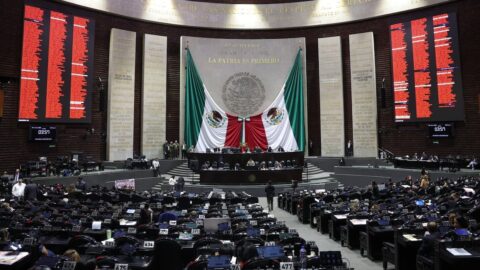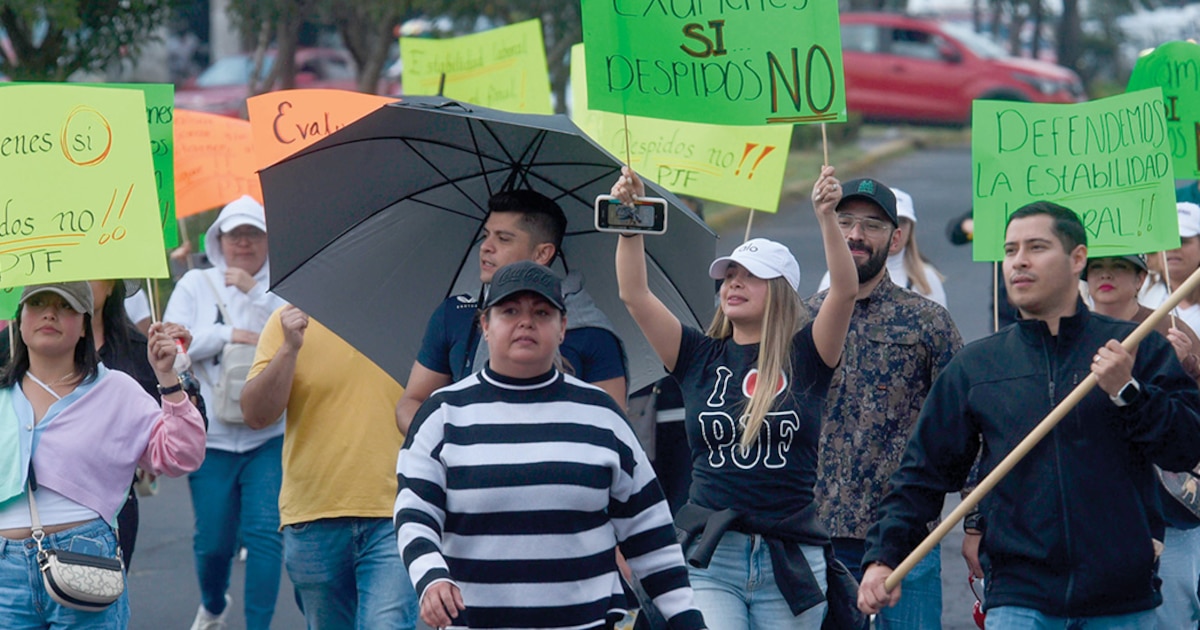
Federal Judiciary Workers Indefinite Strike Against Performance Evaluation System, Digi Mart USA News (Mexico): Employees of the Federal Judiciary Power (PJF) maintained an indefinite work stoppage, with protests reported in at least 17 states and Mexico City, against a new performance evaluation system. Workers demand objective evaluations, job stability, a salary increase and redistribution of workloads.
Protesters liberated the Ignacio Zaragoza roadway at the San Lázaro complex after nearly four hours of blockade without being attended by authorities. Reopening the roads did not end the strike, which began at the first minute of Friday, November 6.
Workers question evaluations that include assessments by hierarchical superiors in addition to knowledge exams, and fear the process could affect their continued employment and disregard their seniority. They have called for training to be the purpose of the tests.
Patricia Aguayo Bernal, secretary of the Tenth Collegiate Labor Tribunal, questioned the agreement published November 5 in the Diario Oficial de la Federación. “We are not refusing to be evaluated, but it should not be with the purpose of removing us.
We want to be evaluated, but the purpose should be training,” she said.
Jurist Ney Granados said mobilizations would continue until the workers obtain dialogue with authorities. Criminal lawyer Diana González Obregón warned that the suspension harms victims and people awaiting hearings, procedures and rulings, and called for a working table to address the claims without interrupting judicial services.
In a statement, Supreme Court president Hugo Aguilar Ortiz met with leaders of two unions and said evaluations should strengthen staff capabilities without punitive character. He offered spaces for dialogue together with the Judicial Administration Body (OAJ).
The OAJ said the 2026 tests will be exclusively diagnostic with no individual consequences for employment, announced a 4.5 percent salary increase, and set the first Christmas bonus payment for November 13. It noted that the agreement provides labor consequences for later ordinary evaluations, including possible separation for unfavorable results that become final.