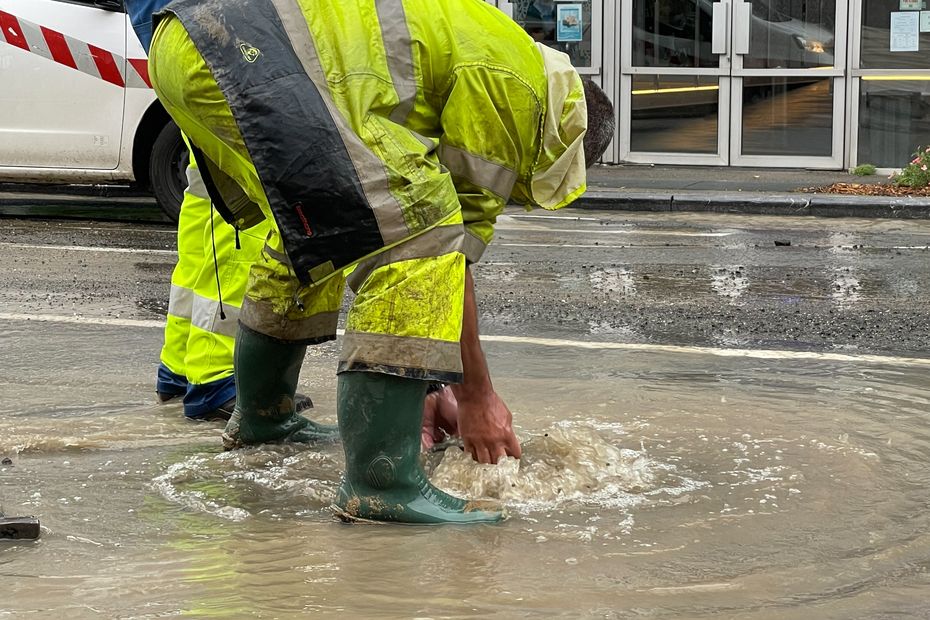
Drought and aging pipes strain drinking water distribution networks in Northern France, Digi Mart USA News (Nord-Pas-de-Calais, France): Water main breaks have multiplied across the Nord-Pas-de-Calais region in recent months, according to France 3 Régions. The towns of Béthune, Éperlecques and Les Attaques have all experienced significant pipe ruptures, and on October 26 a broken pipe at Cuincy, near Douai, cut drinking water supply to several surrounding communes.
The report attributes the failures mainly to drought and the age of the network, which weaken underground infrastructure sensitive to climate conditions. Summer 2026 saw three major heatwaves, making it the hottest on record in France according to Météo France.
Clay soils in the region suffered from the heat and from shrink-swell movement, while storms Austen and Boelo hit the Nord-Pas-de-Calais region a few weeks ago.
Véolia Eau Hauts-de-France, which operates more than 30,000 kilometers of pipeline in the Hauts-de-France region, said that clay soils shrink during dry periods and swell again when rehydrated. These repeated movements can stress buried pipes and cause breaks.
On July 25, a drop in water pressure affected several communes in the north of the Audomarois and west of the Dunkerquois after a break at Éperlecques.
Sylvie Barbon-Leroy, regional director of Suez Eau Hauts-de-France, said the land at Éperlecques had been completely underwater during the 2023–2024 winter floods and had then been hit by drought, with extreme conditions that can lead to such breaks. She noted that climate change is making drought and flooding episodes more pronounced and increasing the risk of breakage.
According to Véolia, leaks rose 25% this summer compared with 2025. Since late October, the company has recorded 25,000 leaks on its network.
The report stresses, however, that drought is not the only factor. Materials used, ground movement and the age of infrastructure all contribute, and their importance varies by territory depending on network renewal.
In France, the average pipe renewal rate is 0.65%, equivalent to a service life of 150 to 160 years. Barbon-Leroy said the rate should be 1.25%, which operates Suez’s roughly 9,000 kilometers of drinking water networks in the region.
Local authorities currently invest about 3 billion euros in water and sanitation networks, and she said that sum would need to double. “It would take 6 billion euros to maintain networks within an acceptable service life,” she said.
Some local authorities are committing resources to renew their networks. In the Arrageois area, investments in pipe and connection renewal help maintain a performance rate close to 90%, which Véolia says limits pipe breaks.
Pipe breaks bring multiple consequences, including repair work and interruptions in water distribution. As climate change intensifies, utilities are looking at new, stronger materials and new technologies.
Barbon-Leroy described sensors and robotic inspections used to identify which sections need priority replacement. Broken pipes are also sent to Suez’s research center, CIRSEE, to analyze how the material deteriorated, and Véolia uses its Leak Tracker tool, which relies on artificial intelligence, to identify high-risk zones.
Water resource pressures remain a major long-term challenge. Water restriction orders in the Nord-Pas-de-Calais region have been extended until the end of the year, and reducing water consumption will need to become a lasting habit for residents.