Central Asian cinema, Digi Mart USA News: European festivals and emerging regional forums are bringing the cinema of Central Asia to major international stages. From the studios of Alma-Ata in Kazakhstan to new steppe westerns, the film industry is charting a new direction as Russia steps back and partnerships with Europe, Iran and South Korea expand.
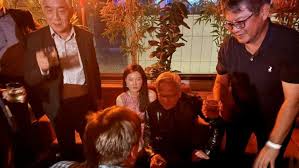
In late October 2026, attention turned to Tashkent, where actor Adrien Brody, known for his role in The Pianist, Uzbek director Ali Khamraev and Kazakh actress Shugyla Yeshen walked the red carpet at the Golden Globes Silk Road Tribute Gala. The inaugural edition honored talent from the film and television industries of Central Asia and the Caucasus.
It reflected growing interest from international actors in a region still little known to the general public.
Behind this recognition lies an industry in transformation, driven by a new generation of filmmakers determined to tell the stories of their societies and to break free from the Soviet legacy.
The history of Central Asian cinema is inseparable from that of the Soviet Union. From the 1920s, educational and ethnographic documentaries, produced notably by the Vostokkino studio, were made by Russian filmmakers from Moscow and Leningrad.
Their mission was to document the Soviet periphery. They captured traditional ways of life, landscapes and local customs while promoting the modernization project led by Moscow.
In 1929, Viktor Turin celebrated the construction of the Turkestan-Siberia railway in Turksib. Through such productions, Central Asia appeared as an exotic, passive territory destined to be transformed by Soviet progress.
Official propaganda extolled interethnic friendship and the figure of the Russian “big brother.”
The creation of studios in the Soviet republics fostered the emergence of local filmmakers, such as Kamil Yarmatov. During the Second World War, the evacuation of Moscow studios eastward turned Alma-Ata, today Almaty in Kazakhstan, into a cinematic refuge.
Sergei Eisenstein worked there on his film Ivan the Terrible between 1942 and 1944.
The Tashkent International Film Festival, held between 1968 and 1988, also played a decisive role. Conceived as a cultural bridge between the USSR and the “Third World” countries, it placed Central Asian filmmakers at the center of exchanges with newly decolonized nations.
However, it was in the late 1980s, with perestroika and the easing of censorship, that a new creative freedom emerged. A Kazakh “New Wave” then took on long-taboo subjects such as deportations, collectivization and Stalinist repression.
The collapse of the USSR in 1991 nonetheless disrupted this momentum, as the loss of Soviet funding weakened the studios.
In recent years, festivals have become essential springboards for Central Asian cinema. Founded in 2023, the Bishkek International Film Festival claims the heritage of the “Kyrgyz Miracle,” the film school that had brought the country international renown from the 1960s.
Its fourth edition, held in June 2026, confirmed its international ambitions.
In Europe, the goEast festival in Wiesbaden has contributed to this visibility. In 2023 it presented Goliath by Adilkhan Yerzhanov, described as a “Kazakh revenge western,” and This Is What I Remember by Aktan Arym Kubat, which follows a Kyrgyz migrant worker returning home after twenty years in Russia.
Its East-West Talent Lab connects emerging directors with European producers and distributors.
The year 2025 marked a further milestone. At the Vesoul International Film Festival of Asian Cinema, Abel by Kazakh director Elzat Eskendir won the special jury prize, while Deal at the Border by Kyrgyz director Dastan Zhapar Ryskeldi received two awards.
Black Red Yellow by Aktan Arym Kubat received the Golden Goblet Grand Prize in Shanghai.
Corruption, urban violence, the condition of women, migration and youth disillusionment are among the realities that contemporary Central Asian cinema explores, subjects long kept off screen. In Olma Djon, presented at more than 60 festivals, the relationship between an impassive father and his mute daughter changes after an encounter with a shaman.
The military world has also become a setting for social critique. In Cadet, Serik, a young man deemed “effeminate,” suffers humiliation and violence at a military school where he tries to meet his family’s expectations.
Filmmakers such as Sharipa Urazbayeva address domestic violence, while Fish on the Hook, awarded in 2025, depicts the uprooting of migrant workers.
Nature remains a character in its own right. Steppes, mountains, yurts and herds embody a nomadic identity threatened by rural exodus.
This aesthetic extends the legacy of Djamilia (1968), in which grand landscapes and thwarted passions reflect tensions between individual aspirations and collective norms. These filmmakers seek less to show a picturesque region than to convey the complexity of societies in transition.
The international visibility of Central Asian cinema has been accompanied by a reshaping of its partnerships. Long dominated by Moscow, regional production is now turning toward other horizons.
France plays an important role through funding, residencies and workshops supported by the National Center for Cinema and the Image (CNC), the Cinéfondation Residence in Cannes and the Three Continents Festival in Nantes.
Iran exerts a particular cultural and artistic influence in the region, first through Tajikistan, with which it shares the Persian language. Uzbekistan also maintains historical ties with Persian culture.
Central Asian filmmakers admire Abbas Kiarostami and Asghar Farhadi, who made films with limited means and evaded censorship through metaphor.
South Korea represents another model. The worldwide success of K-pop and K-dramas, driven by the Hallyu cultural wave, is inspiring a new generation of professionals.
International platforms are also beginning to host regional productions, notably from Kazakhstan.
These influences contribute to the emergence of a hybrid cinema that blends Hollywood rhythms, Asian inspirations and local traditions. The war in Ukraine has accelerated this reshaping: facing its own financial constraints and tighter censorship, Russia no longer holds the central place it once occupied in financing and distributing regional cinema.
This international opening does not, however, mean the end of political constraints. In several countries, cinema remains an instrument of nation-building, closely monitored by authorities.
In Kazakhstan, the National Center for Cinema supports patriotic productions such as Nomad (2005), about a historical Kazakh figure, while works addressing police violence face greater difficulty in securing funding. In Uzbekistan, the series Super Kelinchak illustrates another form of patriotic cinema, based on the celebration of family traditions and a return to moral order, in which the authority of the father or clan leader remains central.
Despite the easing of censorship after the presidency of Islam Karimov, Uzbek productions remain subject to criteria of “national morality,” which restrict representations of LGBT people, religious criticism or overly dark portrayals of society. In Turkmenistan, political control remains particularly strict: independent productions require state approval, while official cinema contributes to the cult of personality surrounding the leadership.
Tajikistan offers relatively more room for maneuver, but filmmakers must work with reduced budgets and avoid sensitive subjects, notably religion and the civil war of the 1990s.
Caught between public support, ideological imperatives and artistic aspirations, filmmakers walk a fine line. Their desire to portray social fractures still collides with the national narratives states wish to promote.
Behind the landscapes of steppes, mountains and historic cities, Central Asian cinema appears less as an emerging film tradition than as one in the process of reclaiming its own stories, languages, imaginaries and place on the international stage. Between Soviet legacy, global influences and the affirmation of new identities, it now seeks to build its own perspective on the world.