Breton zero-waste youth volunteers Hermines du zéro déchet, Digi Mart USA News (Brittany, France): Nine intercommunalities in Brittany have recruited young civic service volunteers to join the “Hermines du zéro déchet” network, whose regional launch is scheduled for Thursday, November 12, 2026, in Rennes. Their announced work goes beyond distributing leaflets, including door-to-door visits, workshops and food waste prevention.
At a monthly allowance of 619.83 euros, the question is what exactly is being asked of them, and how much power they are given over the causes of the region’s waste. The ermine is one of Brittany’s emblems, but it is not meant to empty bins on behalf of their owners, yet nine local authorities plan to assign young volunteers to this work.
At Brest Métropole, two volunteers are planned alongside a team that already includes a coordinator and three sorting facilitators. They are to discuss reuse, repair, washable diapers, food waste, composting and sorting at events.
The work is scheduled over four seven-hour days for eight months, and this proximity to professional staff is decisive, as it shapes a support role rather than a service left to beginners.
In the Cap Sizun–Pointe du Raz area, one position was offered for eight months, with possible interventions with residents, schoolchildren, associations and residents of day-care homes. Activities include door-to-door visits, stands, workshops and participation in a survey on consumption habits.
The offer notes that a category B driving licence would be an advantage in this rural area, showing that everyday ecology also depends on transport.
At Centre Morbihan Communauté, two positions are offered, with a precise split of 60% home visits, 20% workshops and 20% public events. Travel must be done in pairs with a prevention officer.
The authority is also preparing a change to its collection system in 2027, so volunteers will have to explain changes that are concrete for households.
Other announcements show that Leff Armor Communauté, which sought two young people, and Pays Bigouden Sud also participate. These five territories are publicly identifiable; the complete list of the nine announced intercommunalities and the count of positions actually filled remain to be established.
The word “recruitment” appears throughout local authority communications, although civic service is legally neither a job nor an internship. According to the Agence du service civique, the base monthly allowance is 619.83 euros net: 504.98 euros paid by the State and 114.85 euros paid, in cash or in kind, by the host organization.
A supplement exists under social conditions. Missions are generally open to people aged 16 to 25, up to 30 for people with disabilities, with no diploma requirement.
In Brest the work is 28 hours a week; in Cap Sizun, 24 to 30 hours; at Leff Armor, one announcement also indicates 28 hours a week over eleven months. This is therefore not a simple volunteer gesture squeezed between classes.
It occupies a large part of the week, sometimes for nearly a year. The counterpart is experience, training, mentoring and social protection, not an employment contract conferring the same rights.
One rule protects this boundary: the Agency states that a volunteer may not replace a public agent, an employee or a volunteer, nor become indispensable to the ordinary operation of the organization. On paper the prohibition is clear.
In the life of a waste service subject to targets, collection rounds and budget constraints, however, everything depends on actual supervision. A volunteer who leads a workshop discovers a trade; one on whom a recurring operation alone depends no longer occupies exactly the same place.
The statistical backdrop is less reassuring than the mascot. According to the latest memo from the Observatoire de l’environnement en Bretagne, Breton local authorities collected 2.3 million tonnes of household and similar waste in 2024, or 670 kilograms per inhabitant.
This figure includes flows passing through recycling centres, so it does not refer only to a Breton’s kitchen bin. The ratio fell 1.4% over one year, but the mountain remains.
In 2024, management cost an average of 118 euros excluding tax per inhabitant, 30% higher than five years earlier. In 2025, 32% of the regional population was covered by an incentive pricing system.
Individual action matters, but collection rates, access to composting, the organization of recycling centres, local reuse and consumption choices also weigh heavily. Asking a young person to explain the right bin does not give them control over the whole chain that fills that bin.
The scheme has real value. By entering building lobbies, community halls and local festivals, volunteers will meet residents that poster campaigns reach poorly.
They will learn how a public service sometimes works in thankless conditions. Better still, young people can relay what official guidelines do not say: the lack of space in a kitchen, the distance to a collection point, doubt about a composite packaging item, and the fatigue of hearing that everything is a matter of goodwill.
It remains to be seen whether these voices will reach decision-makers. Will the “Hermines” be free to report that equipment is lacking, that a guideline is unclear, or that a new collection organization meets legitimate resistance?
The surveys announced in Cap Sizun and the support for residents in Centre Morbihan offer a chance to go beyond top-down education.
This question is not new. In a 2018 report, Unidivers already described volunteers’ enthusiasm and the vigilance needed against the risk of substituting for paid jobs.
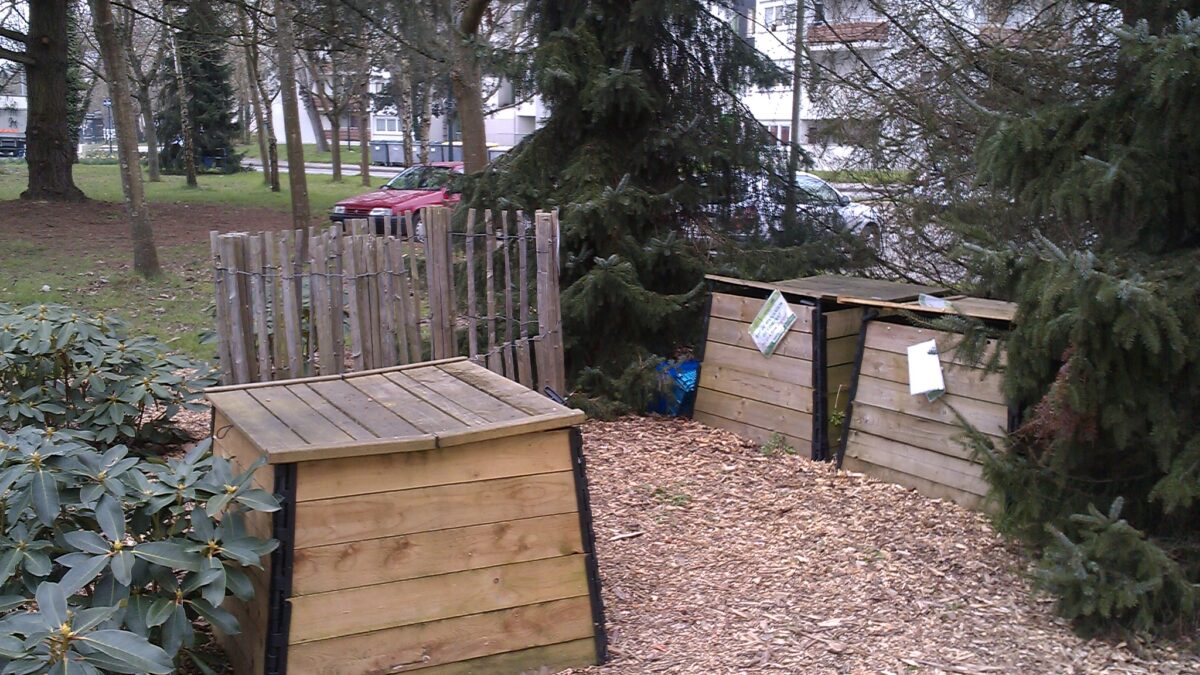
Another article on shared composting in Rennes recalled how resident participation relies on lasting intermediaries and facilities. The Hermines inherit both of these stories.
The regional ambition fits a stated trajectory of waste reduction by 2040. To assess the Hermines’ contribution, more is needed than a count of stands staffed and brochures distributed: residents genuinely supported, practices changed and, when the data allow, changes in collected quantities on a comparable basis.
Nothing today allows a drop in tonnage to be attributed in advance to this new cohort.
The network must provide shared support to volunteers and their mentors, beyond the isolation of each intercommunality. The quality of training, the freedom to design actions and how local authorities will build on what works after the young people leave will therefore also be judged.
On Thursday, at the Hôtel de Courcy, the Hermines will receive their regional launch. Their first success would be more modest and more valuable than a group photograph: that by the end of the mission a resident finally finds the right contact, a composter works better, or an item avoids the skip.
And that local authorities no longer make a habit of entrusting the youngest with problems that only they have the means to solve.