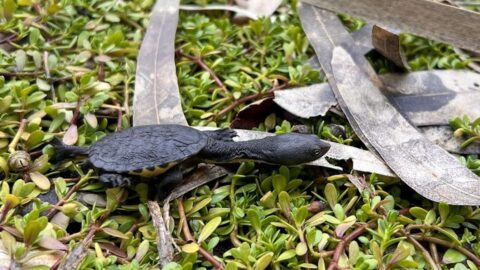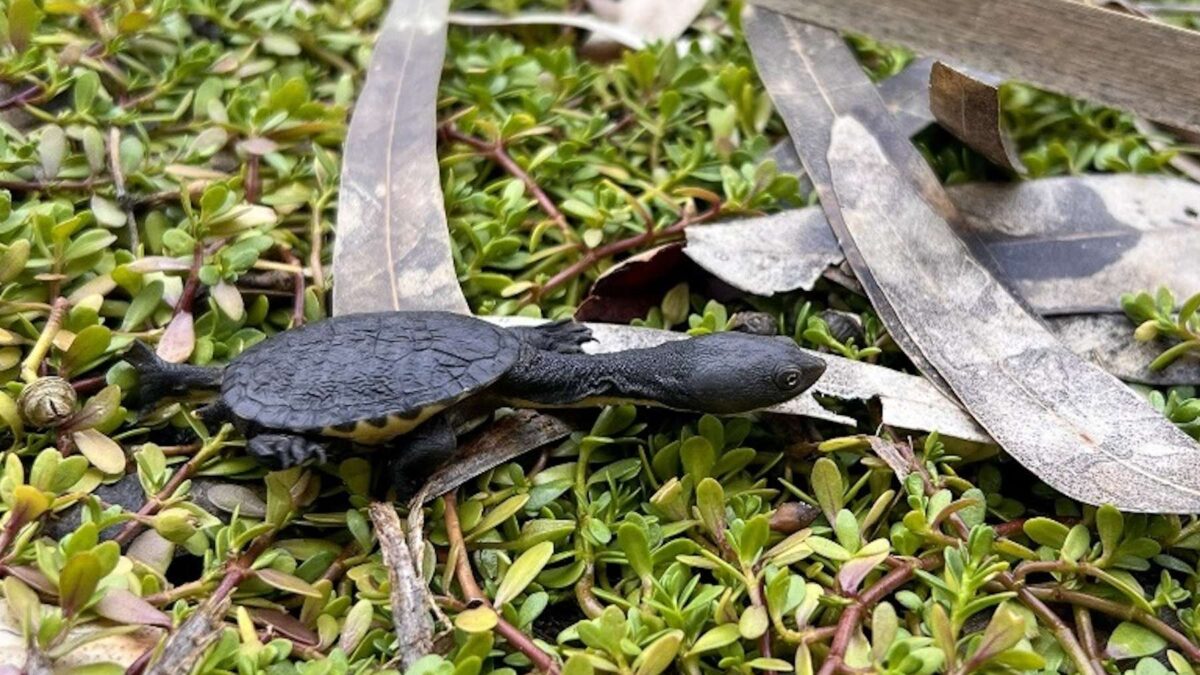
southwest tortoise hatchlings, Digimart Global (Western Australia): A tiny long-necked turtle, the southwest Chelodina colliei, was released in July 2025 at Lake Manning in the wetlands of Perth, Western Australia, weighing no more than 4.77 grams. Researchers at Murdoch University released the hatchling to test whether turtles raised through artificial incubation can survive in the wild.
Hatchlings this small are very difficult to track over time, because current long-term tracking technologies are too large for them. Researchers therefore relied on photographs to identify the animal when it reappeared.
During the annual population survey at Lake Manning in October, the team captured a juvenile turtle released more than a year earlier. Because it was too small for tracking equipment, it was identified from photographs.
It had grown from 4.77 grams to about 100 grams.
Why the Find Matters
According to the publisher’s report, the capture is the first confirmation that a turtle raised in a laboratory can survive and stay healthy in the wild. The species occurs only in the southwest of Western Australia, and researchers say its wetland populations face predators, road deaths, habitat drying and climate change, with young animals becoming increasingly rare.
Researchers cautioned that the survival of this single individual still needs to be confirmed as more than chance. They also stressed that artificial incubation should remain a last-resort measure, used alongside other conservation methods.