

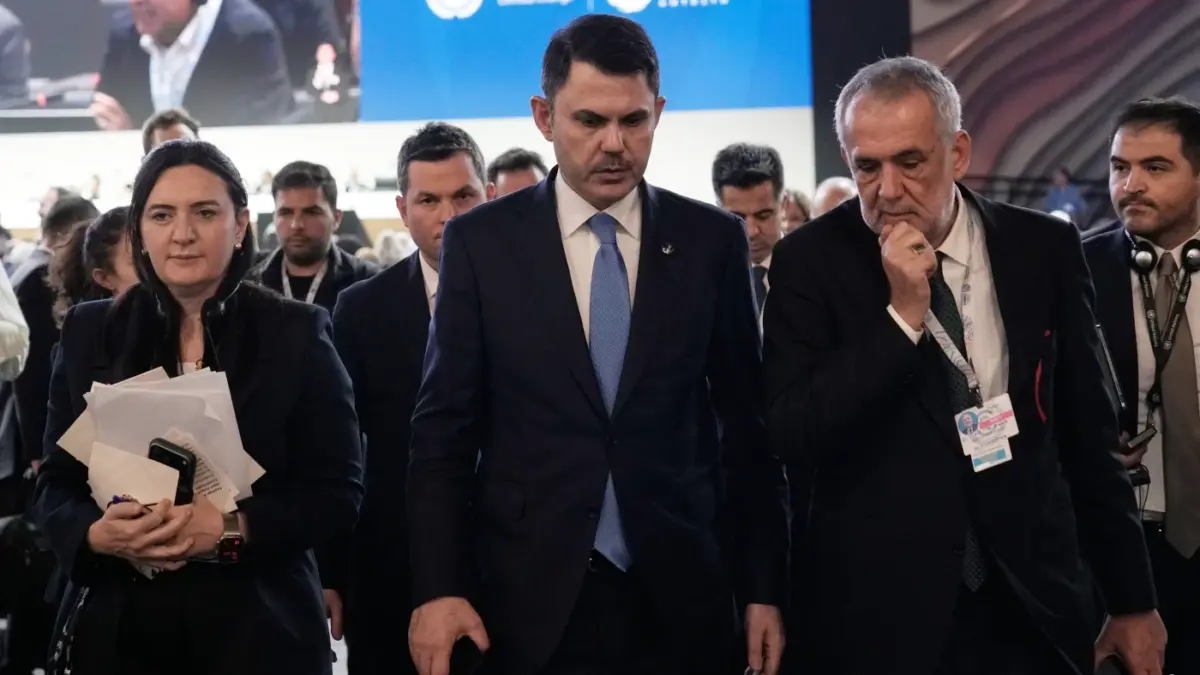
Climate talks fossil fuels, Digimart Global (Antalya, Turkey): International climate talks in Antalya, Turkey, broke down in overtime hours on Sunday over the main driver of planetary warming, fossil fuels. Nearly 200 countries failed to reach an agreement on whether they should move away from energy sources such as coal and natural gas, according to NPR’s report.
The talks ended dramatically after European Union negotiators said they could not accept a final agreement that did not mention the transition away from fossil fuels. The EU bloc then walked out of the room, and other countries pushing for a speedy transition away from fossil fuels also left.
Why the Fossil Fuel Language Matters
Burning fossil fuels such as oil, gas and coal makes up roughly 73% of global emissions, according to the report. European climate chief Wopke Hoekstra said that with the world heading for an overshoot of 1.5 degrees Celsius, the EU could not tolerate an agreement that does not mention fossil fuels, calling that position unacceptable.
Countries agreed in 2015 to limit climate change to 1.5 degrees Celsius (2.7 degrees Fahrenheit). NPR reports that scientists now see this summit as the first U.N.
climate summit where there is consensus that the world will surpass that threshold, which the planet has essentially already reached.
Stakes for the Most Vulnerable
Passing that threshold means more severe climate impacts, such as more intense hurricanes and heat waves. The United Nations found that a best-case scenario of 1.7 or 1.8 degrees Celsius would require cutting emissions immediately and reducing them by 45% by 2035, which scientists say would require dramatically cutting fossil fuel use.
Mohamed Adow of Power Shift Africa, a nonprofit focused on climate change in Africa, said the rejected outcome did not do enough to protect the people most vulnerable to climate change, who have contributed the least and are suffering the worst firsthand.