
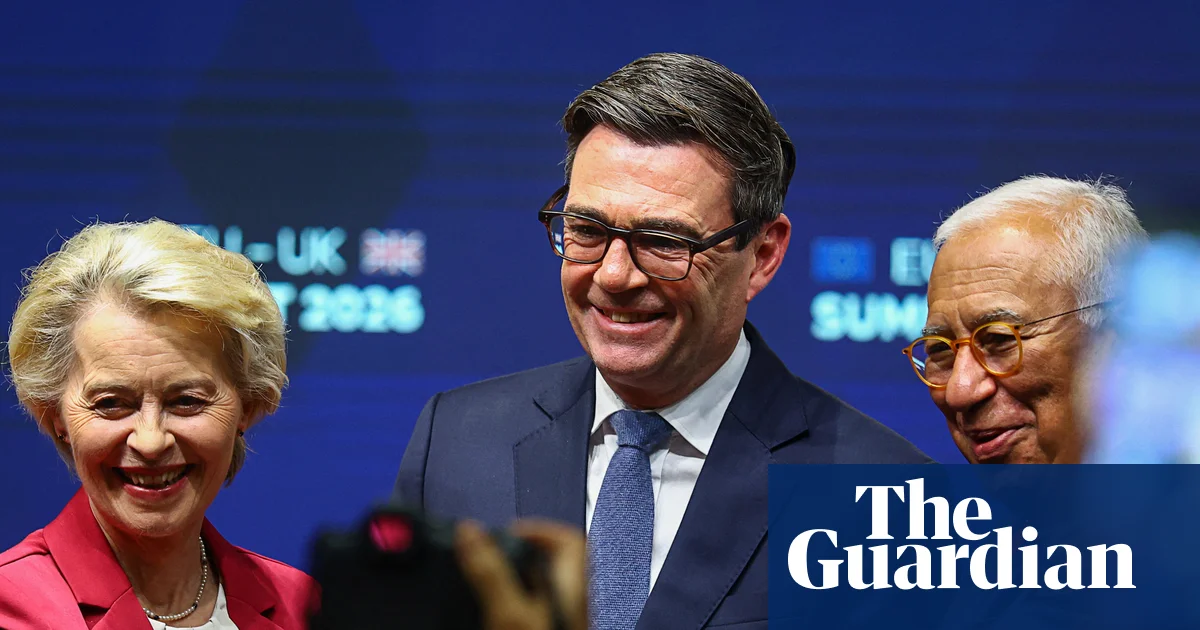
Burnham EU deal, Digimart Global (Brussels): Prime Minister Andy Burnham has staked his political standing on closer relations with the European Union, setting out a package covering food checks, emissions trading and a new youth exchange scheme. Speaking after a summit in Brussels, he argued that Britain today is not the country that voted in the 2016 referendum and that the EU has changed too.
Burnham said the agreement would bring cheaper food, with a reference to supermarkets including Tesco and Asda, as well as lower electricity costs and a claimed 0.5% boost to overall economic growth. He described the growth gain as a long-term effect and said it would be more than any other single intervention.
Those figures are the government’s claims as reported in the publisher’s coverage and have not been independently verified.
The prime minister stood alongside Ursula von der Leyen, president of the European Commission, and Antonio Costa, president of the European Council. He framed the youth exchange scheme as a gift to a generation that he said had been limited by the 2016 referendum and then the Covid pandemic, saying that hope “starts now”.
A constituency-level poll released on Friday estimated that voters in 274 of the 394 constituencies that backed leave in 2016 would now support rejoining the EU, including Burnham’s own Makerfield seat.
Burnham challenged political opponents to reject the plan. Reform UK leader Nigel Farage held a press conference of his own near the EU building.
The Conservatives, led by Kemi Badenoch, issued a statement criticising the deal, focusing more on what it described as reopening past divisions than on its specifics. The Brexit campaign group Stay Out argued that rejoining the EU would cost the UK £750m a week, a claim it made in its own statement.
Discussion of wider future links with the EU was more limited. Officials said any further closer ties were at an early stage, with mutual “brainstorming” on next steps and progress possibly taking months.
A bill to write the new EU deal into UK law is due to be presented to parliament next week, and Labour MPs will be asked to support it.