

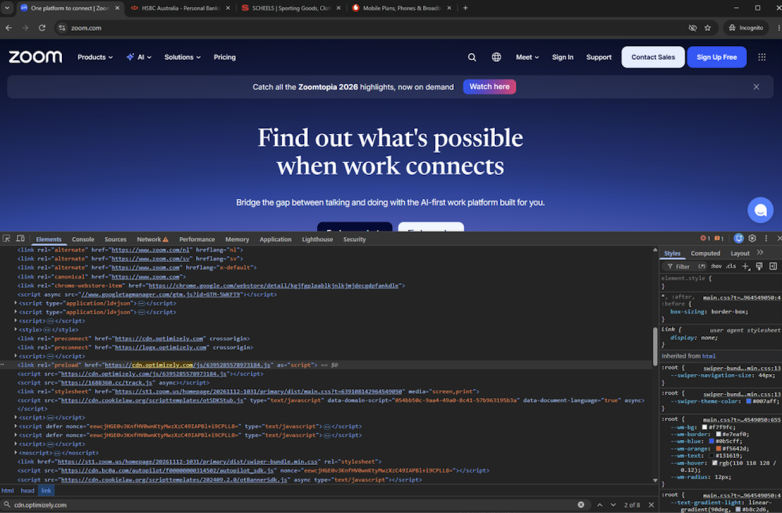
Optimizely malware attack on top websites, Digimart Global: At least 178 leading websites unknowingly served malware to visitors over a 24-hour period after attackers exploited a vulnerability in Optimizely, a company whose platform helps websites customise user experiences and test new features. Among the affected sites were the BBC, CNN, Equifax, Ledger and Zoom, according to a blog post by the security firm Report URI.
According to Report URI, malicious JavaScript code was served to visitors of 178 organisations through Optimizely’s platform on 16 November. Report URI researcher Scott Helme wrote that the payload was rebuilt 26 times during the day and dropped a multi-purpose malware kit capable of stealing payment card data, cookies and screenshots, and of swapping cryptocurrency payment addresses for the attacker’s own.
Helme also noted that the affected websites served exploit code targeting known vulnerabilities in older Apple iPhone and iPad devices. Known as DarkSword and Coruna, these zero-click exploit kits chain together a half-dozen security flaws to take control of outdated devices and extract data.
Optimizely said that on 16 November 2026 it identified a security incident in which an unauthorised party exploited a vulnerability in Optimizely Experimentation to add malicious JavaScript to some customer projects. In a written statement, the company said it had blocked access to the vulnerable path, deployed a fix, removed the injected code, ended active sessions, revoked tokens and reset access for affected user accounts.
It added that it has implemented additional protections against malicious code being delivered through Cloudflare, and that it is working with third-party experts on a comprehensive investigation.
Security researcher Zach Edwards of Infoblox, who co-founded the ad-tracking service DecryptAds, said Optimizely’s code is designed to fire immediately on page load rather than wait behind a consent dialogue, so the attack required no clicks or consent from visitors to trigger. Report URI found that 68 of the affected sites had no Content Security Policy (CSP) at all, 50 had a CSP that still allowed the payload and data theft, and only 24 (15 per cent) had CSPs that fully blocked it.
Report URI estimated that the attackers stole around $7,500 worth of virtual currency, as well as an unknown number of payment card records.
Optimizely has also published an initial findings report, and the company’s statement says the investigation is ongoing.