
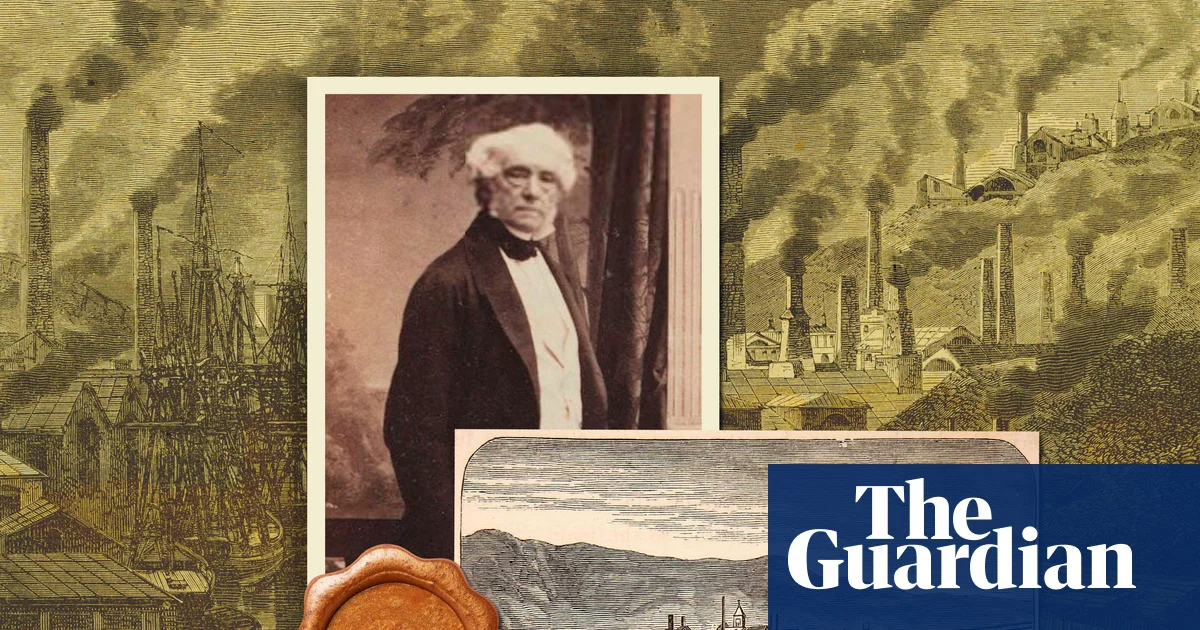
Bank of England directors Cuba enslavement, Digimart Global: British businesses run by long-serving directors of the Bank of England profited from “brutal” enslavement in Cuba for decades after slavery was abolished across the British empire, according to research by the historian Chris Evans.
Men and boys were enslaved in prison conditions at the El Cobre copper ore mine near Santiago de Cuba, which supplied British firms during the Industrial Revolution. In the 1840s, Cuba was the most important foreign source of copper ore for the UK, a metal critical to Manchester’s cotton industry, railways and telegraphy.
Links to the Bank of England
Evans’s research found that the Bank of England directors Charles Pascoe Grenfell and William Thompson acted in a private capacity as key players in the operation. Grenfell was a partner in the Cobre mining and export company, and was also a partner in the Swansea-based smelter Pascoe, Grenfell & Sons, which bought imports from the mine.
Thompson, a former lord mayor of London, exploited enslaved miners through the ore export firm he directed, the Royal Santiago Company.
Previous research has shown that dozens of financiers involved in the founding of the Bank of England in 1694 invested in enslavement. Evans’s findings show that these ties continued even after the government outlawed the practice.
Investors who held Cobre shares from the outset received £102 in dividends for every £40 share between 1836 and 1865.
Conditions and the illegal trade
Enslaved copper miners at El Cobre were likely trafficked to Cuba by illegal voyages from the Bight of Biafra, in modern-day Nigeria, according to Evans, who details this in his book, Slavery’s Long Goodbye. Conditions at the mine were described as extremely brutal, with daily violence and torture, and “slave catchers” were employed to recapture miners who tried to escape to the mountains.
Evans said the death rate at El Cobre means it is likely that thousands of Africans were exploited there, although their life stories remain largely undocumented. Although slavery was legal in Cuba, the importation of enslaved people was not, and a 1817 treaty signed under British pressure banned the trafficking of enslaved Africans to Cuba.
Local colonial authorities ignored it, with 25,000 captives arriving in 1859 alone.
Limited accountability and the end of enslavement at El Cobre
A 1843 attempt to prohibit British subjects from owning enslaved people in other jurisdictions was diluted after lobbying by mining interests, according to the research. Neither Grenfell nor Thompson appears to have faced legal penalties for their involvement.
Enslavement at El Cobre finally ended after Cuban revolutionaries captured the town from Spanish forces in November 1868.
A Bank of England spokesperson said: “We have previously acknowledged the role of former governors and directors in the slave trade.”