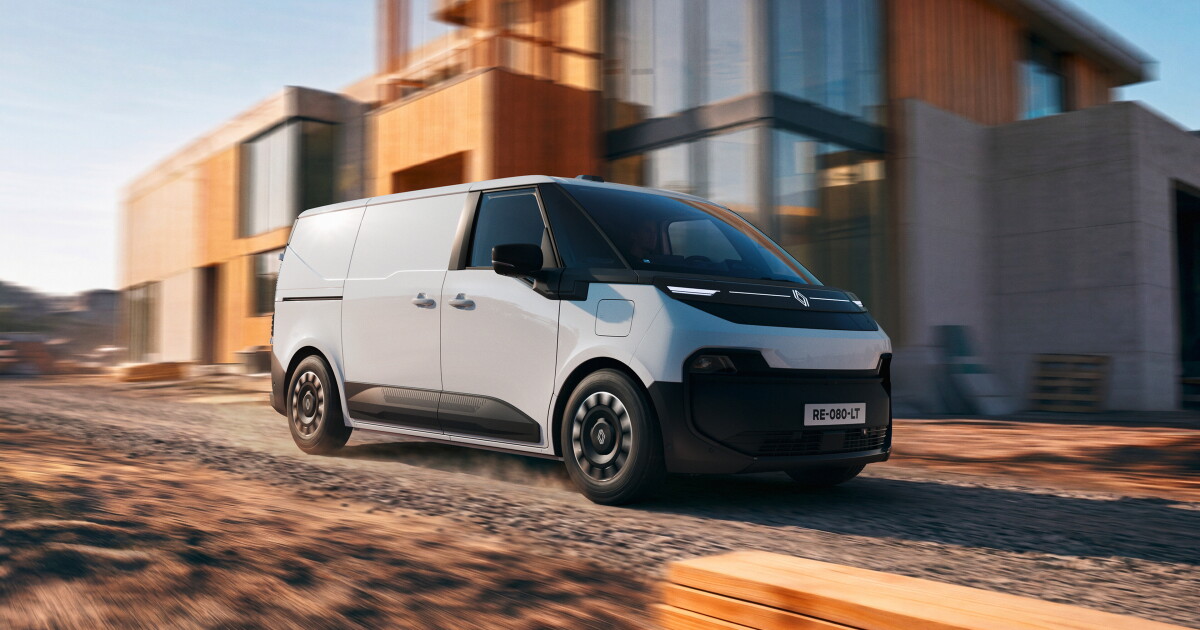
Renault Trafic E-Tech 800-volt electric van, Digi Mart USA News: Renault has unveiled the new Trafic E-Tech light commercial van, which a publisher report describes as the first fully software-defined vehicle in Europe’s light commercial sector. According to the report, the van replaces dozens of separate electronic control units with a centralised architecture built on two high-performance supercomputers running an Android-based operating system.
The vehicle is reported to connect to Google Cloud and to receive full over-the-air software updates throughout its lifecycle. Fleet operators could display their own delivery apps, route-scheduling tools or temperature-monitoring software on the dashboard, and cloud-connected predictive maintenance is described as flagging failing components before a breakdown.
The van uses an 800-volt electrical system, which the report contrasts with the 400-volt platforms of some commercial electric vans sold in the US, such as the Ford E-Transit and GM-backed BrightDrop. The 81-kWh battery is reported to charge from 15% to 80% in under 20 minutes, adding about 174 miles of range during a short break.
Range figures are reported as follows: the entry-level model with a 60-kWh battery is quoted at up to 217 miles (350 km) on the WLTP cycle, and the flagship 81-kWh variant at 292 miles (470 km) on WLTP, or 428 miles (690 km) in city driving. The publisher notes that highway range would be lower.
The van is reported to have a 215-hp (160-kW) electric motor and to carry up to 2,866 lb (1,300 kg), with a 240-kW DC charging capacity for the flagship model.
The publisher also reports that the platform could allow future camper conversions to draw high-wattage power directly from the main battery, though this is a speculative implication rather than a confirmed product feature. Pricing is reported at €41,500 (about US$49,000) for the entry model and €47,000 (about $55,500) for the flagship.
The report states the van was crowned International Van of the Year, and says the electronic architecture may influence vehicles from partners such as Volvo, Nissan and Mitsubishi. The publisher article was not independently verified.