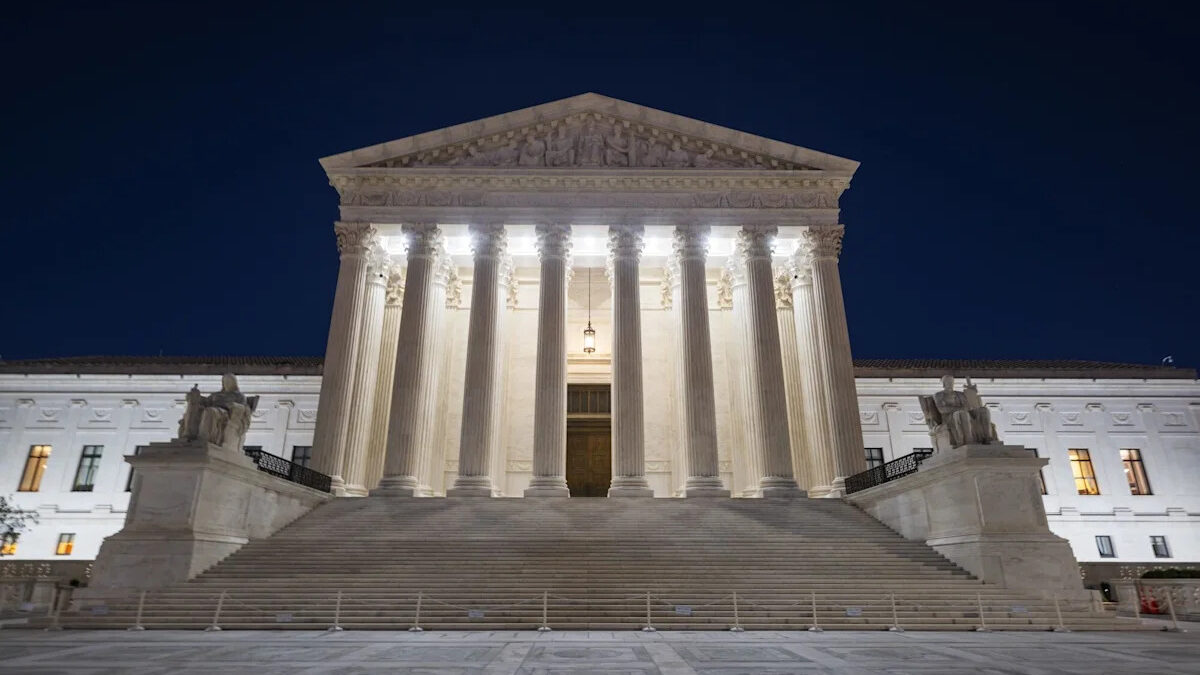
Supreme Court Goldman Sachs bankruptcy arbitration case, Digi Mart USA News: The U.S. Supreme Court on Friday agreed to review a request by Goldman Sachs asking whether bankruptcy courts can override arbitration agreements, setting up a high-stakes test of the reach of the Federal Arbitration Act.
The court approved the multinational investment bank’s request to clarify whether, and under what circumstances, a bankruptcy court can refuse to enforce an arbitration agreement for claims under Section 362(k) of the U.S. Bankruptcy Code when a creditor violates the automatic litigation stay that protects bankrupt individuals and companies.
Goldman Sachs argued that because Section 362(k) issues arise frequently in bankruptcy, a circuit split on the question reflects lower-court confusion about the intersection of the Federal Arbitration Act and bankruptcy law. The bank lost a bid in the U.S.
Court of Appeals for the Fourth Circuit to compel arbitration in a suit alleging it violated bankruptcy law by continuing debt collection efforts despite the stay.
The majority of the three-judge Fourth Circuit panel found that arbitration inherently conflicts with the core purposes of the bankruptcy code. Judge Robert B.
King, in a dissent, found that the debtors’ claims belong in arbitration.
The Federal Arbitration Act creates a national policy favoring arbitration when parties have agreed to it, but bankruptcy law is designed to provide a collective, centralized resolution of a debtor’s financial affairs. Courts are generally divided over a test that considers whether issues are “core” or “non-core” and whether arbitration creates an inherent conflict.
The Supreme Court has not previously tested the tension between the two statutory schemes. The debtors, two holders of Apple Card accounts issued by Goldman Sachs, argued the court should not take the case because its facts, which involve a Chapter 13 stay, make it an unsuitable vehicle for resolving the broader legal question.
The American Bankers Association filed an amicus brief in support of Goldman Sachs.
Latham & Watkins LLP represents Goldman Sachs, while Kellett & Bartholow PLLC and Giles & Lambert PC represent the consumer borrowers. The case is Goldman Sachs Bank USA v.
Brown, No. 25-1408.