Mexico City chocolate robberies alert, Digi Mart USA News (Mexico City): Over the past four months, authorities in Mexico City have received at least five reports of robberies in which victims lost consciousness after consuming sweets or chocolates offered to them on public streets. Criminals have taken advantage of the situation to strip victims of their belongings.
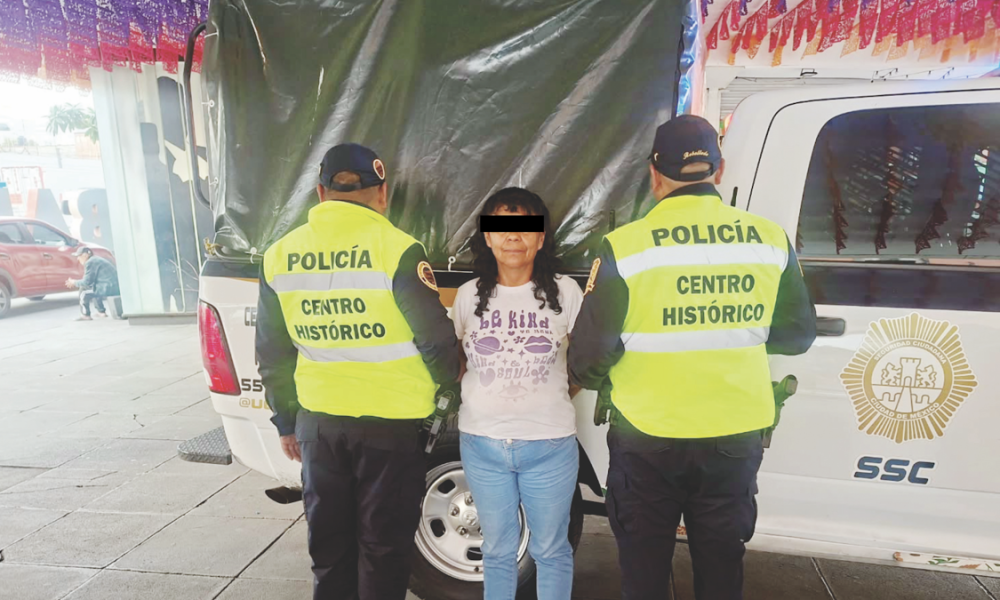
The most recent case was recorded on October 27 in the Centro neighborhood of the Cuauhtémoc borough, where a 62-year-old woman was arrested by officers of the Citizen Security Secretariat (SSC) after allegedly robbing an older man to whom she had previously offered a chocolate.
According to police information, the incident occurred around 5:00 p.m., when operators at the Historic Center Command and Control Center (C2) detected, through video surveillance cameras, a woman speaking with a man at the intersection of Isabel la Católica and José María Izazaga avenue.
Operators observed the man collapse and the woman begin searching his pockets before leaving the area. After receiving the report, SSC officers approached the site and interviewed Luis Arce Ávila, 81, who said a woman had approached him and offered him a chocolate.
The man later began to feel unwell and lost consciousness, which the suspect used to rob him. Officers then requested medical services to evaluate the victim.
Ambulance MX-426 from the Rescue and Medical Emergency Squadron (ERUM) arrived at the scene, led by paramedic Mitzi Fernández along with two other medical personnel, who diagnosed the man with a probable stroke. Authorities have issued an alert to warn the public about this type of crime.
Separately, the Jalisco New Generation Cartel (CJNG) has expanded its criminal activities, no longer relying exclusively on drug trafficking to finance its operations. Investigations by Mexican and U.S.
authorities have shown the group has diversified its income sources, including acquiring chemical precursors for synthetic drug manufacturing, drug trafficking, kidnapping, extortion, protection fees, fuel theft and, more recently, large-scale smuggling of cigarettes from Asia.
These activities have allowed the CJNG to obtain significant resources outside the drug market, although the production and sale of fentanyl, methamphetamine and cocaine remain part of its operations. Investigations have also documented its involvement in homicides, arms trafficking, money laundering, migrant smuggling, illegal logging, illegal mining and real estate fraud linked to timeshare schemes.
One area of interest identified by the Secretariat of the Navy (Semar) is international cigarette smuggling. Since 2024, the Naval Intelligence Unit (UIN) has conducted intelligence work that resulted in the seizure of 481 million cigarettes of illicit origin, equivalent to 678 tons.
The smuggling has an estimated commercial value of 2.375 billion pesos, representing a significant financial impact on the criminal structures involved.
UIN monitoring has reconstructed trade routes, identified irregular movements of goods and detected possible international intermediary networks that facilitate the introduction of illegal tobacco into the Mexican market. Investigations have established commercial and logistical connections with countries including Vietnam, Singapore, South Korea, Japan, Sri Lanka, Thailand, Cambodia, China, the United Arab Emirates and Taiwan.
Among the most notable findings is the use of Singapore, South Korea and Japan as possible points of trade triangulation. Through these operations, cigarette shipments transit several countries before reaching Mexico, complicating the identification of their original source and making it harder to detect documentation irregularities.